Browse categories
English
$
USD
Connect to your AI



Your devices work. It's time to connect them.
IoT platforms fail quietly: certificates copied by hand, commands lost while a device was offline, data counted twice.
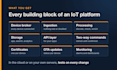
The building blocks, on AWS, another cloud or your own servers:
- Device connection through a broker, with a certificate per device
- Ingestion pipeline where nothing is lost or counted twice
- Processing: decode, check and enrich device data
- Storage per purpose: the app's database, OpenSearch for complex queries, a warehouse for analysts
- API layer for your apps that device traffic can't slow down
- Two-way commands, retried until the device confirms
- Over-the-air updates, alarms, tests and infrastructure as code
Packages start small: one device type, one event type. Bigger platforms run as a custom offer in stages.
Done by a team lead with 10 years of experience on IoT platforms for enterprise.
Built AI-driven: Claude Code from spec to review, with tests on every change.
How it works:
1. Share the device, a sample message and what has to work
2. A short plan first: data flow, storage and security
3. Small steps, with progress every few days
Device firmware stays with your team.
AWS and AI Agent Engineer
Languages
Is device firmware included?
No. The work covers the platform side: device connection, backend and API. Your firmware team gets the topics, the message format and the certificates to connect with. Over-the-air updates deliver firmware your team builds.
Cloud or our own servers?
Either. On AWS: IoT Core, Lambda, SQS and DynamoDB. On another cloud or your own servers: a message broker, Kafka and PostgreSQL, with services in Docker or Kubernetes. Already have a stack? It stays.
What counts as one event type?
One kind of message with its own format, like a location update or an engine status. Standard and Premium cover one event type; each extra type is an add-on.
What if we need more?
Several device types, more databases, access rules for different users, over-the-air updates or certificate rotation: send a message first. That runs as a custom offer in stages, each at a fixed price.
How are devices kept secure?
Each device gets its own certificate and access rules that only allow its own topics, so one leaked key can't reach the rest of the fleet. Certificates can come from your own private CA.
What if a device goes offline?
Commands wait and retry until the device confirms them, and expire after a set time. Data sent again after a reconnect is de-duplicated, so nothing is counted twice.
Can old and new devices run side by side?
Yes. Message formats are versioned, so a new device generation rolls out without breaking the one already in the field.
How many devices can it handle?
From the first few devices to a large fleet. The design stays the same: one identity per device, queues between steps, and device traffic kept apart from your app's reads.
What access is needed?
For a review: the repo with its infrastructure code, or read-only access to the servers or cloud account. For building: a dev environment with limited rights, plus a test device or sample messages. No production keys. Everything is deployed as code.
Is the code written by AI?
Partly, on purpose. Claude Code writes the first draft from a short written plan. Every change is then reviewed by hand and covered by tests before delivery. That keeps the work fast and the code easy for your team to maintain.