Browse categories
Explore
Fiverr Pro
English
$
USD





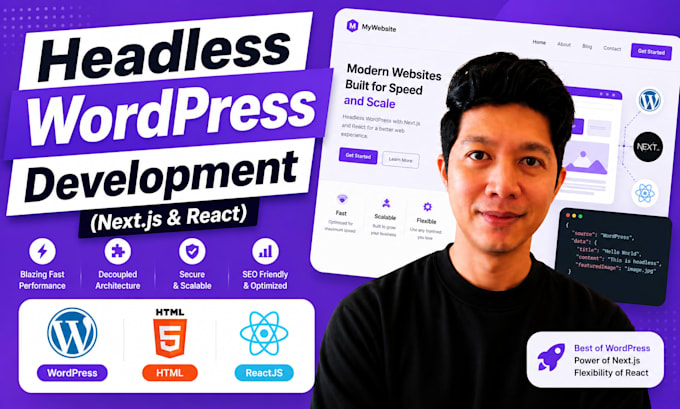
Get the best of both worlds: The absolute contents management power of WordPress coupled with the blazing-fast execution speeds of Next.js and React. Welcome to modern Headless Jamstack architecture!
Standard WordPress databases can become slow and insecure. By separating your content backend from your frontend interface, we gain sub-second page transition speeds, absolute security protection against DDoS threats, and superior Google SEO crawl rankings.
What my framework provides:
- Decoupled architecture using WordPress endpoints data engine
- Fast rendering frontend interface built using Next.js and Tailwind CSS
- Data management structures pulled using native REST API frameworks
- Total protection against typical SQL injection threats
- Automatic production builds triggered directly to Vercel deployment networks
This strategy is highly scalable for high-traffic media publications and digital corporate portals requiring enterprise performance layers.
Message me to revolutionize your web structure today!
Please be aware that it is against Fiverr's policies for sellers to include themes, templates, or any other elements that infringe third-party rights or applicable laws in the delivered work. Read more about in our Guide to Responsible Digital Creation.
Building Modern Web Apps Fullstack and High Converting WordPress Sites
Languages
How do I update content inside a Headless architecture?
You continue to write posts and manage media blocks inside your regular, familiar WordPress admin panel. The Next.js frontend automatically queries data updates dynamically.
Where will the decoupled application files be hosted?
Your WordPress backend remains on a standard Linux server, while the Next.js production frontend will be deployed on cloud platforms like Vercel.
Do traditional WordPress plugins work on a headless site?
Plugins modifying database outputs like Yoast or Advanced Custom Fields work perfectly. Plugins rendering frontend code directly to themes do not work and require manual React components.