Browse categories
Explore
Fiverr Pro
English
$
USD


STOP CHASING LEADS. ARCHITECT A CONVERSION ENGINE.
Traditional lead gen is broken. To scale in 2026, you need an Industrial-Grade AI Multi-Agent System.
I am a Networks & Telecom Engineer and founder of Ézéchiel Consulting. I build autonomous B2B infrastructures that identify and qualify leads with surgical precision.
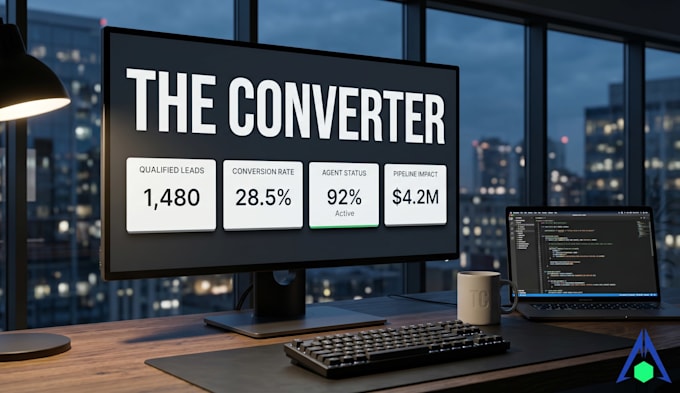
INTRODUCING: THE CONVERTER
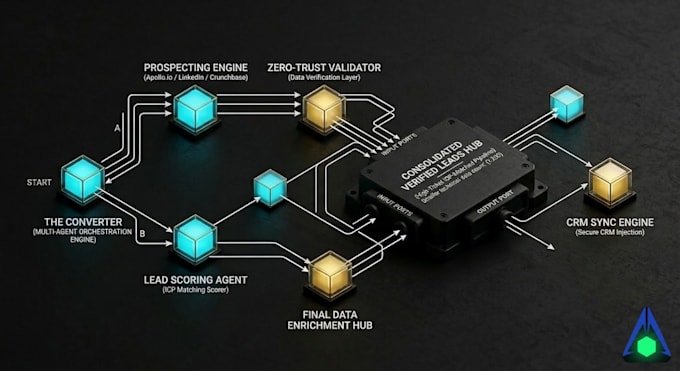
My proprietary framework, exclusively powered by Relevance AI. Unlike simple bots, this system uses advanced orchestration to handle complex reasoning and real-time data validation within a single, robust environment.
WHY RIGOR MATTERS?
WHAT YOU GET:
LETS ARCHITECT YOUR GROWTH.
Please contact me for a professional consultation before placing an order to ensure structural alignment with your goals.
Principal AI Systems Architect
Languages
What is a Multi-Agent System?
Unlike a single chatbot, this consists of specialized entities working together. Within Relevance AI, one agent finds leads, another verifies data, and a third crafts outreach. This mimics a human team with 10x the speed and 0x the error margin.
Why use Relevance AI specifically?
It provides the most stable infrastructure for multi-agent workflows. It allows for advanced state management and tool integration, ensuring THE CONVERTER operates with industrial-grade reliability without multi-platform latency.
How do you guarantee data quality?
Through a Zero-Trust verification layer. Every lead is cross-referenced against multiple sources. If data doesn't meet the 100% accuracy threshold, it is discarded before reaching your team.