Browse categories
English
$
USD
Connect to your AI
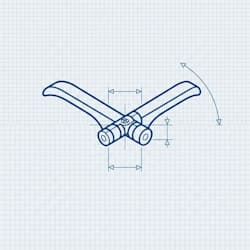

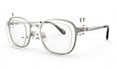

Struggling with loose joints, uncomfortable bridge geometry, or custom hardware details on your eyewear frame?
I engineer precision mechanical components for optical frames, sunglasses, and rimless eyewearfocusing on fit, folding kinematics, and manufacturable tolerances.
What I do:
Model 3 barrel, 5 barrel, 7 barrel, rivet, and spring hinge assemblies
Engineer ergonomic keyhole/saddle nose bridges and swan neck pad arms
Design sculpted temple arms, shooting core wires, and weighted temple tips
Detail rimless lens mounting pins, bushings, endpieces, and micro screws
Tools:
SolidWorks, Rhinoceros 3D, Autodesk Fusion 360, AutoCAD, KeyShot.
You receive:
Tolerance checked 3D CAD component assemblies (STEP, IGES, SLDPRT, 3DM)
2D mechanical detail drawings with hole bores, thread specs, and fold arcs
Macro studio renders showing joint engagement and hardware fit
Why it works:
Reliable eyewear durability starts at the hinge, bridge, and temple jointengineered to real micro fastener and metal forming standards.
Message me with your frame files or component requirements before placing an order.
Please inform the freelancer of any preferences or concerns regarding the use of AI tools in the completion and/or delivery of your order.
Eyewear CAD Engineer, Technical Drawings and Manufacturing Tech Packs
Languages
Q1: What do you need from me to engineer eyewear components?
A1: Share your existing frame CAD file (STEP/3DM/IGES) or reference sketches, along with target alloy or acetate material, hinge barrel count, and fastener size preferences.
Q2: Which input formats can I send for hardware integration?
A2: You can share STEP, IGES, SolidWorks, Rhino 3DM, or DXF files of your frame front, or clear macro photos and sketches with millimeter dimensions.
Q3: Do you follow standard eyewear micro-screw and hinge sizes?
A3: Yes. Hardware assemblies are engineered around standard M1.2, M1.4, and M1.6 optical screws, standard 3/5/7-barrel knuckles, rivet pin diameters, and press-in/screw-in pad boxes.
Q4: What do revisions cover on component engineering orders?
A4: Revisions cover barrel clearance adjustments, temple fold angle tweaks, bridge pad geometry updates, and tolerance refinements within the agreed scope. New parts require a custom offer.
Q5: What factors influence pricing for hardware engineering?
A5: Pricing depends on part count, mechanical complexity (fixed rivet hinge vs. spring mechanism), custom decorative core-wire embossing, and 2D tolerance drawing requirements.
Q6: Do I receive full ownership of the engineered component files?
A6: Yes. Once completed, all 3D CAD part assemblies, mechanism layouts, and 2D manufacturing drawings belong exclusively to you for tooling and production.
Q7: Can you design rimless eyewear mounting hardware?
A7: Yes. I engineer rimless bridge bars, endpieces, compression bushings, twin-pin drill mounts, and threaded stud assemblies with exact lens drill-hole coordinates.
Q8: Do you verify temple folding clearance in open and closed states?
A8: Yes. Every hinge and temple assembly is checked in both open (90°–95° out-angle) and folded positions to ensure zero collision with the frame front or lenses.
Q9: Do you manufacture custom metal hinges or supply screws?
A9: No. I provide digital 3D CAD engineering and 2D mechanical drawings only. I do not stamp metal hardware, supply screws, or perform on-site factory tooling work.
Q10: Can you adapt third-party catalog hinges into my frame CAD?
A10: Yes. Send the catalog hinge datasheet or STEP file and I will model the exact mating pockets, rivet holes, and solder pads onto your frame front and temples.


