Browse categories
Explore
Fiverr Pro
English
$
USD
PCB DESIGNER
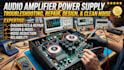
If your amplifier has hum, buzz, ripple noise, unstable voltage, low output, overheating, or power board failure, the fault often starts in the audio power supply section.
A weak capacitor, bad rectifier, unstable regulator, poor grounding, ripple on DC rails, or a damaged protection stage can introduce noise into the signal path and ruin audio performance.
I help diagnose and solve audio amplifier power supply problems for:
home audio amplifiers
speaker amplifier boards
subwoofer amplifier power sections
preamp power supply stages
custom audio PCB power circuits
What I help fix
amplifier hum / 50Hz buzz
ripple noise on DC rails
no output / low output
unstable voltage rails
overheating power section
bad capacitors / rectifier faults
grounding and noise issues
intermittent startup / shutdown faults
What you get
fault analysis from photos, PCB images, schematic, or measurements
power rail troubleshooting guidance
component-level diagnosis
repair recommendation with exact likely fault area
clean and practical technical support you can actually use
If your amplifier sounds noisy, weak, unstable, or completely dead, Ill help track down the power supply issue fast.
My amplifier has a humming or buzzing sound. Can you fix it?
Yes. In most cases, that comes from ripple, grounding, or poor filtering in the power supply. I’ll trace the exact cause and fix it.
What kind of audio power supplies do you work on?
I work on amplifier boards, speaker power boards, preamp supplies, subwoofer amps, DIY audio PSU circuits, and custom audio electronics.
Can you fix hum, buzz, or 50Hz noise?
Yes. Hum and buzz usually come from ripple, grounding issues, filter capacitors, or PSU instability. I help isolate the actual source.
Can you help if the amplifier powers on but has low output or distortion?
Yes. That often points to unstable rails, bad filtering, weak capacitors, or PSU current delivery problems.
What if I don’t have a schematic?
That’s fine. Clear PCB photos, part numbers, voltage readings, and symptoms are usually enough to start.
Do you design for high-end audio or HiFi systems?
Yes. I focus on low-noise, high-quality power delivery suitable for HiFi and sensitive audio circuits.


