Browse categories
English
$
USD
Connect to your AI



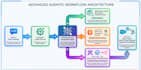
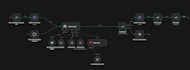

Linear automations fall apart when unexpected edge cases occur. Modern enterprise operations require autonomous agents that can reason through unstructured data, validate their own outputs, and adapt dynamically.
I build custom autonomous AI agents and multi-agent systems using LangGraph, n8n, and state-of-the-art LLMs (Claude Fable, GPT-6-Astra).
What These Systems Automate:
Autonomous Inbound/Outbound Lead Engines: Scrapes prospect signals, enriches contact records, evaluates ICP match, and drafts tailored outreach inside your CRM.
Autonomous Support & Ticket Triage: Parses complex multi-modal customer emails, checks database order records, drafts precise resolutions, and updates team channels.
Internal Operations Assistants: Ingests documents,complex SQL/Vector queries, and posts structured summaries to Slack or Microsoft Teams.
Architectural Standards:
Cyclic state machines designed in LangGraph to prevent endless execution loops
Human-in-the-loop verification gates.
Token caching layers that decrease LLM operational expenses by up to 40%
Message me your problem , workflow JSON and a screenshot of your failing node for a free 10-minute architecture assessment before ordering
Autonomous AI Swarms and Agentic Engineering Architect
Languages
Q: Why choose LangGraph over traditional Zapier or linear n8n workflows?
A: Linear automations break as soon as an edge case occurs. LangGraph enables cyclic state loops, allowing AI agents to self-verify outputs, retry failed steps, and navigate complex conditional logic autonomously without breaking your production pipeline.
Q: How do you keep my OpenAI or Anthropic API costs low?
A: I design token-efficient system prompts, implement semantic caching to prevent redundant queries, and deploy lightweight routing models for basic logic, calling expensive models like Claude 3.5 Sonnet or GPT-4o only when necessary.
Q: What if an integration or workflow breaks after project delivery?
A: Every package includes a 30-Day Guarantee. If any script, webhook, or state loop encounters unexpected bugs within 30 days of delivery, I fix it free of charge.
Q: Do I need technical knowledge to operate the system after handover?
A: No. You receive full source code, comprehensive technical documentation, and a step-by-step Loom video walking you through running and monitoring the system effortlessly.
Q: Can you deploy the AI workflow directly into my existing cloud setup?
A: Yes. I containerize workflows using Docker and deploy them directly to your preferred infrastructure (AWS, GCP, VPS, or cloud-hosted n8n/Python environments) following strict security standards.
Do these agents run locally or in the cloud?
Both. I can deploy via AWS/GCP or set up a secure local environment.
Can the agent access live internet data?
Yes, through custom search tool integrations.
How does a LangGraph agent differ from standard Zapier/n8n automations?
Traditional automations follow rigid step-by-step paths that fail on missing data. LangGraph agents evaluate context, select external tools conditionally, and self-correct when an API returns unexpected data.
How do you prevent runaway API usage costs?
I implement multi-tier routing: lightweight models handle basic validation, while flagship reasoning models are invoked exclusively for complex analysis.
Do I own the intellectual property and code?
Yes. You receive 100% of the workflow exports, Python scripts, Docker files, and technical deployment guides.