Browse categories
Explore
Fiverr Pro
English
$
USD

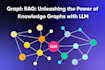

The Graph-RAG Application combines the capabilities of knowledge graphs with retrieval-augmented generation (RAG) techniques to deliver an advanced information retrieval and generation system. By leveraging structured data from knowledge graphs alongside generative models, this application enhances the precision and relevance of generated responses for complex queries.
Features:
Packages and Technologies:
AI Specialist
Languages
What is GraphRAG and how is it better than standard RAG?
Standard RAG only connects text chunks by vector similarity. GraphRAG builds a structured knowledge graph of your data, linking entities and concepts. This allows the AI to answer complex, high-level, and global queries across your entire dataset without losing context.
What databases and tools do you use for GraphRAG?
I typically build using Microsoft's GraphRAG framework, LangChain, or LlamaIndex. For the graph database layer, I work with Neo4j, FalkorDB, or local alternatives, combined with vector databases like Pinecone, Chroma, or Milvus depending on your architecture.
Can I connect this GraphRAG model to a Custom GPT UI?
Yes. By using the "Custom Actions" feature in OpenAI's GPT builder, we can connect your Custom GPT interface directly to the GraphRAG backend API. This gives your frontend bot access to the deeply connected knowledge graph architecture.
Do I need to host a graph database like Neo4j?
For Basic packages, we can run lightweight, file-based local graph structures. For Standard and Premium production-grade systems, a hosted instance (like Neo4j AuraDB or AWS Neptune) is highly recommended for scalability, performance, and stability.


