Browse categories
English
$
USD
Connect to your AI
Top Rated
Top Rated sellers are individually selected by Fiverr after meeting specific benchmarks for quality and service.
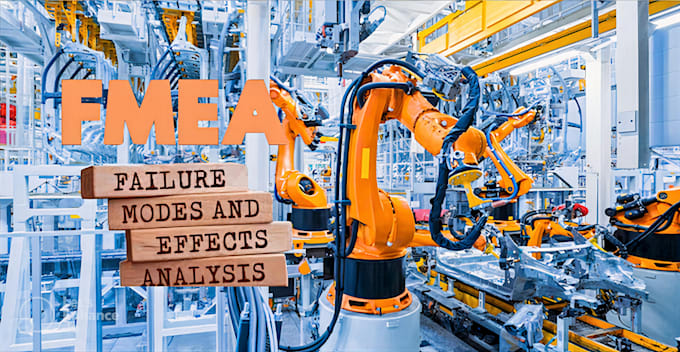
FMEA ensures quality by identifying and mitigating production failures.
Why FMEA?
FMEA offers a proactive approach to risk management, systematically assessing failure possibilities and consequences. It aids in prioritizing issues, optimizing resource allocation, and implementing preventive measures, maintaining high production standards.
Industry Demand:
In today's competitive landscape, clients increasingly demand FMEA from suppliers. It showcases a commitment to quality and process reliability, differentiating you as a reliable, quality-conscious supplier.
Key Points:


Document type:
Documentation
•
Other
Language:
English
•
Italian
Please inform the freelancer of any preferences or concerns regarding the use of AI tools in the completion and/or delivery of your order.
What is FMEA?
FMEA, or Failure Modes and Effects Analysis, is a systematic methodology for evaluating potential failures within a process, identifying their effects, and prioritizing them based on severity, occurrence, and detection.
Why is FMEA important?
FMEA is crucial for proactive risk management. It helps businesses anticipate and address potential failures, ensuring the reliability and robustness of processes while minimizing risks.
How does FMEA work?
FMEA involves identifying potential failure modes, assessing their effects, determining the likelihood of occurrence, and evaluating the ability to detect these failures. This process results in a risk priority number (RPN) for each failure mode.
In which industries is FMEA commonly used?
FMEA is widely utilized in industries such as automotive, aerospace, healthcare, manufacturing, and more. It is applicable wherever quality control and risk management are critical.
What are the key benefits of implementing FMEA?
Benefits include improved product quality, reduced downtime, enhanced customer satisfaction, proactive risk management, and compliance with industry regulations.
When should FMEA be conducted?
FMEA is typically conducted during the design phase of a product or process, but it can be applied at any stage where potential failure modes need to be identified and addressed.
Who is involved in the FMEA process?
FMEA is a collaborative effort involving cross-functional teams with expertise in design, production, quality control, and other relevant areas.
Can FMEA be applied to both products and processes?
Yes, FMEA can be applied to both products and processes. It helps identify potential failure modes in product design as well as in the production and assembly processes.
How can I get started with FMEA for my business?
To get started with FMEA, consider engaging with a qualified FMEA expert or providing training to your team. Tailor the FMEA process to your specific industry and business needs for optimal results.