Browse categories
Explore
Fiverr Pro
English
$
USD

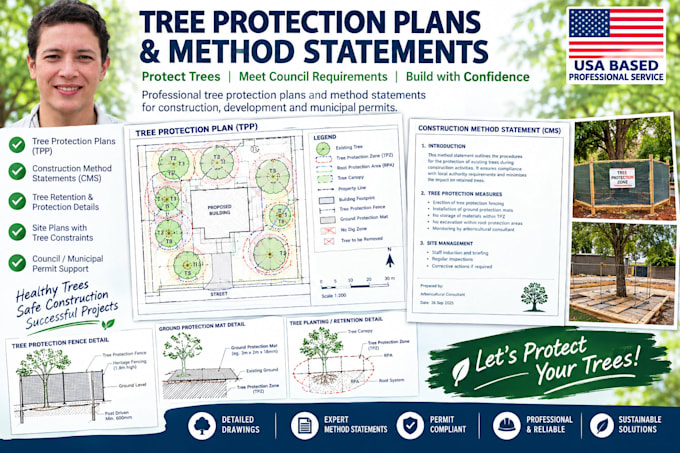
Protect your construction project from expensive site fines, stop-work orders, and liability.
Once demolition and grading begin, heavy machinery, soil compaction, and careless trenching can permanently damage protected root systems. Municipal inspectors require a formal Tree Protection Plan (TPP) and Arboricultural Method Statement (AMS) before any heavy equipment enters a construction site.
I will deliver contractor-ready blueprints and operational instructions that tell your site crew exactly how to build safely around existing trees while keeping you 100% compliant with local civil environmental codes (including US municipal rules, UK BS5837:2012, and Australian AS4970).
Fiverr does not screen freelancers in this category. Please verify qualifications and discuss requirements with the freelancer before ordering, including any preferences regarding the use of AI tools.
Tree Survey and CAD Drafter Arboricultural Reports Data Mapping
Languages
Do you provide the physical fencing or on-site supervision?
No. This is a remote technical design and drafting service. I provide the architectural blueprints and written manuals that your general contractor uses to execute the physical setup on-site
Can you design protection plans for utility trenching?
Yes. If utility lines (water, gas, electric, or fiber) must cross a Root Protection Area, I will specify alternative micro-tunnelling, directional drilling, or hand-digging methodologies in the Method Statement to keep your utilities compliant.
What is the difference between a Tree Constraints Plan (TCP) and a Tree Protection Plan (TPP)?
A TCP is created during the early design phase to show designers where not to build. A TPP is created for the construction phase; it adds physical fencing boundaries, contractor access paths, and specific engineering notes to keep the site crew from damaging the trees during actual construction
