Browse categories
Explore
Fiverr Pro
English
$
USD
Find casting defects on screen before they become scrap on the floor.
I run production-grade LPDC aluminium casting simulations for wheels and structural parts (A356 / Al-Si-Mg). Send me your part and I'll show you exactly where it will have problems and how to fix the process.
What I predict
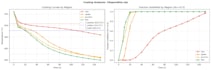
With the Premium package I also run a 27-recipe Design of Experiments and hand you the best, production-feasible process recipe (charge, mold temperature, cooling) not just analysis, but the answer.
Why trust it: the physics is benchmarked against peer-reviewed, plant-validated LPDC research and checked for mesh convergence. You get clear 3D maps, tables, and actionable settings engineering you can defend.
Great for: aluminium foundries, wheel makers, die-casters, and OEM suppliers who want to cut trial-and-error die tuning, reduce scrap, or get a fast second opinion on why a part is leaking, cracking, or warpi



Tools:
Google Cloud Deployment Manager
•
Other
Frameworks:
Chef
•
Other
Cloud Provider:
Other
Programming language:
Python
Expertise:
Development
What do you need from me?
Part geometry (STEP or STL), the alloy (e.g. A356), and your current process conditions (pour & mold temperature, cooling, gate location if known). I can proceed with reasonable assumptions if some are unknown.
What software do you use?
My own production LPDC simulation suite (SPUN) — voxel thermal / filling / stress / DOE in one pipeline.
Can you optimize the process, not just analyze?
Yes — the Premium package runs a Taguchi DOE and recommends the best feasible recipe.
Is my CAD confidential?
Yes. I'm happy to keep your files private and not reuse them.
Can we start small?
Yes — order Basic on one part first, then scale up.


