How Much Does It Cost to Hire a Computer Repair Professional in 2026?
Hiring a computer repair professional in 2026 typically ranges from $48 to $200 per hour, with fixed-price services starting around $30, based on recent marketplace pricing insights.
 March 12, 2026
 9 minute reading
As businesses increasingly rely on digital infrastructure for daily operations, computer systems have become mission-critical assets that demand expert attention. In 2026, organizations face a complex landscape of hardware failures, software conflicts, security vulnerabilities, and network issues that can halt productivity within minutes. The rising adoption of hybrid work models, cloud-based operations, and integrated business systems has made reliable computer repair professionals essential for maintaining operational continuity and preventing costly downtime.
Current marketplace data reveals that computer repair services vary significantly based on the nature of the issue, the required expertise level, and whether you choose hourly or project-based pricing. Technical support services range from $48 to $140 per hour, while specialized tasks like server administration command $40 to $100 hourly. Fixed-price packages offer predictable budgeting, with simple troubleshooting starting around $30 and comprehensive system repairs reaching several hundred dollars. This article provides detailed insights into what drives these costs, breaks down pricing by service type and complexity, examines related service expenses, and helps you determine which pricing model aligns best with your technical needs and budget constraints.
Average Computer Repair Professional Costs
Based on recent Fiverr marketplace data, computer repair professional services show considerable variation depending on the specific technical discipline and engagement model. Understanding these baseline figures helps businesses budget appropriately and select the right service tier for their needs.
Technical Support services typically cost between $48 and $140 per hour, with fixed-price projects ranging from as low as $5 for basic troubleshooting to around $96 for more comprehensive diagnostic and repair work. This broad spectrum reflects the diversity of issues professionals address, from simple password resets to complex system restoration.
Server Administration commands a premium, with hourly rates spanning $40 to $100 and fixed-price engagements averaging around $37.50 for basic tasks and climbing to $85 for more involved server configurations. These professionals handle critical infrastructure that businesses depend on for operations, which justifies the higher investment.
Software Installation services fall in the middle range at $42 to $100 per hour, with fixed-price projects typically costing between $40 and $80. This category encompasses everything from installing basic productivity software to configuring complex enterprise applications across multiple workstations.
Specialized services show even wider variation. VoIP and Telephony implementation ranges from $45 to $80 hourly with fixed prices around $92, while AI Agents development commands $40 to $200 per hour with fixed projects averaging $100. Full Stack Web Applications, when they involve significant technical troubleshooting, can reach $47 to $175 hourly with fixed prices averaging $349.
Platform Migrations represent another specialized area with hourly rates around $40 and fixed-price projects averaging $89. CCTV Setup services typically cost around $66 for fixed-price engagements, while Email Management hovers around $62 for project-based work.
Which Pricing Model Is Best for You?
Hourly pricing works best when the scope of the problem remains unclear at the outset. If your system issues require extensive diagnosis, troubleshooting multiple potential causes, or ongoing technical support over an extended period, hourly arrangements provide flexibility without requiring you to commit to a fixed scope before understanding the full extent of the problem.
Fixed-price packages suit well-defined tasks with clear deliverables. When you know exactly what needs repair, such as installing specific software, configuring a particular system, or resolving a clearly identified issue, fixed pricing offers budget predictability and eliminates concerns about time tracking. This model also incentivizes efficiency, as professionals focus on solving your problem rather than extending billable hours.
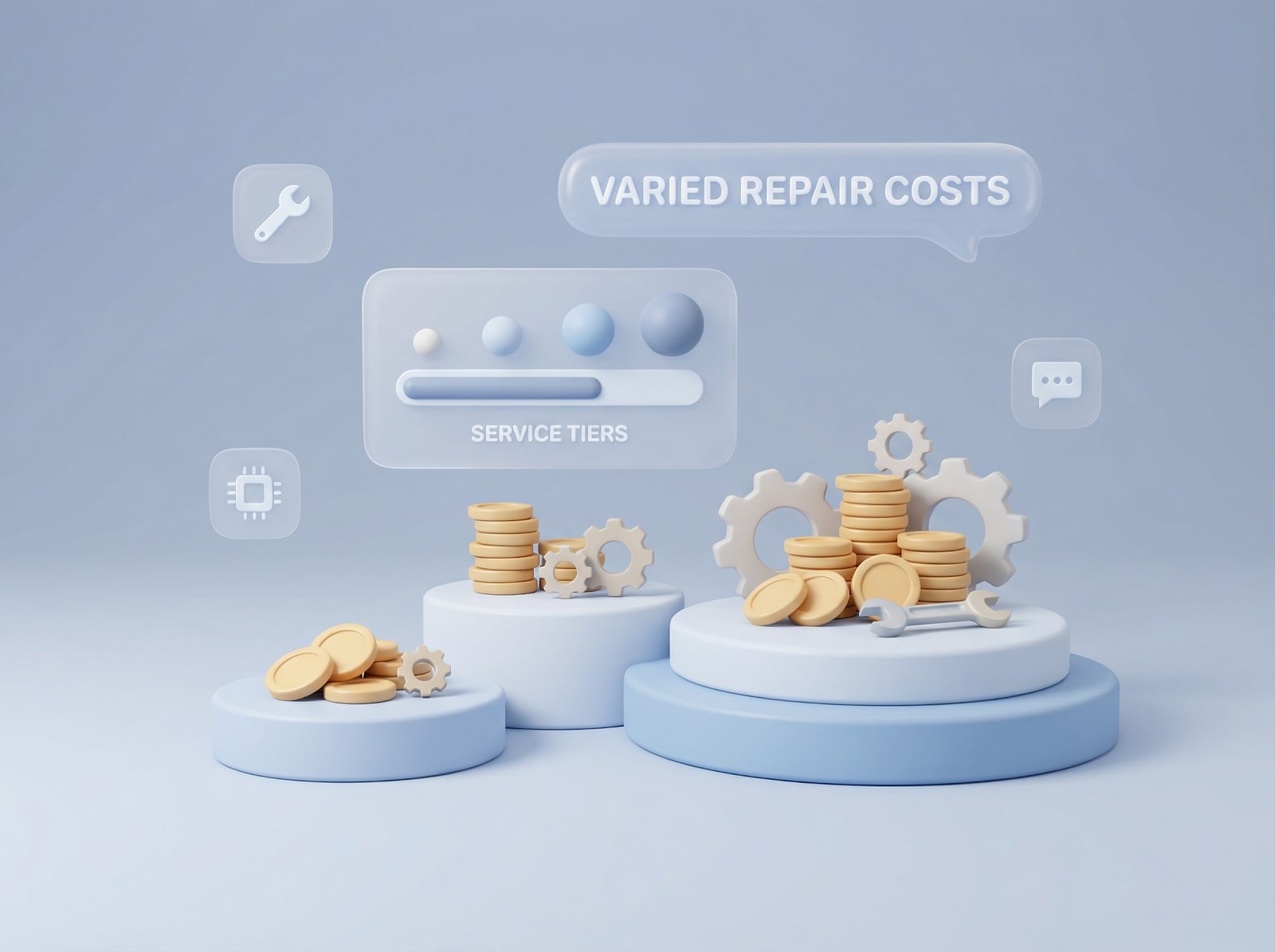
What Influences Computer Repair Costs
Problem Complexity and Diagnostic Requirements
Simple issues like software conflicts, driver updates, or basic troubleshooting typically require 30 minutes to two hours of work and cost between $30 and $80 as fixed-price services. These straightforward repairs involve known solutions and minimal diagnostic time.
Moderate complexity problems, such as operating system corruption, malware removal, or hardware component replacement, generally demand two to five hours of professional attention. These engagements range from $80 to $250, reflecting the additional diagnostic work, specialized tools, and testing required to ensure complete resolution.
Complex system failures involving data recovery, motherboard-level repairs, network infrastructure issues, or multi-system conflicts can extend beyond eight hours of specialized work. These scenarios often cost $300 to $800 or more, particularly when they require advanced diagnostic equipment, multiple repair attempts, or coordination across different system components.
Urgency and Availability Requirements
Standard turnaround services, delivered within two to five business days, typically cost 20 to 30 percent less than rush requests. Professionals can schedule these repairs during regular workflow, optimizing their time and resources.
Same-day or next-day emergency repairs generally carry premium pricing of 40 to 100 percent above standard rates. When system downtime directly impacts business revenue, this premium often represents a worthwhile investment compared to the cost of prolonged operational disruption.
After-hours, weekend, or holiday emergency support can double or triple standard pricing. Businesses requiring 24/7 uptime capabilities should factor these potential costs into their IT budgeting or consider retainer arrangements that provide more predictable emergency coverage.
Hardware Versus Software Focus
Software-focused repairs, including operating system issues, application conflicts, and configuration problems, generally cost less per hour because they require fewer physical tools and materials. These services typically range from $40 to $120 for most common problems.
Hardware diagnostics and repairs command higher rates when they involve physical component testing, replacement, or specialized equipment use. Professionals dealing with hardware issues typically charge $80 to $150 per hour, plus the cost of any replacement parts needed.
Hybrid issues requiring both hardware and software expertise, such as driver conflicts causing hardware malfunctions or software corruption resulting from failing storage devices, often fall at the higher end of pricing scales because they demand broader technical knowledge and more extensive testing protocols.
Experience Level and Specialization
Entry-level technicians handling routine maintenance, basic troubleshooting, and common software issues typically charge $8 to $30 per hour. They effectively address straightforward problems but may require more time for complex diagnostics.
Mid-level professionals with three to seven years of experience and broader technical knowledge command $35 to $75 hourly. They efficiently diagnose most common and moderately complex issues and can work across multiple operating systems and hardware platforms.
Senior specialists with advanced certifications, niche expertise in specific systems, or extensive experience with enterprise environments charge $80 to $200 per hour. Their value becomes apparent in complex scenarios where their specialized knowledge prevents costly trial-and-error approaches and reduces overall resolution time.
Remote Versus Onsite Service Delivery
Remote support services cost significantly less because they eliminate travel time and associated expenses. Most software issues, configuration problems, and diagnostic work can be handled remotely at rates 30 to 50 percent below onsite alternatives.
Onsite visits become necessary for hardware repairs, network infrastructure work, or situations where remote access proves insufficient. These services include travel time and mileage, typically adding $50 to $150 to the base service cost depending on distance and local market rates.
Hybrid approaches, where initial diagnosis occurs remotely followed by targeted onsite visits only when necessary, offer cost optimization while maintaining service quality. This model reduces overall expenses by 20 to 40 percent compared to purely onsite engagements.
Cost Breakdown by Service Complexity
Understanding how pricing scales with project complexity helps you budget appropriately and select the right service tier for your specific needs.
Basic Troubleshooting and Maintenance
- Includes routine diagnostics, software updates, driver installations, basic virus scans, and simple configuration adjustments
- Typical price range of $30 to $80 for fixed-price packages, or $8 to $25 per hour for ongoing support
- Best for small businesses with occasional technical issues, individual users needing periodic maintenance, or organizations seeking preventive care to avoid larger problems
Intermediate System Repairs
- Covers operating system reinstallation, comprehensive malware removal, hardware component replacement, network configuration, and multi-application troubleshooting
- Typical price range of $80 to $250 for project-based work, or $30 to $60 per hour for time-based engagements
- Best for businesses experiencing recurring issues that impact productivity, organizations managing aging hardware requiring regular attention, or situations requiring bug fixes across multiple systems
Advanced Technical Services
- Encompasses data recovery from failed drives, server configuration and optimization, complex network troubleshooting, enterprise software deployment, and custom automation setup
- Typical price range of $250 to $800 or more, depending on scope and duration, or $75 to $150 per hour for specialized expertise
- Best for enterprises with critical infrastructure dependencies, businesses undergoing digital transformation requiring IT support services, or organizations needing specialized knowledge that internal teams lack
Ongoing Support and Managed Services
- Provides continuous monitoring, regular maintenance schedules, priority support access, preventive care, and long-term technical partnership
- Typical monthly retainers ranging from $200 to $2,000 depending on coverage scope, number of systems, and response time guarantees
- Best for organizations requiring predictable IT budgeting, businesses with limited internal technical staff, or companies where system downtime directly impacts revenue generation
Related Service Costs












































I will fix windows PC, laptop, macbook and computer repair remotely
Offers video consultations






I will computer repair, windows 11, fix laptop, desktop, macbook, gaming PC remotely
Offers video consultations








I will do PC optimization, computer repair, mac and tech support remotely
Offers video consultations








I will repair, fix your windows, mac computer, laptop, pc
Offers video consultations






Software Installation and Configuration
Professional software installation goes beyond simply running setup wizards. It includes assessing system compatibility, optimizing configurations for your specific workflow, integrating new applications with existing systems, and training users on proper usage. These services typically cost between $40 and $100 for standard applications, though enterprise software deployments can reach several hundred dollars. Businesses benefit most when complex software requires specific configuration, when multiple workstations need coordinated deployment, or when integration with existing systems demands technical expertise that prevents costly misconfigurations.
Server Administration and Maintenance
Server administration encompasses monitoring server health, applying security patches, optimizing performance, managing user access, and ensuring backup systems function correctly. Professionals in this field charge $20 to $100 per hour, with monthly maintenance contracts ranging from $300 to $1,500 depending on server complexity and uptime requirements. Organizations with business-critical servers, those handling sensitive data requiring stringent security protocols, or companies experiencing growth that strains existing server capacity find these services essential for preventing catastrophic failures and maintaining operational continuity.
Network Security and Vulnerability Assessment
Security services identify vulnerabilities in your network infrastructure, implement protective measures, configure firewalls, monitor for intrusion attempts, and respond to security incidents. These specialized services command premium rates of $80 to $200 per hour, with comprehensive security audits costing $500 to $3,000 depending on network size and complexity. Businesses handling customer payment information, organizations subject to regulatory compliance requirements, or companies that have previously experienced security breaches prioritize these investments to protect sensitive data and maintain customer trust.
Data Backup and Recovery Solutions
Backup implementation establishes automated systems that protect your data against hardware failure, accidental deletion, ransomware attacks, or natural disasters. Recovery services retrieve lost data when backups fail or when unexpected data loss occurs. Setup typically costs $150 to $500 for small business implementations, while emergency data recovery from failed drives ranges from $300 to $2,000 depending on drive condition and data volume. Every business handling irreplaceable data, from customer records to financial information, needs robust backup systems before disaster strikes, making this a foundational investment rather than an optional expense.
System Migration and Upgrades
Migration services transfer your data, applications, and configurations from old systems to new hardware or operating systems while minimizing downtime and preventing data loss. These complex projects typically cost $200 to $1,000 for individual workstations and $500 to $5,000 for server migrations. Businesses replacing aging hardware, organizations adopting new operating systems, or companies consolidating multiple systems require these services to ensure smooth transitions that maintain business continuity throughout the change process.
Ongoing Costs and Hidden Expenses
Beyond the immediate repair or service cost, several ongoing and unexpected expenses can impact your total investment in computer repair services.
- Replacement Parts and Components: Hardware repairs often require new components beyond labor costs. Hard drives, memory modules, power supplies, and other parts typically add $30 to $400 to repair bills depending on component quality and availability.
- Software Licensing and Subscriptions: Resolving certain issues may require legitimate software licenses or subscriptions that weren't previously needed. Operating system licenses, security software, or specialized diagnostic tools can add $50 to $500 in one-time or recurring costs.
- Follow-up Support and Adjustments: Some repairs require monitoring and fine-tuning after initial completion. Budget for potential follow-up sessions costing $50 to $150 to ensure repairs remain stable and address any secondary issues that emerge.
- Data Transfer and Migration Fees: When repairs involve replacing storage devices or rebuilding systems, transferring your data safely may incur additional charges of $50 to $200 depending on data volume and complexity.
- Preventive Maintenance Recommendations: Professionals often identify additional issues during repairs that, while not immediately critical, should be addressed to prevent future failures. Setting aside 20 to 30 percent of repair costs for these recommended preventive measures helps avoid larger expenses later.
- Business Downtime Costs: While not paid directly to repair professionals, the productivity loss during system unavailability often exceeds the repair cost itself. Factor in revenue impact, employee idle time, and customer service disruptions when evaluating true repair expenses.
Frequently Asked Questions
How much does computer repair cost on Fiverr?
Computer repair services on Fiverr show significant range based on the specific technical need. Basic troubleshooting and technical support typically start around $30 for simple fixed-price packages, addressing common software issues, configuration problems, or basic diagnostics. More comprehensive services, including server administration, software installation, and complex system repairs, range from $60 to $350 for project-based work. Specialized services like data recovery, network security implementation, or enterprise system configuration can exceed $500. Entry-level support for routine maintenance costs considerably less than expert-level intervention for critical infrastructure issues, giving you flexibility to match your budget with your actual technical requirements.
What are the typical hourly rates for computer repair professionals?
Hourly rates for computer repair professionals vary based on expertise level and service specialization. General technical support ranges from $48 to $140 per hour, with most professionals charging between $30 and $75 for standard diagnostic and repair work. Specialized services command different rates depending on technical complexity. Server administration typically costs $40 to $100 hourly, software installation runs $42 to $100, and advanced services like AI implementation or full-stack development can reach $175 per hour. Hourly pricing makes most sense for undefined problems requiring extensive diagnosis, ongoing support relationships, or complex issues where the total time investment remains unclear at project start. Professionals with advanced certifications, specialized expertise in specific systems, or extensive experience with enterprise environments justify premium rates through faster problem resolution and reduced trial-and-error approaches.
What is typically included in a basic computer repair package?
Basic computer repair packages generally include initial problem diagnosis, identification of the root cause, and resolution of the specific issue described. Most standard packages cover software troubleshooting, operating system diagnostics, driver updates, basic malware scans, and simple configuration adjustments. Professionals typically provide a brief explanation of what caused the problem and basic recommendations for preventing recurrence. Upgrades to more comprehensive packages usually add services like thorough system optimization, complete malware removal with security hardening, hardware component testing, data backup before repairs, or extended post-repair support. Additional costs often apply for replacement parts, specialized software licenses, extensive data recovery, or repairs requiring more than the initially estimated time. Understanding exactly what your chosen package includes before work begins prevents surprise charges and ensures alignment between your expectations and the delivered service scope.

Related Guides



About the author
Dolev GamzoR&D Director
Dolev Gamzo is a Director of R&D at Fiverr, where he leads engineering groups and the Fiverr AI Guild. With 12+ years of experience in building software, he spent 5 years managing Fiverr’s payment and financial systems before shifting his focus to Fiverr's inbox moderation framework and order framework. In his free time, Dolev explores nature and spends time with his three children.
