How Much Does It Cost to Hire a Cybersecurity Data Protection Expert?
Cybersecurity data protection expert costs in 2026 range from $40 to $1,172 for fixed-price projects, with hourly rates typically between $50 and $300 based on marketplace insights.
 March 12, 2026
 9 minute reading
As digital threats continue to evolve and data privacy regulations tighten across industries in 2026, businesses of all sizes are prioritizing cybersecurity investments. Cyberattacks have become more sophisticated, targeting vulnerabilities in cloud infrastructure, applications, and networks, making professional cybersecurity data protection expertise essential for organizations seeking to safeguard sensitive information, maintain compliance, and preserve customer trust. Companies now recognize that robust security measures are not optional extras but fundamental requirements for sustainable operations in an increasingly connected world.
Understanding what you should expect to pay for professional cybersecurity services helps you budget effectively and find the right expertise for your specific needs. Costs vary significantly based on project scope, specialist experience, service complexity, and whether you need ongoing management or one-time assessments. This guide breaks down current pricing models, explores the factors that influence rates, provides detailed cost ranges for different service types, and offers practical insights to help you make informed decisions when securing expert cybersecurity support for your business.
Average Cybersecurity Data Protection Expert Costs
Based on recent marketplace data, cybersecurity data protection services show considerable variation in pricing depending on service category and engagement model. For fixed-price projects, compliance services average around $1,172.51, representing comprehensive regulatory assessments and implementation support. Assessment and penetration testing services typically cost approximately $519.94 for fixed engagements, while cybersecurity management services average $619.75 for project-based work.
Consultation services, which often include security audits, strategy development, and advisory sessions, average around $500.98 for fixed-price engagements. Website security maintenance services are available at lower price points, averaging $67.40 for basic protection measures. Cloud security services show diverse pricing, with cloud consultation projects averaging $141.57 and cloud network security implementations around $126.05 for fixed engagements.
Hourly rates provide flexibility for ongoing projects or retainer-based work. Consultation services range from $40 to $300 per hour, reflecting the wide spectrum of expertise levels and specialization areas. Assessment and penetration testing specialists typically charge between $100 and $120 hourly, while cybersecurity management professionals range from $35 to $200 per hour depending on experience and project complexity. Compliance specialists command rates between $50 and $200 hourly, and cloud security experts typically charge from $35 to $150 per hour for consultation work.
These ranges reflect real marketplace conditions and account for differences in specialist credentials, project scope, industry requirements, and technical complexity. Entry-level security reviews and basic website protection services sit at the lower end of the spectrum, while comprehensive enterprise security audits, advanced threat detection implementations, and specialized compliance consulting command premium rates.
Which Pricing Model Is Best for You?
Choosing between hourly and fixed-price models depends largely on your project definition and ongoing needs. Fixed-price packages work best when you have clearly defined deliverables such as a one-time security audit, penetration test, compliance assessment, or specific security implementation. This model provides budget certainty and works well for businesses with precise requirements and established timelines.
Hourly arrangements make more sense for ongoing security management, evolving projects with changing requirements, or situations where scope may expand based on findings. If you need a security specialist to monitor threats continuously, respond to incidents as they emerge, or provide flexible consulting as your business grows, hourly pricing offers the adaptability required. Many businesses combine both approaches, using fixed pricing for initial assessments and hourly rates for subsequent implementation and ongoing management.

What Influences Cybersecurity Protection Costs
Scope and Complexity of Security Requirements
Project scope dramatically affects pricing. A basic website vulnerability scan for a small business site with limited functionality might take 3-5 hours and cost between $150 and $400. A comprehensive security audit for a mid-sized e-commerce platform with payment processing, customer databases, and third-party integrations typically requires 20-40 hours and ranges from $2,000 to $8,000. Enterprise-level security assessments covering multiple systems, cloud environments, network infrastructure, and application layers can extend beyond 100 hours and cost $15,000 to $50,000 or more.
Complexity increases when dealing with custom applications, legacy systems requiring specialized knowledge, multi-cloud environments, or intricate network architectures. A straightforward penetration test on a standard web application differs significantly from testing a complex API ecosystem with microservices architecture, each requiring different expertise levels and time commitments that directly impact final costs.
Industry and Regulatory Compliance Needs
Organizations in regulated industries face additional costs due to specific compliance requirements. Healthcare businesses requiring HIPAA compliance assessments typically spend $3,000 to $15,000 for initial audits and ongoing consultation. Financial services organizations needing PCI-DSS compliance for payment processing can expect costs ranging from $5,000 to $25,000 depending on transaction volume and system complexity. General GDPR compliance consulting for data protection ranges from $2,000 to $10,000 for small to medium businesses.
Compliance work involves not just technical assessment but also documentation, policy development, staff training recommendations, and ongoing monitoring frameworks. Specialists with cybersecurity certification expertise command higher rates due to their specialized knowledge of regulatory frameworks and their ability to navigate complex compliance landscapes efficiently.
Specialist Experience and Certifications
Credentials significantly impact pricing structures. Professionals holding CISSP, CEH, CISM, or similar recognized certifications typically charge 30-50% more than those without formal credentials. A security consultant with 2-3 years of experience might charge $40-$75 per hour, while a senior specialist with 10+ years and multiple certifications can command $150-$300 hourly.
Specialists with niche expertise in specific technologies, cloud platforms, or industry verticals justify premium pricing through their ability to identify threats faster, implement solutions more efficiently, and provide strategic guidance that less experienced professionals cannot match. The time savings and risk reduction they deliver often offset their higher rates.
Urgency and Response Time Requirements
Standard project timelines with 1-2 week delivery windows follow normal pricing structures. Projects requiring expedited delivery within 24-72 hours typically incur rush fees of 25-50% above standard rates. Emergency incident response services, where specialists must drop other commitments to address active breaches or urgent vulnerabilities, can cost 50-100% more than standard rates.
Retainer agreements for guaranteed response times provide predictable costs while ensuring priority access. Monthly retainers for ongoing security monitoring and incident response readiness typically range from $1,500 to $10,000 depending on organization size, coverage hours, and guaranteed response windows.
Type of Service Delivery
The nature of engagement affects pricing models and total costs. Remote assessments and consultations generally cost less than on-site work, which may include travel expenses and higher daily rates. A remote penetration test might cost $3,000-$8,000, while the same service delivered on-site could range from $5,000-$12,000 including travel and accommodation expenses.
Automated scanning tools and services cost less than manual testing. Automated vulnerability scans range from $100-$500 monthly, while comprehensive manual penetration testing with detailed reporting costs $3,000-$15,000 per engagement. Hybrid approaches combining automated tools with expert review offer middle-ground pricing and balanced coverage.
Cost Breakdown by Service Type
Understanding how different cybersecurity services are priced helps you allocate budget appropriately and select the right combination of protections for your specific situation.
Basic Security Assessment
- Automated vulnerability scanning of websites and basic infrastructure
- Standard security posture review with templated recommendations
- Basic compliance checklist evaluation
- Typical cost range: $200-$800
- Best for: Small businesses, startups, or organizations seeking initial security baseline understanding
Intermediate Security Services
- Manual penetration testing with detailed findings documentation
- Specific compliance implementation support for standard frameworks
- Security policy development and review
- Cloud security configuration and hardening
- Typical cost range: $1,500-$6,000
- Best for: Growing businesses with customer data, e-commerce operations, or specific compliance requirements
Advanced Security Solutions
- Comprehensive security audits across multiple systems and environments
- Advanced threat modeling and penetration testing services simulating sophisticated attack scenarios
- Custom security architecture design and implementation oversight
- Incident response planning and tabletop exercises
- Typical cost range: $8,000-$25,000+
- Best for: Established businesses, organizations handling sensitive data, or companies in regulated industries
Enterprise Security Management
- Ongoing security program development and management
- Continuous monitoring with threat intelligence integration
- Regular testing, assessment, and improvement cycles
- Executive reporting and board-level security advisory
- Typical cost range: $10,000-$50,000+ monthly retainer
- Best for: Large organizations, enterprises with complex infrastructure, or businesses facing elevated threat profiles
Related Cybersecurity Service Costs






Vetted Pro
I will help in gulf cybersecurity compliance with nca ccc, sama, nesa and qatari csf
From $500Offers video consultations


Vetted Pro
I will be your ai cybersecurity consultant, llm risk expert
From $400Offers video consultations




Vetted Pro
I will provide expert advice on cybersecurity solutions and digital forensics task
Offers video consultations












Vetted Pro
I will provide 24x7 ransomware protection for your business pcs
From $180Offers video consultations





Vetted Pro
I will protect server vps vm website from high ram cpu usage of ddos bad bots attacks
Offers video consultations






Vetted Pro
I will enterprise vciso, chief information security officer, ciso, biso
Offers video consultations
Vetted Pro
I will conduct website penetration testing and security audits
Offers video consultations
Vetted Pro
I will penetration test your web app cloudflare cloudfront nextjs vite
From $150Offers video consultations

Vetted Pro
I will provide expert consultancy on cybersecurity insurance
From $200Offers video consultations

Vetted Pro
I will answer any cybersecurity query with a 5 min loom video and action plan
Offers video consultations


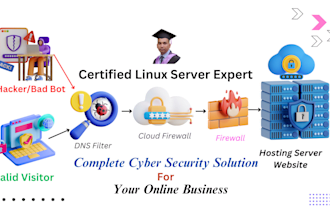
Vetted Pro
I will audit the pentest linux server high cpu ram usage penetration testing on website
Offers video consultations
Risk Management Consulting
Risk management services complement cybersecurity work by identifying, evaluating, and prioritizing threats across your entire business operation. While cybersecurity focuses on technical protections, risk management consulting takes a broader view, assessing how security vulnerabilities intersect with business processes, regulatory exposure, and operational continuity. These services typically cost between $2,000 and $15,000 for comprehensive risk assessments, with ongoing advisory retainers ranging from $1,500 to $8,000 monthly. Businesses benefit from this service when developing business continuity plans, preparing for audits, or making strategic decisions about security investments and insurance coverage.
Cybersecurity Management Systems
Comprehensive cybersecurity management services provide ongoing oversight of your security posture rather than one-time assessments. This includes establishing security policies, coordinating response procedures, managing security tools and vendors, and continuously improving defenses based on emerging threats. Monthly management services range from $2,000 to $12,000 depending on organization size and infrastructure complexity. Organizations typically invest in management services when they lack internal security leadership, need to maintain compliance continuously, or want expert oversight without hiring full-time security staff.
Security Consultation Services
Advisory and consultation services help organizations develop security strategies, evaluate technology decisions, and navigate complex security challenges without committing to full implementation projects. Consultations typically range from $500 to $3,000 for focused sessions addressing specific questions or challenges, with strategic planning engagements costing $3,000 to $15,000. Businesses use consultation services when evaluating new technologies, responding to specific threats, preparing for compliance audits, or developing long-term security roadmaps that align with business objectives.
Compliance Implementation Support
Beyond assessment, compliance implementation services help organizations actually achieve and maintain regulatory requirements. This involves configuring systems, developing documentation, training staff, and establishing ongoing compliance processes. Implementation costs vary widely by framework but typically range from $5,000 to $30,000 for initial setup, with annual maintenance and monitoring costing $2,000 to $10,000. Organizations pursuing specific certifications or operating in regulated industries need these services to translate compliance requirements into operational reality and avoid penalties for non-compliance.
Ongoing Costs and Hidden Expenses
Beyond initial project costs, several recurring and unexpected expenses can affect your total cybersecurity investment.
- Security tool subscriptions and licenses often required after assessments, ranging from $50 to $500 monthly depending on organization size and tool sophistication
- Remediation implementation costs for fixing identified vulnerabilities, which can range from $1,000 to $20,000 depending on issue severity and system complexity
- Regular re-testing and compliance audits typically needed annually or after significant system changes, costing $1,500 to $10,000 per cycle
- Security awareness training for staff recommended quarterly, ranging from $500 to $5,000 annually depending on organization size
- Incident response retainers for guaranteed emergency access to specialists, typically $1,000 to $5,000 monthly
- Documentation updates and policy reviews needed as regulations evolve, costing $500 to $3,000 annually
- Third-party vendor security assessments when integrating new services or partners, ranging from $1,000 to $5,000 per vendor
Frequently Asked Questions
How much does cybersecurity data protection cost on Fiverr?
Cybersecurity services on the platform range considerably based on service type and complexity. Basic website security assessments and vulnerability scans start around $67, while comprehensive compliance services average $1,172 for fixed-price projects. Penetration testing services typically cost around $520, and general cybersecurity consultation packages average $500. More specialized services like cloud security implementations range from $126 to $142 for standard projects. Many professionals also offer custom quotes for enterprise-level needs or ongoing security management arrangements. Entry-level packages provide good value for small businesses establishing baseline protections, while premium options deliver advanced testing, detailed reporting, and strategic security planning suitable for organizations with significant data protection responsibilities or regulatory requirements.
What are typical hourly rates for cybersecurity specialists?
Hourly rates vary significantly based on specialist expertise and service complexity. General cybersecurity consultation ranges from $40 to $300 per hour, with most experienced professionals charging $100-$200 hourly. Penetration testing specialists typically command $100-$120 per hour, reflecting the specialized skills required for ethical hacking and vulnerability assessment. Compliance consulting rates span $50-$200 hourly depending on regulatory framework complexity and specialist credentials. Cloud security experts charge $35-$150 per hour for consultation and implementation work. Hourly pricing makes sense for ongoing security monitoring, flexible consulting relationships, or projects where scope evolves based on findings. Organizations with changing needs, growing infrastructure, or continuous improvement goals often prefer hourly arrangements over fixed pricing, as they provide access to expertise without committing to predefined deliverables that may not match emerging requirements.
What is typically included in a basic cybersecurity package?
Basic cybersecurity packages generally include automated vulnerability scanning of your website or application, a summary report identifying critical security issues, and prioritized recommendations for remediation. Most entry-level services cover common vulnerability categories like SQL injection, cross-site scripting, outdated software, weak authentication, and basic configuration errors. You typically receive a PDF report with findings severity ratings and general guidance on fixes. Some packages include a brief consultation call to discuss results and answer questions. Basic packages usually do not include manual testing, custom exploit development, remediation implementation, or ongoing monitoring. Upgrades and add-ons often available include detailed manual testing, compliance mapping showing how findings relate to specific regulations, assistance implementing recommended fixes, re-testing after remediation, and follow-up consultations. Expanding from basic to comprehensive packages typically doubles or triples costs but provides significantly deeper analysis and actionable support.

Related Guides




About the author
Lior IluzVP R&D
Lior Iluz is a VP of R&D at Fiverr, leading cross-organizational engineering efforts across web and mobile platforms. With over a decade of experience spanning Android development, full-stack engineering, and senior R&D leadership, his background centers on building and scaling distributed, event-driven systems and modern cloud-native architectures. His work focuses on technical strategy, team leadership, and delivering resilient, high-impact products at scale.
