How Much Does It Cost to Hire a Market Researcher?
Market researcher pricing on freelance platforms ranges from $40 to $300 per hour in 2026, with most projects averaging between $73 and $352 depending on scope and methodology.
 February 15, 2026
 9 minute reading
Market research has become an essential cornerstone of business strategy in 2026, as companies navigate increasingly complex consumer behaviors, competitive landscapes, and digital transformation challenges. Organizations of all sizes now rely on data-driven insights to inform product development, marketing campaigns, pricing strategies, and expansion decisions. The ability to understand target audiences, identify market opportunities, and validate business assumptions has shifted from a luxury to a necessity in today's fast-paced commercial environment.
Current pricing for market research services reflects the wide spectrum of methodologies and deliverables available. Based on recent Fiverr marketplace data, businesses can expect to invest anywhere from $43 for basic strategy research to over $350 for comprehensive interviews and focus groups. The cost depends primarily on research methodology, project complexity, data collection requirements, and the researcher's specialized expertise. This guide examines current market research pricing structures, explores the key factors that influence costs, and helps you determine which investment level aligns with your business objectives and budget constraints. Whether you need a professional market researcher for a quick competitive analysis or a comprehensive multi-phase study, understanding the pricing landscape will help you make informed hiring decisions.
Average Market Researcher Costs
Based on Fiverr's recent marketplace data, market research services demonstrate considerable price variation depending on the specific service category and deliverables. The pricing structure typically follows either hourly rates or fixed-price packages, with each model suited to different project types.
For comprehensive market research packages, fixed prices average around $132 for general market research projects, while full-package qualitative and quantitative research typically costs approximately $102. When businesses require market research consulting services, the fixed price averages $111, with hourly rates ranging from $40 to $300 per hour.
Survey-based research projects show fixed pricing averaging $73, with hourly rates spanning $20 to $52 per hour. General online research services typically cost around $100 on a fixed-price basis, with hourly rates between $10 and $30. For businesses seeking interviews and focus groups, fixed prices average $352, reflecting the labor-intensive nature of qualitative data collection and analysis.
Adjacent services show varied pricing structures as well. Voice of Customer (VoC) research averages $78 as a fixed price, while customer journey mapping typically costs $100. User research and insights for product management purposes average $190, and research assistant services through virtual assistant categories cost approximately $58 on a fixed-price basis, with hourly rates around $11.
Statistical modeling and analytics services demonstrate significant price variance, with hourly rates ranging from $10 to $50 and fixed prices as low as $15 for basic services. Influencer marketing strategy and research averages $43, while social media consultation and audience research typically costs around $20.
Which Pricing Model Is Best for You?
Choosing between hourly and fixed-price arrangements depends primarily on your project's scope definition and expected duration. Fixed-price packages work best when you have clearly defined research objectives, specific deliverables, and a well-understood methodology. These arrangements provide budget certainty and are ideal for standard projects like competitor analysis reports, customer satisfaction surveys, or market sizing studies where the scope rarely changes mid-project.
Hourly pricing makes more sense for exploratory research, ongoing advisory relationships, or projects where the scope may evolve based on initial findings. This model offers flexibility when you need iterative research, continuous consultation, or when the depth of investigation depends on what preliminary data reveals. Hourly arrangements also benefit clients who require periodic research support rather than one-time deliverables, allowing you to scale investment up or down based on business needs.

What Influences Market Research Pricing
Research Methodology and Approach
The research methodology significantly impacts pricing, with quantitative studies involving large-scale surveys typically costing $70 to $150 for basic projects with 100-300 respondents and standard questionnaires. Qualitative research involving in-depth interviews or focus groups commands higher rates, generally ranging from $200 to $400 for projects involving 8-12 participants with detailed analysis and thematic coding. Mixed-method approaches combining both quantitative and qualitative elements often fall in the $300 to $600 range for comprehensive studies that triangulate data sources and provide multidimensional insights.
Data Collection Complexity and Sample Size
Sample size and recruitment difficulty directly affect costs. Research targeting general consumers with readily accessible demographics typically adds $50 to $100 to project costs for samples of 200-500 respondents. Specialized audiences such as C-level executives, medical professionals, or niche industry experts can increase costs by $200 to $500 or more, as recruitment requires specialized panels, longer timelines, and often higher incentive payments. Projects requiring multi-country data collection typically multiply base costs by 1.5 to 3 times depending on the number of markets and local research complexities.
Analysis Depth and Deliverable Format
Basic descriptive analysis with summary statistics and simple charts typically represents the baseline pricing in any research quote. Advanced statistical analysis including regression modeling, segmentation analysis, or predictive analytics generally adds $150 to $400 to project costs depending on complexity. Comprehensive reports with strategic recommendations, executive presentations, and actionable insights command premium pricing, often adding 30 to 50 percent to base research costs. Interactive dashboards or ongoing tracking studies further increase investment by $200 to $800 depending on customization requirements and update frequency.
Researcher Specialization and Industry Expertise
Generalist researchers conducting standard market studies typically charge base marketplace rates of $10 to $50 per hour. Industry specialists with deep knowledge in sectors like healthcare, financial services, or technology command $75 to $150 per hour, as their expertise reduces learning curves and enhances insight quality. Researchers with advanced credentials, published work, or consultancy backgrounds at recognized firms may charge $150 to $300 per hour, particularly for strategic advisory work that goes beyond data collection to inform critical business decisions.
Timeline and Turnaround Requirements
Standard turnaround projects delivered within 2-4 weeks represent baseline pricing structures. Expedited research requiring delivery within 3-7 days typically incurs rush fees of 25 to 50 percent above standard rates, as researchers must prioritize your project, accelerate fieldwork, and compress analysis timelines. Same-week or 48-hour turnarounds, when feasible, may double standard project costs. Conversely, flexible timelines extending beyond one month may provide opportunities for 10 to 20 percent cost savings, as researchers can conduct fieldwork during slower periods and manage multiple projects simultaneously.
Cost Breakdown by Project Scope
Market research investments vary significantly based on project comprehensiveness and business objectives. Understanding typical scope levels helps you budget appropriately and set realistic expectations for deliverables.
Basic Research Projects
- Typical services include secondary research compilation, competitor website analysis, basic online surveys with 50-100 respondents, or industry trend summaries
- Price range generally falls between $43 and $100 for fixed-price packages
- Best suited for startups validating initial assumptions, small businesses conducting preliminary market assessment, or established companies exploring new market entry at minimal risk
- Deliverables typically include summary reports, basic data tables, and high-level findings without deep strategic recommendations
Intermediate Research Projects
- Scope includes custom survey design with 200-500 respondents, competitor benchmarking studies, customer satisfaction research, or focused qualitative interviews with 5-8 participants
- Investment typically ranges from $100 to $200 for standard fixed-price projects, or $20 to $75 per hour for ongoing work
- Ideal for mid-sized businesses refining product positioning, companies conducting regular customer feedback loops, or brands preparing for product launches requiring validated market insights
- Deliverables include detailed analysis reports, segmentation findings, comparative benchmarks, and tactical recommendations aligned with specific business questions
Comprehensive Research Programs
- Full-service offerings encompass multi-method research combining surveys, interviews, focus groups, advanced analytics, and strategic consultation
- Pricing generally ranges from $200 to $400 for complex fixed-price packages, or $40 to $300 per hour for consultative engagements requiring specialized expertise
- Best for established enterprises making significant strategic decisions, companies entering new markets with substantial investment at stake, or organizations requiring ongoing research partnerships
- Comprehensive deliverables include executive presentations, detailed analytical reports with statistical modeling, strategic recommendations, implementation roadmaps, and often follow-up consultation sessions
Related Market Research Service Costs


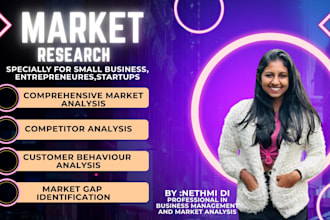



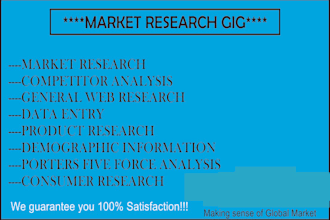



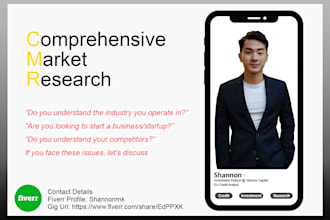

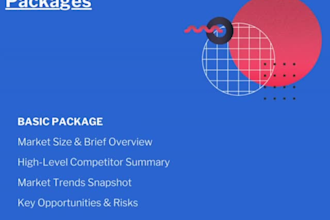








































I will do market research competitor analysis market analysis market research analysis
From $50Offers video consultations

















I will do comprehensive market research and industry research
Offers video consultations














Voice of Customer Research
Voice of Customer (VoC) research focuses specifically on capturing customer perceptions, expectations, and experiences with your products or services. This specialized research typically costs around $78 for basic VoC studies and helps businesses understand satisfaction drivers, pain points, and improvement opportunities directly from their customer base. VoC research becomes particularly valuable when you are refining existing offerings, reducing churn, or prioritizing product roadmap features based on actual user feedback rather than assumptions.
Customer Journey Mapping
Customer journey mapping visually documents every touchpoint and interaction customers have with your brand across the entire lifecycle. With average costs around $100, this research methodology combines qualitative interviews, observational studies, and data analysis to create comprehensive journey visualizations. Businesses typically invest in journey mapping when optimizing omnichannel experiences, identifying friction points in conversion funnels, or aligning organizational departments around customer-centric processes that improve overall experience quality.
Interviews and Focus Groups
In-depth interviews and moderated focus group sessions represent premium qualitative research methodologies, averaging $352 for professional execution. These approaches provide rich, nuanced insights into motivations, attitudes, and decision-making processes that quantitative surveys cannot capture. The higher investment reflects recruitment effort, moderator expertise, facility costs when applicable, transcription services, and thematic analysis. Companies typically choose interviews and focus groups when exploring new concepts, understanding complex purchase decisions, or gathering feedback on prototypes before significant development investment.
Statistical Modeling and Analytics
Advanced statistical services apply sophisticated analytical techniques to research data, including predictive modeling, segmentation analysis, conjoint analysis, or multivariate testing. Hourly rates range from $10 to $50 depending on complexity, with some basic fixed-price offerings starting around $15. These services add substantial value when you have existing data requiring deeper analysis, need to forecast market trends, want to identify hidden customer segments, or require quantitative validation of strategic hypotheses with statistical rigor.
Online Research Services
General online research services encompass secondary research, competitive intelligence gathering, industry report compilation, and desk-based market analysis. With average fixed pricing around $100 and hourly rates between $10 and $30, these services provide cost-effective information gathering when primary data collection is unnecessary. Businesses commonly use online research for initial market scans, regulatory landscape reviews, technology trend analysis, or compiling background information before committing to more expensive primary research initiatives.
Ongoing Costs and Hidden Expenses
Beyond the initial research investment, several recurring and incidental costs may affect your total expenditure. Understanding these additional expenses helps you budget accurately and avoid surprises during project execution.
- Respondent incentives for surveys or interviews typically add $5 to $100 per participant depending on audience exclusivity and time commitment required
- Survey platform subscriptions or panel access fees may cost $50 to $300 monthly if conducting research regularly rather than one-off projects
- Transcription services for recorded interviews generally run $1 to $3 per audio minute, adding $60 to $180 for a typical one-hour interview
- Translation costs for multi-country research typically range from $0.10 to $0.25 per word for questionnaires and reports
- Data visualization or custom dashboard development beyond standard reporting may add $100 to $500 depending on sophistication
- Follow-up consultation sessions or presentation meetings often incur additional hourly charges if not included in the original scope
- Data storage and privacy compliance measures may require additional investment, particularly for sensitive research in regulated industries
Frequently Asked Questions
How much does market research cost on Fiverr?
Market research costs on Fiverr vary widely based on methodology and scope, with fixed-price packages ranging from approximately $43 for basic influencer marketing research to $352 for comprehensive interviews and focus groups. General market research projects typically cost around $132, while specialized services like customer journey mapping average $100 and survey-based research runs about $73. Entry-level offerings such as basic online research or virtual research assistance start as low as $15 to $58, making preliminary market exploration accessible for businesses with limited budgets. Premium services combining qualitative and quantitative methods, or those requiring specialized industry expertise, naturally command higher rates reflecting the additional value, complexity, and time investment required.
What are the typical hourly rates for a market researcher?
Hourly rates for market researchers on freelance platforms span a considerable range, from $10 to $300 per hour depending on specialization and experience level. General online research typically costs $10 to $30 per hour, while survey design and execution ranges from $20 to $52 per hour. Consultation services command higher rates of $40 to $300 per hour, reflecting the strategic advisory component beyond basic data collection. Hourly pricing is most commonly used for exploratory projects with undefined scope, ongoing research partnerships requiring flexible engagement, or consultative relationships where the researcher provides periodic strategic guidance. Fixed-price packages are generally preferred for well-defined deliverables with clear methodologies, as they provide budget certainty and align researcher incentives with project completion rather than time expenditure.
What is typically included in a basic market research package?
Basic market research packages generally include a defined research objective, secondary data compilation from publicly available sources, competitor landscape analysis, and a summary report presenting key findings. For survey-based packages, you can expect questionnaire design with 10-15 questions, data collection from 50-200 respondents depending on pricing tier, basic descriptive analysis with frequency distributions, and charts visualizing primary results. The research report typically runs 5-15 pages covering methodology, findings, and high-level observations. Premium upgrades often include larger sample sizes, advanced statistical analysis, demographic segmentation, strategic recommendations beyond data presentation, executive summary presentations, or additional consultation time to discuss findings and implications. Expanding scope to include primary qualitative research, multi-country data collection, or ongoing tracking significantly increases investment, as these enhancements require substantially more time, specialized expertise, and often third-party costs for participant recruitment and incentives.

Related Guides




About the author
Tal Gonen Marketing & Branding Expert
Tal Gonen is a Marketing & Branding expert with 10 years of experience working with 15+ global brands across 20+ EMEA markets. She specializes in building growth strategies for SaaS startups, combining consumer insights with data-driven creativity to help entrepreneurs build brands and secure funding.
