How Much Does It Cost to Hire a Pianist in 2026?
Pianist costs in 2026 typically range from $50 to $550 per project, with hourly rates between $40 and $60, based on current marketplace insights.
 March 12, 2026
 10 minute reading
The demand for skilled pianists has surged significantly in 2026 as businesses across film, gaming, advertising, and digital media recognize the value of authentic instrumental performances. From crafting emotionally resonant soundtracks to delivering polished session recordings, professional pianists offer specialized services that elevate creative projects beyond what synthesized alternatives can achieve. As remote collaboration becomes industry standard, companies increasingly rely on freelance musicians to deliver broadcast-ready performances without the overhead of traditional studio sessions.
Current marketplace data reveals that pianist pricing varies considerably based on project complexity, deliverable format, and the musician's specialization. Basic transcription services may start around $40 to $60, while comprehensive music arrangement projects command $140 to $550 depending on scope and turnaround requirements. This guide examines the specific factors that influence pianist costs, breaks down pricing across different service categories, and provides clarity on which engagement model best suits your creative needs in the evolving landscape of 2026.
Average Pianist Costs
Based on recent Fiverr marketplace data, pianist services demonstrate considerable pricing variation depending on the specific deliverable and expertise required. Understanding these baseline figures helps businesses budget appropriately and set realistic expectations for professional musical services.
For music transcription focused on piano and keyboard instruments, fixed project pricing typically averages around $50, making this one of the most accessible entry points for businesses needing sheet music conversion or notation services. General instrument transcription services trend slightly lower at approximately $40 per project, while comprehensive music transcription packages average $58.
Session musicians specializing in piano and keyboard performances command an average of $73 for fixed-price engagements, reflecting the technical skill and recording quality required for production-ready tracks. Online music lessons, whether general instruction or instrument-specific piano tutoring, range between $55 and $58 per package, offering educational services alongside performance capabilities.
Composition and arrangement services represent the premium tier of pianist offerings. Music arrangement projects show considerable range, with fixed pricing averaging $140 in standard composer categories and reaching up to $550 when handled through specialized music production professionals. Hourly rates for arrangement work typically fall between $45 and $60, with average hourly engagements totaling approximately $352, indicating these projects often require substantial time investment.
Film and soundtrack composition services average $126.88 for fixed projects, with hourly options at $45 generating average project totals around $257. Musical theater composition commands higher fixed rates at approximately $243.60, reflecting the specialized knowledge required for theatrical contexts. Game composers typically charge around $113.49 per project, with some offering hourly rates at $40 that average $80 per engagement.
Additional production services that often involve pianist expertise include general music production at $132.24 average, remixing services at $95.42, composing and soundtrack work at $62.73, and ghost production averaging $135.65 with hourly rates spanning $40 to $60 depending on project requirements.
Which Pricing Model Is Best for You
Freelance pianists typically offer both hourly and fixed-price structures, each suited to different project scopes. Fixed pricing works exceptionally well for clearly defined deliverables such as recording a specific piece, transcribing sheet music, creating an arrangement of predetermined length, or delivering a set number of lesson sessions. This model provides cost certainty and works best when project parameters are established upfront.
Hourly pricing becomes advantageous for collaborative composition work where revisions and creative exploration are expected, ongoing consultation for larger productions, or projects where scope may evolve based on creative direction. This approach offers flexibility but requires clear communication about estimated time investment to avoid budget surprises. For complex arrangements or original compositions, many professionals provide hybrid approaches with base fixed fees plus hourly rates for revisions beyond a specified threshold.

What Influences Pianist Service Costs
Complexity and Length of Musical Material
Project complexity directly impacts pricing through the technical demands placed on the performer or arranger. A simple lead sheet transcription of a three-minute pop song with basic chord progressions might cost $35 to $50 and deliver within 24 to 48 hours. Conversely, transcribing a complete Rachmaninoff concerto movement with full orchestral reduction could require $200 to $400 and take five to seven days given the dense harmonic language and extensive notation required.
Arrangement complexity similarly affects costs. Converting a solo piano piece to a simple piano-vocal arrangement may add $80 to $120 to base transcription fees, while fully orchestrating a piano composition for ensemble performance could command $300 to $500 depending on instrumentation count and the sophistication of voicing required across instrument families.
Recording Quality and Production Requirements
The technical specifications of recorded deliverables substantially influence pricing. A basic home-studio recording suitable for demo purposes or social media content typically represents the baseline pricing tier. Professional-grade recordings requiring multi-microphone setups, high-resolution audio formats, and extensive post-production editing may increase costs by 40 to 70 percent compared to standard offerings.
Projects requiring specific recording environments add further considerations. A pianist with access to quality grand piano recordings can deliver superior tonal characteristics compared to digital keyboard alternatives, often justifying premium rates of $100 to $150 above standard service fees. Similarly, requirements for stems, isolated tracks, or specific mixing specifications extend production time and correspondingly increase project costs by $50 to $200 depending on deliverable complexity.
Turnaround Time and Revision Allowances
Standard delivery timelines typically range from three to seven days for most pianist services, with this timeframe reflected in baseline pricing. Expedited delivery requests commonly incur rush fees ranging from 25 to 50 percent of the base project cost. A composition normally delivered in five days might require a 30 percent premium for 48-hour completion, while same-day delivery could double standard rates.
Revision policies significantly impact overall project costs. Entry-level packages often include one or two revision rounds, while premium services may offer unlimited revisions within a specified timeframe. Projects requiring extensive back-and-forth typically benefit from hourly arrangements, as fixed-price engagements with numerous revision cycles can create friction. Additional revision rounds beyond package inclusions generally cost 15 to 25 percent of the original project fee per iteration.
Specialization and Stylistic Expertise
Pianists with specialized expertise in particular genres or historical periods command premium pricing reflecting their focused knowledge. A jazz pianist experienced in authentic stride, bebop, and modal improvisation may charge 20 to 40 percent above generalist rates for projects requiring stylistic authenticity. Classical specialists with conservatory training in Romantic repertoire similarly justify higher fees when projects demand period-appropriate interpretation and technical mastery of demanding literature.
Contemporary specializations also affect pricing structures. Pianists skilled in cinematic composition techniques, game audio implementation, or electronic music production integration offer cross-disciplinary value that extends beyond pure performance, often reflected in rates 30 to 60 percent higher than standard session work. These professionals understand not just musical performance but also how piano elements integrate within larger production contexts.
Usage Rights and Licensing Scope
The intended commercial application of delivered work substantially impacts final costs. Personal use projects, such as arrangements for private performance or educational transcriptions, represent the baseline pricing tier. Commercial usage rights, including broadcast, streaming, or public performance licenses, typically add 50 to 150 percent to base project costs depending on distribution scope.
Exclusive rights agreements, where clients obtain full ownership including future usage across all media, command the highest premiums. For original compositions, exclusive buyouts may cost three to five times the rate of non-exclusive licensing. Similarly, work-for-hire arrangements where the pianist relinquishes all authorship claims typically require compensation 100 to 200 percent above standard commercial licensing fees, particularly for compositions with significant commercial potential.
Cost Breakdown by Service Type
Understanding how pianist services segment by deliverable type helps businesses select the appropriate service tier and anticipate associated investment levels. Each category serves distinct creative needs with corresponding pricing structures.
Music Transcription and Notation
This entry-level service category focuses on converting existing recordings or performances into written sheet music. Basic transcription packages typically include accurate notation of melody and chord symbols, delivered as PDF or MusicXML files, with pricing around $20 to $30 per song of standard length (three to four minutes). This option suits musicians needing lead sheets, educators creating teaching materials, or composers documenting their work. Mid-tier transcription adds detailed articulation markings, dynamics, and pedaling suggestions, ranging from $40 to $70 depending on musical complexity. Advanced transcription capturing every nuance of a performance, including ornamental details and precise rhythmic interpretation, costs $80 to $120 and serves classical musicians, serious students, or archival projects requiring scholarly accuracy. If you need broader music transcription services beyond piano-specific work, marketplace options extend across all instruments and ensemble types.
Session Recording and Performance
Session work involves recording original piano parts for existing compositions or projects. Basic session packages deliver single-take recordings of straightforward material, typically costing $60 to $90 for tracks under four minutes. These suit demo recordings, YouTube content, or projects with flexible quality requirements. Professional session packages include multiple takes, musician interpretation input, and broadcast-quality recording standards, ranging from $120 to $200 per track. This tier serves podcasters, film projects, or commercial releases requiring polished results. Premium session work adds extensive creative collaboration, improvised sections, or technically demanding performances, commanding $250 to $400 per track. These engagements suit high-budget productions, virtuosic repertoire, or situations where the pianist's interpretive contribution significantly shapes the final artistic product. For projects requiring complete instrumental arrangements, exploring professional piano and keyboard session musicians provides access to specialists across classical, jazz, and contemporary styles.
Arrangement and Orchestration
Arrangement services transform existing compositions into new instrumental contexts or expand harmonic and textural elements. Simple arrangements, such as adapting a song for solo piano or creating a basic piano-vocal reduction, start around $100 to $150 and typically deliver within four to six days. These suit small ensembles, worship settings, or educational contexts. Intermediate arrangements adding countermelodies, reharmonization, or adaptation for small ensemble (trio to quintet) range from $200 to $350, often requiring one to two weeks given the compositional decision-making involved. Advanced orchestration projects, expanding piano works to full ensemble or creating complex multi-instrumental versions with sophisticated voicing, cost $400 to $550 and may require two to three weeks for completion. These serve professional ensembles, theatrical productions, or commercial recordings where arrangement quality directly impacts artistic success. Businesses seeking comprehensive arrangement services can find specialists experienced across genres from classical to contemporary commercial styles.
Original Composition
Custom composition represents the highest value tier, involving creation of entirely original musical material. Basic composition packages deliver simple piano pieces of one to two minutes, suitable for intros, interludes, or background content, typically costing $150 to $250. Mid-level composition services create more developed works of three to five minutes with thematic development and structural sophistication, ranging from $300 to $450. These suit independent films, game levels, or branded content requiring memorable musical identity. Premium composition packages deliver extended works, thematic suites, or pieces requiring specific emotional narrative arcs and advanced compositional techniques, commanding $500 to $800 or more. Film scores, theatrical productions, and high-profile commercial campaigns typically require this tier. Specialized contexts add further premiums; game composition averaging around $113 while film and soundtrack work ranges from $127 to $244 depending on usage scope and exclusivity requirements.
Music Lessons and Consultation
Educational services provide another dimension of pianist expertise. Basic lesson packages offering foundational technique instruction, repertoire guidance, or beginner-focused curriculum typically cost $50 to $70 per session hour. These suit aspiring musicians or businesses developing employee musical skills for creative roles. Intermediate instruction addressing specific technical challenges, advanced repertoire preparation, or genre-specific stylistic education ranges from $80 to $120 per session. Advanced consultation for professional development, performance preparation, or specialized topics like improvisation, interpretation, or composition technique commands $150 to $200 per session, serving professional musicians or serious pre-professional students. Those interested in structured learning can explore online music lessons for various instruments, with piano instruction representing one of the most requested specializations.
Related Service Costs


























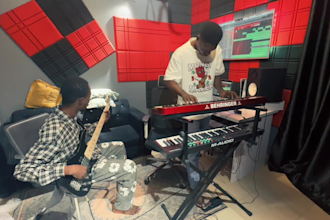

I will be your session pianist, piano, gospel pianist for your song
Offers video consultations
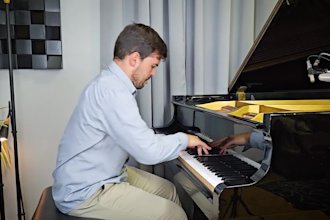




I will be the pro session pianist, piano player, music producer
Offers video consultations










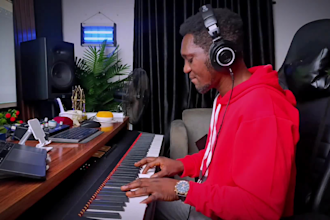

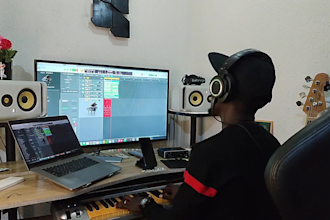




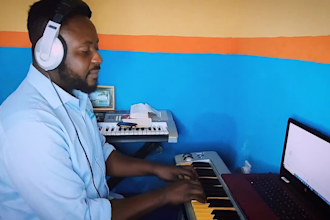



I will record piano keyboard, be your pianist, piano player, covers
Offers video consultations









I will record piano, keyboard, cover be your piano player, pianist jazz
Offers video consultations




Music Production and Mixing
While pianists deliver core musical content, many projects require subsequent production services to achieve commercial polish. Music production encompasses recording refinement, additional instrumentation, and sonic shaping that transforms raw piano recordings into finished tracks. Production services typically range from $63 to $132 for basic projects, extending to $550 for comprehensive packages involving multiple revision rounds and extensive sound design. Projects combining piano performance with full production eliminate the need for separate service engagements, streamlining workflow and often reducing total costs compared to hiring distinct specialists. This integration particularly benefits singer-songwriters, content creators, and small businesses developing branded audio content where cohesive sonic identity matters more than virtuosic performance alone.
Audio Editing and Post-Production
Even professional piano recordings often require technical editing to remove performance artifacts, adjust timing for synchronization with visual media, or create seamless loops for repetitive use cases. Audio editing services address these technical requirements without altering musical content, typically costing $30 to $80 per track depending on complexity. More extensive post-production, including dynamic range adjustment, EQ refinement, reverb treatment, and mastering for distribution platforms, adds $50 to $150 to project costs. For projects requiring pristine technical quality, such as streaming releases or broadcast applications, these services transform good recordings into exceptional final products. The investment proves particularly worthwhile when piano elements integrate within larger multi-track productions where sonic consistency across all elements determines overall professional quality.
Composition for Specific Media Contexts
While general composition services create standalone musical works, specialized media composition addresses unique technical and creative requirements of particular platforms. Film and soundtrack composers understand dramatic pacing, emotional cueing, and synchronization requirements that distinguish cinematic music from concert repertoire, with services averaging $127 for project-based work. Game composers navigate interactive audio requirements, looping structures, and adaptive music systems, typically charging around $113 per deliverable. Musical theater composers balance narrative support, character development, and theatrical performance constraints, commanding approximately $244 per composition. These specialists bring contextual expertise beyond pure musical craft, justifying premium rates through their understanding of how music functions within specific storytelling or interactive frameworks. Projects requiring platform-specific expertise benefit substantially from engaging specialists rather than general composers adapting their approach.
Licensing and Rights Management
Beyond creation and recording, many businesses require assistance navigating usage rights, performance licenses, and copyright considerations. While not typically offered as standalone services by pianists, rights consultation often accompanies commercial projects where usage scope significantly impacts pricing. Understanding whether a project requires mechanical licenses for cover recordings, synchronization licenses for visual media pairing, or performance rights for public presentation helps businesses budget appropriately. Some pianists with publishing industry experience offer consultation on these matters as value-added services, either included within premium packages or available at hourly consulting rates of $40 to $80. This expertise proves particularly valuable for businesses new to commercial music usage, preventing costly rights oversights that could compromise project viability.
Ongoing Costs and Hidden Expenses
Beyond initial project fees, several recurring or unexpected costs can affect total investment in pianist services. Anticipating these elements prevents budget surprises and supports more accurate financial planning.
- Revision cycles beyond package limits: While most services include one to three revision rounds, creative projects often require additional refinement. Each subsequent revision typically costs 15 to 25 percent of the base project fee, accumulating quickly across multiple iterations.
- File format conversions and alternate deliverables: Standard packages usually deliver common formats like MP3, PDF, or WAV files. Requests for specialized formats, stems, or multi-track sessions may incur $20 to $50 per additional deliverable type.
- Extended usage rights and license renewals: Initial licenses often cover specific timeframes or distribution scopes. Expanding usage to additional platforms, extending license duration, or converting limited licenses to perpetual rights can cost 50 to 100 percent of original project fees.
- Rush delivery premiums: Expedited timelines compress musician schedules and often require deprioritizing other work. Rush fees of 25 to 50 percent apply for accelerated delivery, with same-day requests potentially doubling standard rates.
- Technical consultation and project management: Complex projects involving multiple deliverables, extensive creative direction, or coordination with other production team members may require additional administrative time billed at $30 to $60 per hour beyond core creative work.
- Platform fees and payment processing: Marketplace transactions typically include service fees ranging from 5 to 10 percent of project value, affecting total investment even when not reflected in quoted service prices.
Frequently Asked Questions
How much does it cost to hire a pianist on Fiverr?
Pianist services on Fiverr span a broad pricing spectrum based on deliverable type and complexity. Entry-level offerings like basic music transcription start around $35 to $50 per song, while session recording services typically range from $60 to $120 for standard tracks. Arrangement and composition services represent premium tiers, with music arrangements averaging $140 and comprehensive packages reaching $550 for complex orchestration work. Film composition, game scoring, and theatrical music command specialized pricing from $113 to $244 depending on project scope and usage rights. Most services bundle related deliverables; for example, composition packages often include basic mixing and file format options, while transcription may include lead sheets plus chord charts within a single fixed price.
What are typical hourly rates for pianists?
Hourly pricing for pianist services generally ranges from $45 to $70 depending on specialization and project requirements. Music arrangement specialists typically charge $35 to $50 per hour, with average engagements totaling around $352, suggesting most arrangement projects require eight to ten hours of work. Film and soundtrack composition averages $35 hourly with typical projects reaching $257 total. Game composition sees hourly rates around $40, averaging $80 per engagement for more streamlined deliverables. Ghost production services span the widest range at $40 to $60 hourly with average projects at $189, reflecting varying complexity from simple backing tracks to comprehensive production packages. Hourly arrangements work best for collaborative projects where scope evolves through creative development, while fixed pricing suits well-defined deliverables with clear specifications.
What is typically included in a basic pianist service package?
Basic packages vary by service category but share common structural elements. Transcription packages usually include accurate notation of melody and harmony for one song, delivered as PDF sheet music with one revision round and standard five-day delivery. Session recording packages typically provide a single finished take of predetermined material up to four minutes, delivered as high-quality WAV or MP3 files with basic editing for clean starts and endings. Arrangement packages at entry level offer simple piano adaptations of existing songs, including lead sheet notation and basic harmonic enhancement with two revision opportunities. Lesson packages generally include one hour of live instruction via video call with topic consultation beforehand and summary notes afterward. Premium tiers expand these foundations with additional revision rounds, faster delivery, source file access, extended track lengths, or more sophisticated creative input, with costs scaling proportionally to added value and time investment required.

Related Guides




About the author
Fiverr Team
Fiverr is a leading digital freelance solution on a global scale, providing you with access to high-quality, specialized, and diverse human talent on an AI-enhanced platform. We pride ourselves on being the best place to get the most value for your budget—whether you’re part of a startup or Fortune 500, whether you need help on a simple task or complex project.
