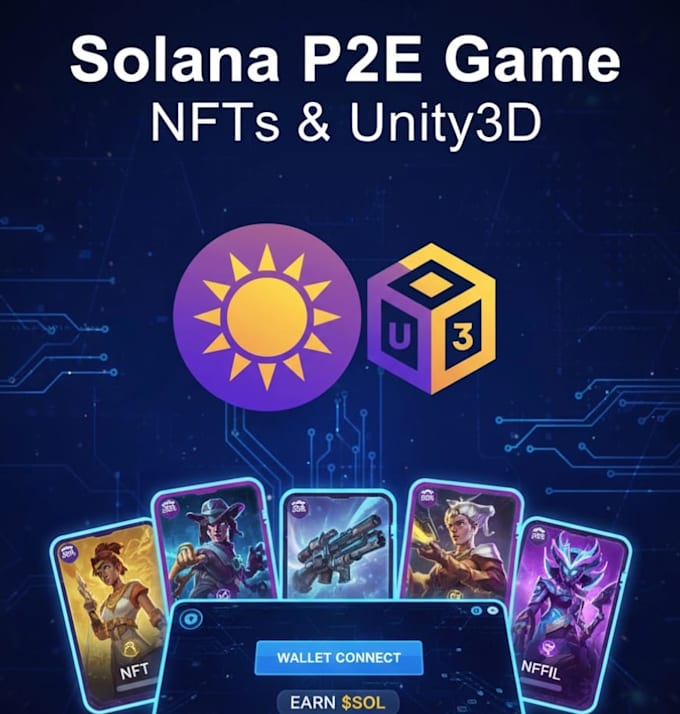
I will develop a solana p2e game and nft integration in unity3d


Level 2
About this gig
With over 4 years of experience in Unity3D (C#) and the Solana Ecosystem, I specialize in building high-performance, scalable Web3 games. I focus on creating a seamless experience where blockchain features feel like a natural part of the gameplay.
What I Offer for Solana Games:
- Advanced Unity3D Development: Professional 2D/3D gameplay for Mobile, WebGL, and PC.
- In-Game Marketplace: A fully functional shop where players can purchase items, skins, or power-ups using SOL or your custom SPL Tokens.
- NFT Utility & Token Gating: Implement logic where owning a specific NFT unlocks exclusive characters, hidden levels, or special abilitiesgiving real value to your digital assets.
- Professional Wallet Integration: I implement Phantom, Solflare, Backpack and Other Wallets connectivity using the latest Solana Unity SDKs, allowing players to sign transactions and verify ownership instantly.
- Backend-Validated Economy: A robust server-side architecture to verify all transactions, preventing cheating and ensuring every purchase or reward is legitimate.
- Play-to-Earn & Kill-to-Earn Mechanics: Real-time reward systems that distribute tokens or assets based on player performance and achievements.
Get to know Shahrukh Y.
Expert Unity Game Developer, Web3 Web2 and AI Apps
Level 2
- FromPakistan
- Member sinceMay 2017
- Avg. response time1 hour
- Last delivery3 days
Languages
Urdu, English
My Portfolio
FAQ
Can players use my own custom token to buy items in the game?
Absolutely. I can set up your in-game marketplace to accept SOL or any custom SPL token you’ve created.
How does the In-Game NFTs work?
My system scans the player's solana wallet for a specific NFT. If found, the backend sends a signal to Unity to "Unlock" that specific character or feature for the player instantly.
Is the game economy safe from hackers?
Yes. Since I use a secure backend to validate player actions, users cannot "inject" tokens or unlock characters by modifying the client-side code.