Browse categories
Explore
Fiverr Pro
English
$
USD
Financial Data Scientist, Data Analyst, Financial Engineer
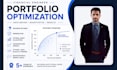
Maximize returns and minimize risk with institutional-grade portfolio optimization. As a professional Financial Engineer, I build data-driven asset allocation models using advanced Python finance libraries. Whether you manage equities, crypto, ETFs, or forex, I provide strict quantitative solutions to elevate your investment strategy.
What I Offer:
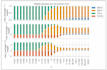
- Mean-Variance Optimization (MVO) & Efficient Frontier mapping
- Black-Litterman modeling incorporating your custom market views
- Advanced risk management: Risk Parity, VaR, CVaR, & Max Drawdown
- Performance metrics evaluation: Sharpe, Sortino, & Treynor ratios
- Historical backtesting & Monte Carlo performance simulations
The Tech Stack:
Python (Pandas, NumPy, CVXPY, Riskfolio-Lib), interactive Plotly analytics, or a deployment-ready Streamlit app.
Why Choose Me?
I deliver robust financial engineering code and modern interactive visuals. No generic AI spam just precise quantitative finance logic tailored to your exact investment constraints.
PLEASE MESSAGE ME BEFORE ORDERING to review your custom requirements and historical data assets!

Programming language:
Python
•
SQL
•
Colab
•
MLflow
•
Amazon SageMaker
Frameworks:
Scikit-learn
•
Google ML Kit
•
Keras
•
PyTorch
•
Panda
Do you provide financial, investment, or trading advice?
Absolutely not. I am a quantitative financial engineer offering technical and mathematical portfolio modeling.
What asset classes can your Python frameworks optimize?
Any asset class with clean historical pricing data! I can optimize custom mixes of US and international stocks, cryptocurrencies, ETFs, indices, commodities, and forex pairs.
Which Python libraries do you use to build the mathematical engine?
I leverage industry-standard libraries built for quantitative asset allocation, including Pandas and NumPy for data structuring, SciPy and CVXPY for advanced convex optimization, and Riskfolio-Lib to build institutional-grade risk metrics.
Will I receive the actual source code?
Clean, PEP8-compliant Python source code (.py scripts or interactive .ipynb Jupyter Notebooks) is included fully in both the Standard and Premium packages.


