Browse categories
Explore
Fiverr Pro
English
$
USD




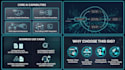
Looking to move beyond simple chat wrappers and build AI that actually takes action?
I architect and develop production-ready AI agents, multi-agent workflows, and RAG systems that execute business logic, query internal data, and integrate seamlessly with your software stack.
What I Build:
Tech Stack: Python, LangGraph, LangChain, OpenAI, Claude, Llama, Pinecone, Supabase, FastAPI
Every system is custom-engineered to your requirements with modular, fully documented code.
Please message me before placing an order to discuss your project scope and architecture.
Automating Business Workflows with Autonomous Agents and n8n
Languages
What do you need from me before we get started?
A brief summary of your desired workflow, access/documentation for any APIs or databases you want integrated, sample documents for RAG (if applicable), and your API keys. Please message me first so we can verify the scope.
What is the difference between a simple chatbot and an AI Agent?
A basic chatbot only generates text responses. An AI agent is equipped with memory, decision logic, and tools. It can autonomously search the web, execute API calls, query private databases, and perform multi-step business actions.
Why do you build with LangGraph instead of basic LangChain?
LangChain is great for linear chains, but real-world tasks require loops and decisions. LangGraph allows cyclical, stateful execution with multi-agent coordination, conditional branching, and self-correction when errors occur.
Can you connect the AI agent to my private business data (RAG)?
Yes. I build Retrieval-Augmented Generation (RAG) pipelines using vector databases like Pinecone, ChromaDB, and Supabase. The agent grounds its answers strictly in your PDFs, CSVs, Notion docs, or internal SQL databases.
Which LLMs do you work with?
I support OpenAI (GPT-4o), Anthropic (Claude 3.5 Sonnet), Google Gemini, and open-source models (Llama 3, Mistral) hosted locally via Ollama or via high-speed providers like Groq.
Can you build Model Context Protocol (MCP) integrations?
Yes. I build custom MCP servers and connect your agents to existing MCP-compatible tools and datasets, following modern standardized tool-use architectures.
How will the AI agent integrate with my existing app or website?
I wrap the agent logic in clean, documented REST endpoints using FastAPI. Your frontend or backend developer can easily communicate with it via standard HTTP requests and JSON schemas.
How do you prevent LLM hallucinations?
I implement strict semantic retrieval thresholds, deterministic output parsing with Pydantic schemas, clear system boundary prompts, and LangGraph validation loops that inspect answers before returning them.


