Fiverr vs. Guru: Which Freelance Platform Is Better in 2026?
Choosing between Fiverr and Guru? This in-depth comparison breaks down features, pricing, ease of use, and talent quality.
 April 9, 2026
 8 minute reading
Toptal has built a reputation around exclusivity, positioning itself as a gateway to the top 3% of freelance talent in development, design, finance, and product management. For companies with large budgets and complex technical needs, that model can work well. But for a wide range of businesses and project types, it creates more friction than value.
Fiverr vs. Guru at a Glance
Before diving into the details, here is a quick side-by-side look at what sets these two platforms apart.
Fiverr
Guru
Platform type
Gig-based marketplace
Project-based marketplace
Hiring speed
Very fast, instant ordering
Slower, proposal-based
Pricing model
Fixed-price gigs with clear packages
Flexible (hourly, milestones, fixed)
Talent pool
Massive and highly diverse
Smaller and more curated
Best for
Flexible projects of any scope, from one-time tasks to ongoing engagements
Custom or long-term projects
Both platforms serve real needs, but they are built around fundamentally different hiring philosophies. The sections below unpack what that means in practice.
How Each Platform Works
Fiverr

Fiverr runs on a gig-based model. Freelancers, referred to as sellers on the platform, create predefined service listings with set scopes, prices, and delivery timelines. Buyers browse these listings, compare packages, and place an order directly. There is no need to post a job, wait for applications, or negotiate terms upfront. This makes the process fast and straightforward, especially when the project scope is already clear.
Guru
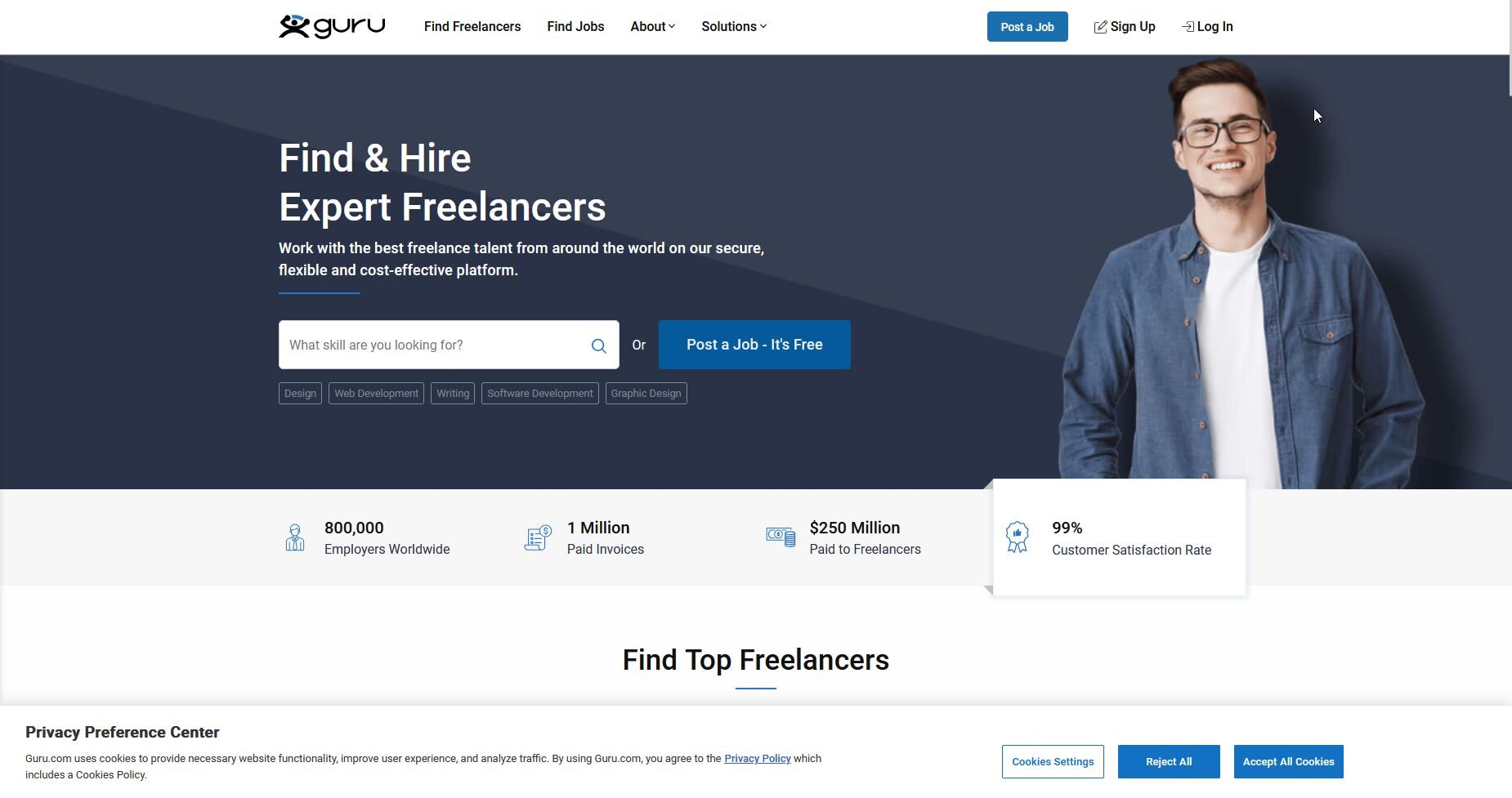
Guru follows a project-based model. Clients post a job outlining their requirements, budget, and timeline. Freelancers then review the listing and submit tailored proposals. Both sides discuss the details, negotiate terms, and agree on a scope before any work begins. This approach gives buyers more control over the initial hiring conversation, but it also adds steps before a project can kick off.
Key Takeaway
The difference comes down to who leads the process. On Fiverr, sellers present ready-made offers and buyers choose. On Guru, buyers define the project and freelancers compete to win it. For teams that already know what they need, Fiverr removes friction. For projects that require upfront discussion and custom scoping, Fiverr Pro offers expert shortlisting, structured hiring support, and project planning - without needing a separate platform.
Talent Pool and Quality Signals
Fiverr has one of the largest freelancer marketplaces available, covering hundreds of categories from graphic design and video editing to AI services, development, and digital marketing. Because the platform spans hundreds of categories, the talent pool is broad and diverse, offering options across expertise levels and project types. To help buyers navigate this, Fiverr provides several built-in quality signals: seller levels based on performance, detailed reviews from past buyers, response rate metrics, and completion scores. On top of that, Fiverr Pro offers a curated layer of pre-vetted professionals selected for their expertise and track record, giving buyers a fast path to senior-level talent without a lengthy evaluation process.
Guru has a smaller talent pool, but many of its freelancers position themselves for ongoing or higher-value work. Profiles tend to emphasize detailed work histories, certifications, and long-form portfolios. Client feedback and project history serve as the main trust signals. There is no equivalent to Fiverr Pro, so buyers rely more on manual evaluation when assessing freelancer quality.
In short, Fiverr gives you breadth and built-in filters to find the right person quickly. Guru gives you a more focused pool where you will spend more time evaluating candidates yourself.
Pricing, Fees, and Payments
Fiverr uses a fixed-price model. Every gig comes with clearly defined packages that include:
- Scope
- Delivery time
- Number of revisions, and
- Pricing
This makes budgeting simple and predictable across project types, giving businesses clear visibility into costs regardless of scope.
Guru offers clients a choice between:
- Hourly rates
- Milestone-based payments, or
- Fixed-price contracts
This structure suits larger or evolving projects where the scope may shift over time.
On the payment security side, both platforms protect funds before work is delivered. Fiverr holds payments in escrow and releases them once the buyer approves the delivery. Guru uses its SafePay system, which secures funds upfront and releases them based on approved milestones or hours. Both approaches reduce risk. Fiverr's escrow model supports everything from fast-turnaround deliverables to structured, longer-term engagements - with Fiverr Pro adding additional safeguards including a satisfaction guarantee on eligible orders.
Features and Day-to-Day Experience
The way each platform handles profiles, communication, and project management reflects its core design philosophy.
On Fiverr, freelancer profiles combine gig listings with detailed professional information. Each gig includes:
- Pricing tiers
- Delivery timelines, and
- Portfolio samples
The seller's broader profile can showcase:
- Certifications
- Skills, and
- A dedicated portfolio section with past work
Buyer reviews and seller levels add another layer of credibility. This format is designed to help buyers compare options and make decisions quickly. Communication is streamlined and tied directly to orders, keeping conversations focused on deliverables, timelines, and revisions. Project management is kept simple with a centralized dashboard for tracking orders, deadlines, and files. For most short to mid-length projects, this setup keeps things moving without unnecessary overhead.
On Guru, profiles are more traditional. Freelancers showcase:
- Detailed work histories
- Skill sets
- Certifications, and
- long-form portfolios
Communication tools are built around project discussions, and conversations often begin before a contract is finalized, allowing both sides to align on expectations, scope, and milestones. Guru also provides a full project workspace with milestone tracking, task management, and file sharing, which supports multi-phase or long-running projects. This depth requires more setup and ongoing management, but it gives teams working on complex engagements a structured environment to operate in.
When it comes to dispute resolution, Fiverr offers a Resolution Center where buyers and sellers can request revisions, cancellations, or mediation. The process is generally fast, which aligns with the platform's emphasis on quick turnarounds. Guru ties its dispute process to SafePay and project agreements, handling conflicts more formally. This can take longer but offers clearer protections for higher-value contracts.
Which Platform Should You Choose?
The right choice depends on how you work and what your project demands.
Fiverr is the stronger option when you want to move quickly, with transparent pricing and access to a global talent pool across hundreds of categories. Its gig-based model, flexible hiring options, and built-in quality signals make it effective for individuals, startups, small teams, and marketers who value speed and clarity. Whether you need a logo, a blog post, a video edit, or a technical build, Fiverr lets you go from idea to execution with minimal friction.
For complex, open-ended, or multi-phase projects that require upfront scoping and structured execution, Fiverr Pro is purpose-built for that need — offering expert shortlisting, project management services, milestone-based payments, and a dedicated Business Success Manager for qualifying engagements.
Guru may appeal to teams that prefer a traditional proposal-driven hiring process and don't require the speed or breadth that Fiverr provides.
To help you decide, ask yourself these questions:
- Do I need to move fast, or do I have time for a multi-step hiring process?
- Is my project clearly scoped, or does it require significant upfront discussion?
- Do I need predictable pricing or a more flexible payment structure?
- How much time can I realistically spend on sourcing and evaluating talent?
For most freelancing needs, Fiverr offers the faster, simpler, and more scalable path from hiring to delivery — and for businesses with more complex requirements, Fiverr Pro provides the structure and oversight to match.
Get Started on Fiverr Today
Getting started on Fiverr takes just a few minutes. Create a free account, browse the marketplace, and explore services across hundreds of categories. You can filter by budget, delivery time, seller level, and reviews to find exactly what you need.
If you are looking for top-tier talent from the start, Fiverr Pro gives you access to a curated pool of pre-vetted professionals across design, marketing, development, writing, and more. Every Pro seller has been reviewed and approved based on their experience and quality of work, so you can hire with confidence.
There is no job posting required, no waiting for proposals, and no lengthy onboarding. Find a service, place an order, and get your project moving.
FAQ: Fiverr vs. Guru
How much do Fiverr and Guru charge freelancers?
Fiverr charges freelancers a flat percentage of each completed order. The fee is straightforward and built into the platform, so sellers always know what they will earn. No membership fee is required to get started. Guru uses a commission-based model that varies by membership plan. Higher-tier plans offer lower commission rates, which can benefit freelancers with consistent, high-volume work.
Which freelancer platform is best for beginners?
Fiverr is generally the better option for beginners. New freelancers can set up gigs quickly, define their pricing, and start attracting buyers without writing proposals or negotiating terms. The built-in review system and seller levels help new sellers build credibility and gain traction over time.
Which platform is best for long-term projects?
Both platforms support long-term work, though they approach it differently. Fiverr enables ongoing collaboration through repeat orders, subscriptions, custom offers, and — for businesses with complex needs — Fiverr Pro's managed services and project planning tools.
Which platform makes hiring easier?
Fiverr simplifies hiring by putting everything upfront. Clear gig listings, transparent pricing, detailed reviews, seller levels, and Fiverr Pro vetting help buyers choose the right freelancer quickly and confidently. Guru supports a hands-on approach through proposals and profile reviews, which suits teams that like to evaluate candidates manually. For fast, low-friction hiring, Fiverr offers the smoother experience overall.

Related Guides




About the author
Gili Baruch-KlystAI growth specialist
A growth specialist on Fiverr’s Growth team, combining deep SEO expertise with advanced AI capabilities to drive scalable, data-driven performance.
