Freelancer Alternatives: A Comprehensive Comparison for Buyers and Sellers
Looking for the best Freelancer.com alternatives? We compare the top freelance platforms to help you find faster hiring, better talent matches, and more flexible pricing for your business needs.
 April 9, 2026
- Key Reasons for Seeking Freelancer Competitors
- Top 7 Freelancer alternatives to check out today
- 1. Fiverr: Best all-around freelance platform
- Become a freelancer today
- 2. Toptal: Best for pre-vetted, high-end developers and designers
- 3. Guru: Best for diverse skill sets and flexible payment options
- 4. SolidGigs: Best for time-saving job lead curation
- 5. GoLance: Best for low fees and crypto payments
- 6. MarketerHire: Best for vetted marketing experts
- 7. Upwork: Best for long-term projects and vetted talent
- Key features to evaluate when choosing a Freelancer.com alternative
- Start your next project on Fiverr
- FAQ
The demand for skilled freelance talent has never been higher. As of 2025, roughly 72.9 million Americans (nearly half the U.S. workforce) are working independently in some capacity.
Businesses need flexible, reliable freelance experts who can step in quickly and deliver high-quality work without the overhead of full-time hires. But as the market expands, so does the challenge of finding truly qualified professionals in a sea of options.
For years, Freelancer.com has been one of the biggest freelance platforms in the game, connecting millions of freelancers with global clients. But high fees, crowded listings, and mixed results have made it harder for companies to source specialized, dependable professionals. The platform’s scale can work against quality and efficiency.
That’s why many businesses are exploring alternatives built for today’s needs, with platforms that emphasize niche expertise, tighter vetting, and more transparent pricing. Among them, Fiverr stands out for its curated categories, flexible budgets, and consistent quality control.
Here’s a closer look at why you should look beyond Freelancer.com, how each platform compares, and key features to consider when evaluating your next freelance platform.
Key Reasons for Seeking Freelancer Competitors
As the freelance market grows, many businesses and creators are realizing that not all platforms deliver the same value. While sites like Freelancer.com offer scale, they often sacrifice quality, transparency, and trust in the process. Here’s why more professionals are moving to specialized alternatives that prioritize results over volume:
High service fees and costs
Rising platform fees and hidden charges cut into freelancer earnings and inflate client budgets. Over time, these costs make projects less sustainable for both sides.
Quality and consistency issues
Massive talent pools can lead to inconsistent work quality. Clients spend more time sorting through generic proposals instead of finding freelancers with proven experience.
Competition and price undercutting
High-volume bidding systems push freelancers to lower rates to stay competitive. This race to the bottom hurts skilled professionals and leaves clients struggling to find true expertise.
Security and scam concerns
Vague postings, fake profiles, and unreliable payment systems have raised concerns about trust and accountability. For many users, moving to better-vetted platforms is about peace of mind as much as performance.
Top 7 Freelancer alternatives to check out today
Best Freelancer alternatives at a glance:
Fiverr: Best all-around freelance platform for projects of any scope - from fast, fixed-price tasks to complex, long-term engagements with vetted professionals.
Upwork: Best for long-term, ongoing projects and vetted talent with built-in time tracking and contracts.
Toptal: Best for pre-vetted, high-end developers, designers, and technical experts for mission-critical work.
Guru: Best for diverse skill sets and flexible payment options across multiple small projects.
SolidGigs: Best for freelancers who want curated, high-quality job leads instead of scrolling marketplaces.
GoLance: Best for low fees, flexible contracts, and support for crypto-friendly payments.
MarketerHire: Best for vetted, senior-level marketing specialists who can plug into strategy and execution quickly.
1. Fiverr: Best all-around freelance platform

Fiverr
Fiverr has grown into one of the most comprehensive and efficient freelance platforms available today. Today, it’s one of the most efficient and user-friendly marketplaces for hiring freelance professionals across graphic design, writing and translation, digital marketing, programming and tech, and more. Businesses turn to Fiverr for fast, transparent, and high-quality projects, especially when they want defined deliverables, quick turnaround, and clear pricing upfront.
Unlike traditional bidding sites, Fiverr’s model is built around gig-based listings where freelancers showcase pre-defined services with transparent pricing. Each listing includes details like scope, delivery time, and add-ons, making it easy for buyers to find exactly what they need without the back-and-forth of negotiating proposals.
For businesses tackling complex, multi-phase, or high-stakes projects, Fiverr Pro provides access to a curated catalog of manually vetted freelancers reviewed by industry experts. Fiverr Pro includes expert-led talent sourcing, structured project planning, a satisfaction guarantee on eligible orders, and dedicated support - making it the right solution when outcomes matter most.
Fiverr features
Gig-based service: Freelancers create service packages tailored to specific deliverables.
Tiered service levels: Each gig offers Basic, Standard, and Premium tiers to match different budgets and needs.
Seller profiles: Portfolios, client reviews, and response metrics help buyers quickly assess quality and reliability.
Category variety: From video editing to SEO optimization, Fiverr covers nearly every business function.
Buyer protection: Payments are held in escrow until the buyer approves the work, adding a layer of trust.
Pros
Upfront pricing: Clear cost visibility before purchase.
Fast turnaround: Many gigs offer 24–48 hour delivery for smaller projects.
High talent volume: A large, global network means quick access to specialists in almost any niche.
Simple search: Robust filters help narrow results by budget, delivery time, and seller level.
Buyer protection: Payments are held in escrow until the buyer approves the work, adding a layer of trust.
Pricing
Fiverr uses transparent, upfront pricing across a wide range of tiers, processed through secure escrow until completion. Businesses can choose from pricing options that reflect expertise level and project complexity.
2. Toptal: Best for pre-vetted, high-end developers and designers
TopTal
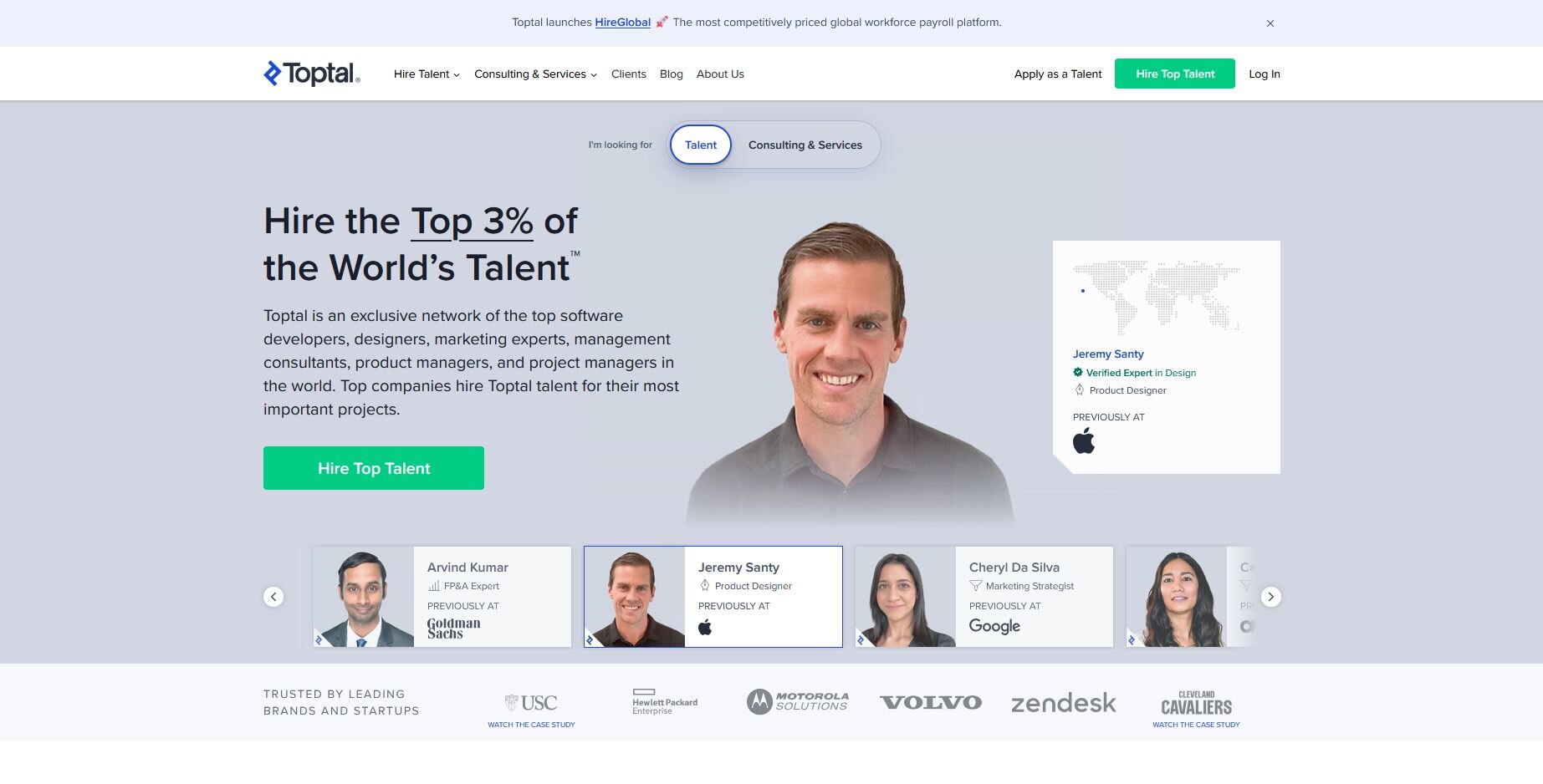
Toptal connects companies with elite developers, designers, project managers, and finance experts. It's designed for organizations seeking an additional layer of pre-screening for specialized technical and financial roles.
Toptal features
Selective talent pool: Toptal accepts a small percentage of applicants following a multi-step screening process focused primarily on technical and financial disciplines.
Rapid matching: Clients are paired with qualified freelancers quickly based on project requirements.
Trial period: A risk-free trial lets clients evaluate performance before long-term contracts begin.
Talent types: Focuses on technical, financial, and strategic roles.
Managed process: Handles contracts, invoicing, and ongoing engagement support.
Pros
Guaranteed quality: Every professional is pre-vetted, ensuring consistent excellence and reliability.
Speed in matching: The platform’s curated process means clients can start projects within days, not weeks.
Cons
High cost/premium pricing: The quality comes at a higher rate than most freelance platforms.
Not for small gigs: Best suited for substantial, ongoing projects rather than quick or low-budget tasks.
Smaller talent pool: The extreme selectivity means fewer available freelancers overall.
Limited scope: Primarily focused on technical, financial, and design roles and is less ideal for general creative or marketing work.
Pricing
Toptal requires an initial refundable deposit to begin sourcing talent. Rates are premium but transparent, with inclusive billing that covers contracts and management. There are no hidden fees or markups.
3. Guru: Best for diverse skill sets and flexible payment options
Guru
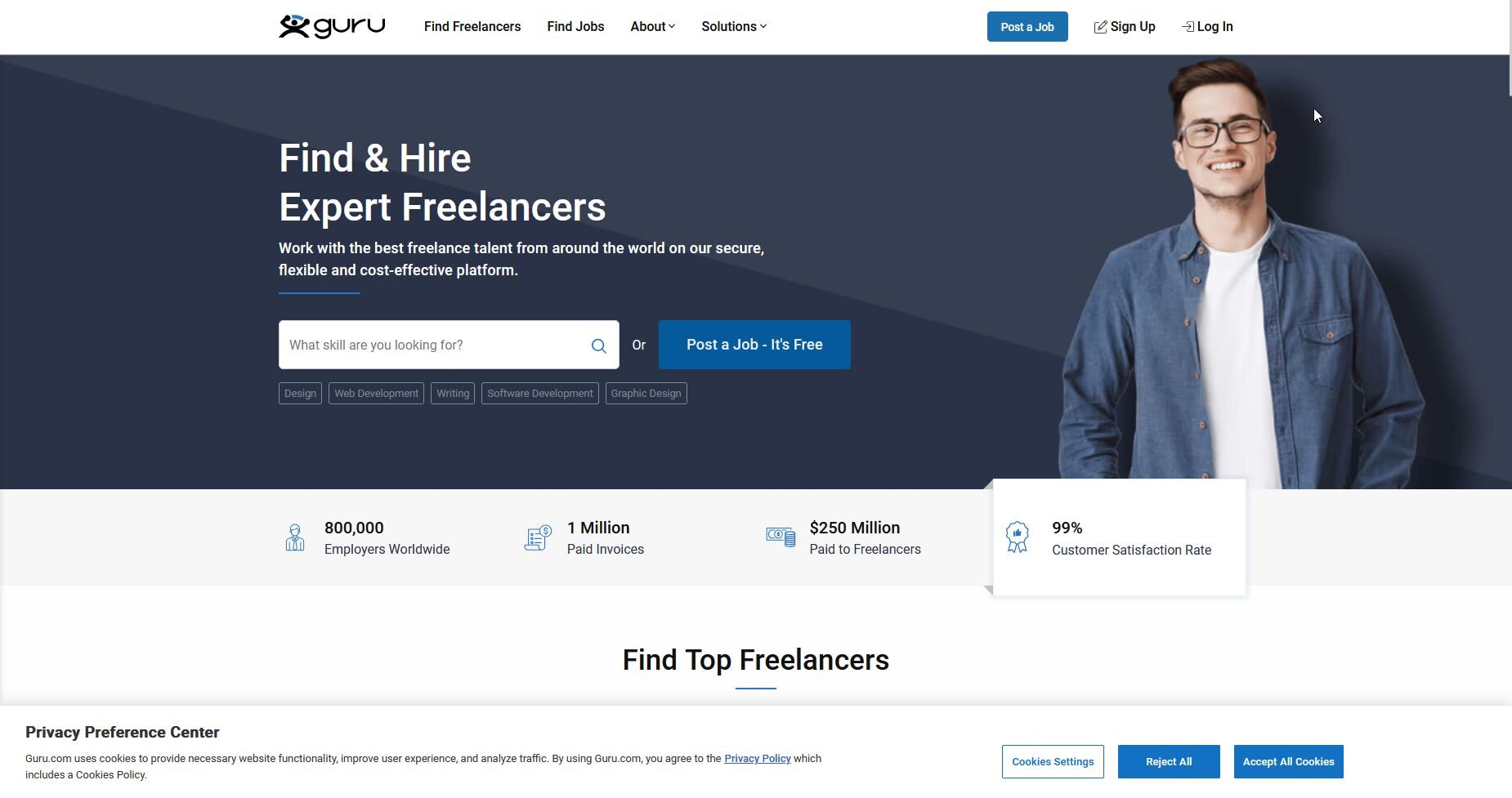
Guru offers a wide range of professional services and flexible payment structures that appeal to both clients and freelancers. It’s a practical choice for businesses managing multiple small projects or testing out new partnerships before long-term commitments.
Guru features
Multiple job posting methods: Clients can post open jobs or invite freelancers directly.
WorkRooms: Built-in project management spaces for collaboration and file sharing.
SafePay system: Escrow-based payment protection for secure transactions.
Payment flexibility: Options for hourly, fixed-price, milestone, or task-based payments.
Feedback system: Ratings and reviews to evaluate freelancer reliability.
Pros
High payment flexibility: Supports multiple payment and contract structures.
Cost-effective sourcing: Lower client fees make it appealing for budget-conscious teams.
WorkRoom functionality: Keeps communication and project files organized.
Accessible to new freelancers: Lower entry barriers expand talent variety.
Cons
Variable quality: Inconsistent vetting can lead to uneven results.
Less specialized depth: Broader focus makes niche expertise harder to find.
Outdated interface: The platform design and UX feel dated compared to competitors.
Limited global visibility: Smaller footprint than leading marketplaces.
Pricing
Clients pay a small service fee, while freelancers pay a membership-based commission. Payments are processed securely through the SafePay escrow system.
4. SolidGigs: Best for time-saving job lead curation
SolidGigs
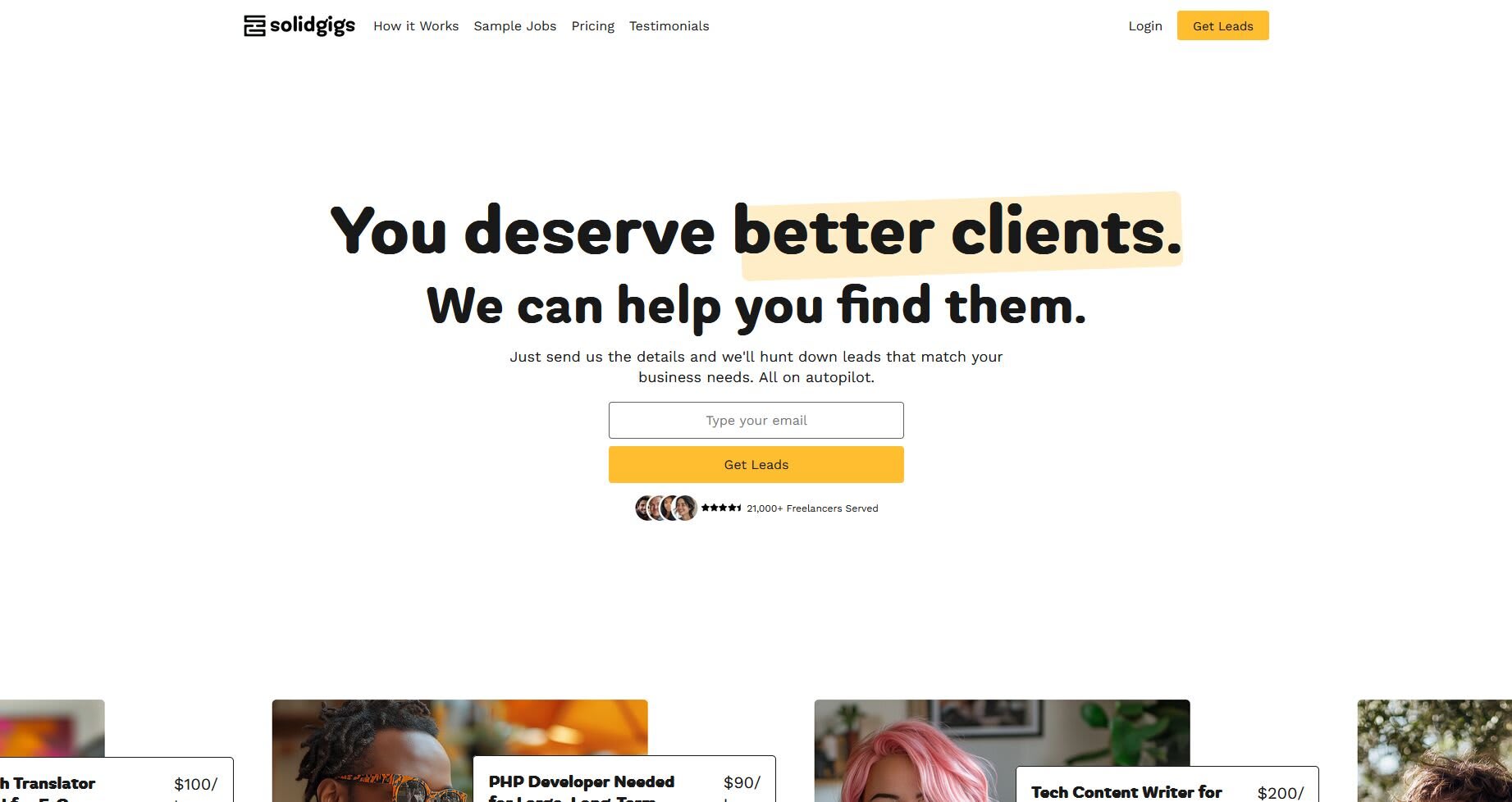
SolidGigs isn’t a traditional freelance marketplace. It’s a curated lead-generation service that helps freelancers skip the endless scrolling and bidding. Instead of applying on crowded platforms, users receive top-quality job leads directly in their inbox, handpicked to match their niche.
SolidGigs features
Curated job leads: Focus on the top 1% of freelance opportunities.
Email alerts: Personalized by niche or skill set.
Educational resources: Access to proposal templates, pitch guides, and training.
Platform-free growth: Freelancers maintain direct relationships with clients.
Pros
Saves time: Eliminates the hassle of searching and filtering job listings.
High-quality leads: Each opportunity is vetted for legitimacy and fit.
Flat fee model: No commissions taken from project earnings.
Client control: Freelancers manage contracts and payments independently.
Cons
Subscription cost: Requires a monthly or annual fee to access leads.
Not a marketplace: Freelancers still need to pitch and close deals themselves.
Limited to individuals: Not designed for agencies or large teams.
Lead volume: Smaller pool of curated listings compared to public platforms.
Pricing
A flat monthly subscription (around $49/month, with discounts for annual plans) covers unlimited leads and resources. There is no percentage-based commission on earnings.
5. GoLance: Best for low fees and crypto payments
GoLance
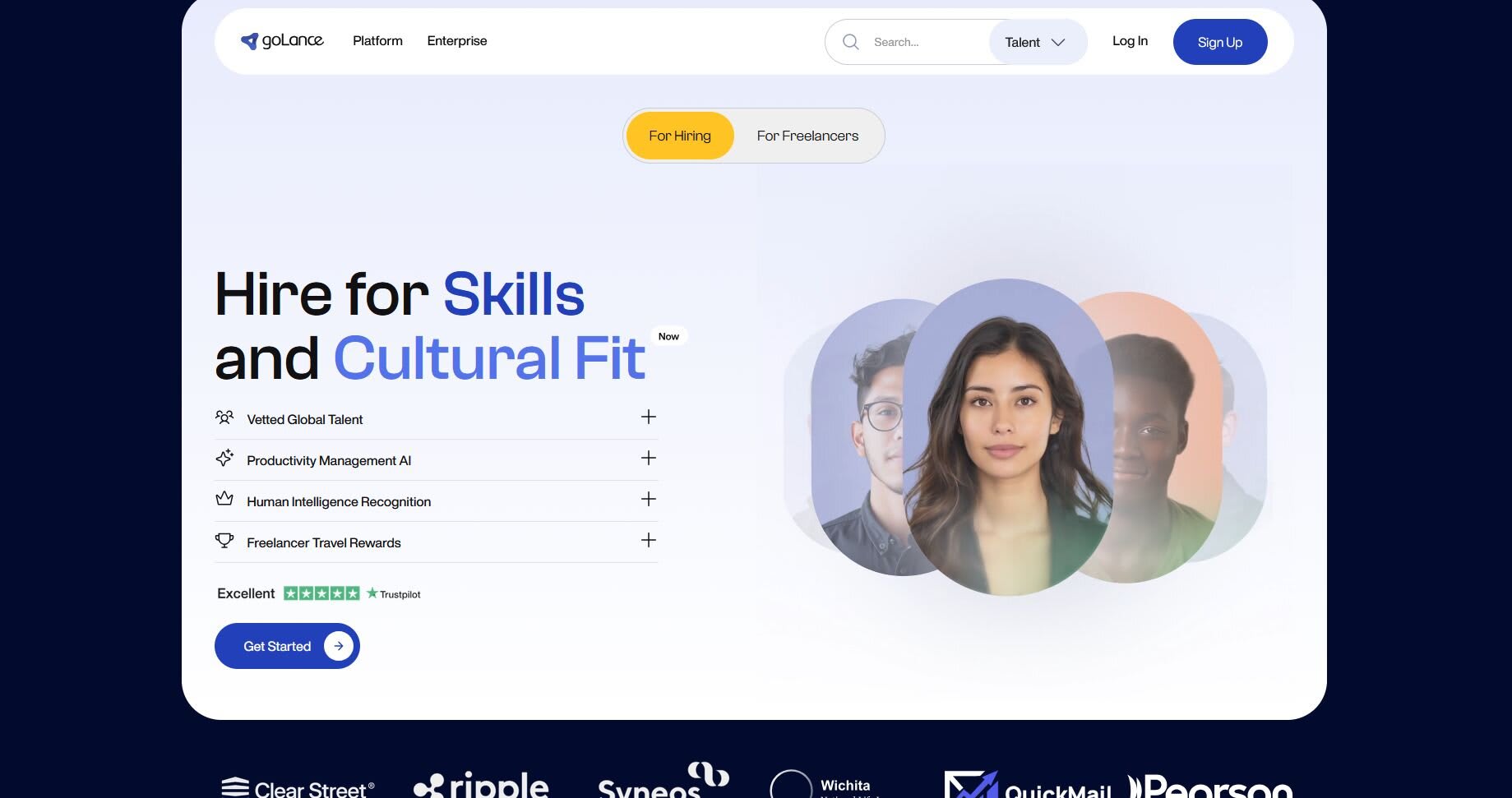
GoLance is a growing freelance platform known for its low fees, flexible payment options, and crypto support. It appeals to freelancers looking to maximize their take-home pay and clients who want transparent, low-cost hiring without hidden charges.
GoLance features
Low freelancer fees: Typically 7.95%–10%, below most competitors.
Flexible contracts: Hourly and fixed-price options supported.
GoMeter tracking: Tracks time and productivity for hourly jobs.
Crypto-friendly payments: Supports multiple currencies, including Bitcoin.
Zero client fees: Businesses pay nothing to post or manage projects.
Pros
Economical: Low commissions make it attractive for freelancers and small teams.
No client fees: Reduces barriers to posting new jobs.
Transparent listings: Job posts include clear client info and budgets.
Flexible payout options: Crypto, PayPal, and direct transfer are supported.
Cons
Smaller marketplace: Fewer listings than top competitors like Fiverr or Upwork.
High competition: Lower fees attract large applicant pools.
Occasional payment delays: Some users report longer processing times.
Limited enterprise support: Less robust for large-scale or long-term contracts.
Pricing
Clients pay 0% in fees, while freelancers are charged 7.95–10% per transaction. Payments are protected through the GoLance escrow system.
6. MarketerHire: Best for vetted marketing experts

MarketerHire
MarketerHire connects companies with senior-level marketing talent—from growth strategists and PPC managers to CMOs on demand. It’s built for speed and quality, providing access to top 5% vetted marketers ready to start within days.
MarketerHire features
Vetted marketing talent: Only the top 5% of applicants are accepted.
Rapid matching: Clients are paired with qualified marketers within 48 hours.
Dedicated manager: Each client gets a MarketerHire manager for onboarding and support.
Flexible commitments: Hire hourly, part-time, or full-time without long-term contracts.
Pros
Guaranteed quality: Every marketer is screened for experience and proven results.
Fast hiring: Projects can begin within days, ideal for brands under time pressure.
No client platform fees: Costs are limited to the marketer’s hourly rate.
Focused expertise: Deep specialization across marketing disciplines like SEO, paid ads, and content.
Cons
High hourly cost: Rates typically range from $80–$160+, reflecting senior talent.
Minimum commitment: Clients often need a $1,500+ monthly budget to start.
Marketing-only: Not suitable for technical or creative non-marketing roles.
Limited visibility: Freelancer profiles aren’t publicly browsable.
Pricing
Clients pay only the hourly rate set by the marketer, with no additional platform fees. However, there’s usually a soft monthly commitment (around $1,500) depending on project scope.
7. Upwork: Best for long-term projects and vetted talent
Upwork
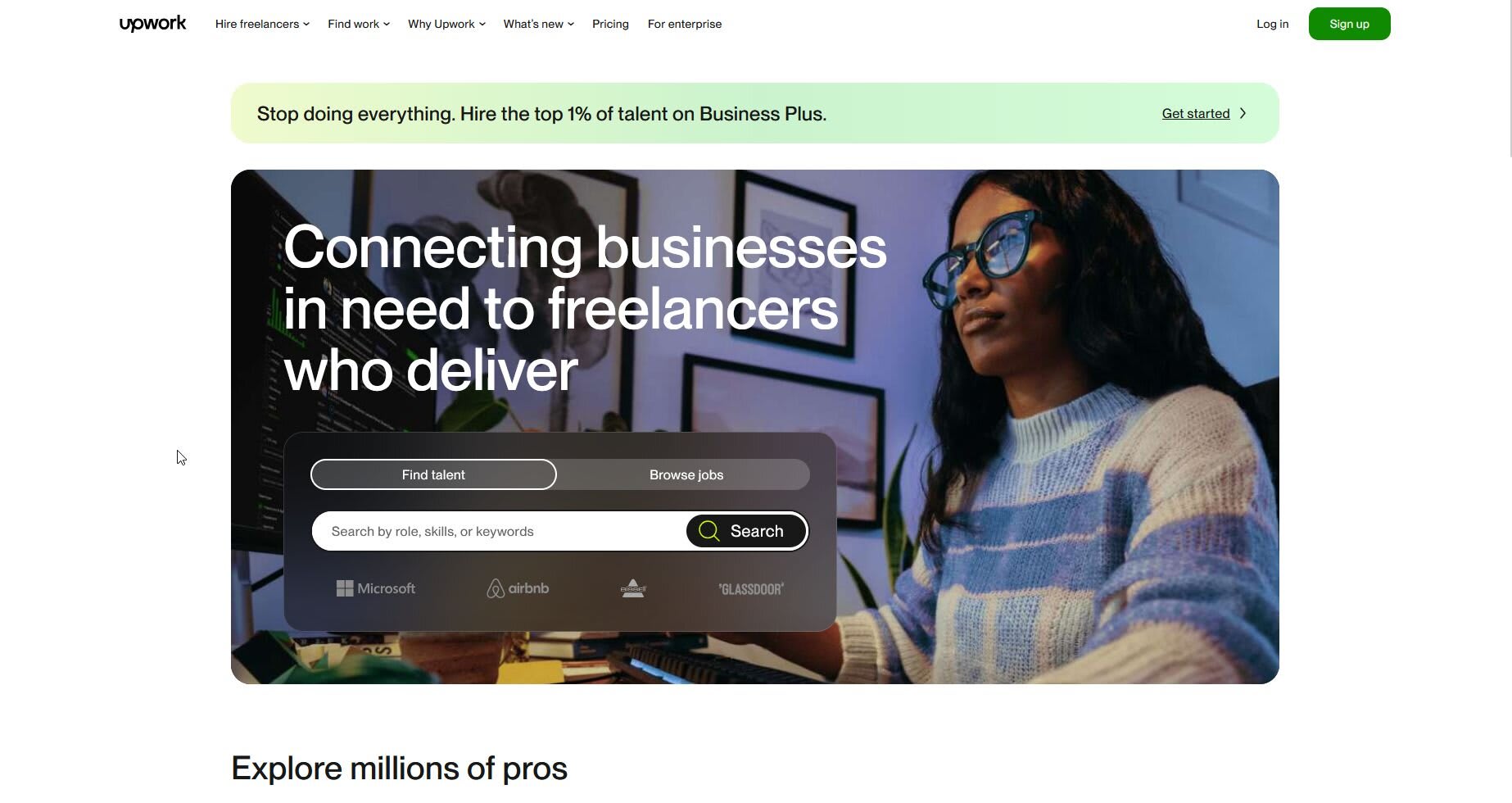
Upwork operates on a job-posting and proposal system that allows clients to outline their needs, set budgets, and evaluate bids. The platform supports both hourly and fixed-price contracts, with built-in tools for time tracking, invoicing, and milestone-based payments.
Upwork features
Job posting & bidding: Clients post detailed briefs, and freelancers submit tailored proposals.
Time tracking & invoicing: Integrated tools log hours and generate invoices automatically for transparency.
Talent scouting: Access to pre-vetted professionals through Upwork’s recruiting service.
Multiple contract types: Choose between hourly or fixed-price structures based on project needs.
Specialized programs: Options like Upwork Enterprise and Expert-Vetted Talent offer white-glove matching and management.
Pros
Robust payment protection: Funds are held in escrow until deliverables are approved.
Responsive customer support: Upwork provides accessible, 24/7 customer service through chat and ticket systems, along with a detailed help center.
Cons
High service fees: Freelancers pay up to 10% in service fees, which can raise overall project costs.
Connects system: Freelancers must purchase “Connects” to apply for jobs, adding a pay-to-play element.
High competition: With millions of users, standing out can be difficult, especially in crowded categories.
Pricing
Upwork charges a service fee for clients (typically around 5%) and a 10% freelancer service fee on earnings. Contract types include both hourly and fixed-price options, with escrow protection ensuring secure transactions for all parties.
Key features to evaluate when choosing a Freelancer.com alternative
Choosing the right Freelancer competitor platform is about fit. Each site has its own strengths, from niche talent pools to unique payment protections. Knowing what to look for helps businesses avoid mismatches and freelancers find the right opportunities. Here are the core features that matter most when comparing alternatives to Freelancer.com:
Unified commerce functionality: Look for platforms that integrate with your existing tools, like accounting software, CRMs, or project management systems, to keep operations seamless.
Reliability and uptime: Stable platforms ensure uninterrupted collaboration and accurate time tracking, especially when payments depend on logged hours.
Security features: Check for identity verification, payment protection, and escrow systems that safeguard both clients and freelancers from fraud or nonpayment.
Pricing transparency: Review commission structures, subscription models, and transaction fees to understand who bears the bulk of the costs.
Essential tools: Prioritize features like strong vetting, easy communication, portfolio visibility, and effective dispute resolution for a smoother experience.
Flexibility: Consider whether the platform supports both fixed-price and hourly contracts, allows you to scale talent up or down, and offers multiple payment options.
Start your next project on Fiverr
The best platform depends on your needs. But whether you're hiring for a one-time deliverable, scaling a team, or managing a complex, business-critical project, Fiverr offers the flexibility, talent depth, and structured support to match. For organizations that need expert vetting and dedicated hiring assistance, Fiverr Pro takes it further.
With transparent pricing, vetted professionals, and instant access to thousands of services (like copywriting, web design, video production, and voice over), you can go from idea to execution in hours, not weeks. Whether you’re hiring for a one-time creative project or building a long-term partnership, Fiverr is the fastest, most reliable way to get high-quality work done.
FAQ
1. Which alternative is best for finding full-time, high-level developers?
For businesses seeking elite developers, several platforms offer strong vetting processes. Fiverr Pro provides access to manually vetted, expert-reviewed developers for complex and high-impact builds, while Toptal takes a narrowly focused approach suited primarily to technical and financial roles.
2. How can a freelancer avoid high commission fees?
SolidGigs offers a flat monthly subscription with zero commissions, while GoLance charges some of the lowest freelancer fees in the industry. Another smart option is to use marketplaces to build initial credibility, then transition to direct client relationships to eliminate platform costs entirely.
3. Is the quality better on low-fee platforms like GoLance?
Not necessarily. While low-fee sites offer savings, they often lack the deep vetting of curated platforms like Toptal or MarketerHire. Clients using budget-friendly marketplaces should spend more time reviewing profiles, portfolios, and reviews before hiring.
4. What are some websites like Freelancer?
Several platforms offer strong alternatives to Freelancer.com, depending on your goals and budget. Fiverr supports a wide range of project types - from defined, fixed-price deliverables to complex, ongoing engagements - across dozens of categories including design, tech, marketing, and more. For businesses with strategic or large-scale needs, Fiverr Pro adds an additional layer of expert vetting and managed hiring support.
Upwork suits long-term collaborations with built-in project management tools, while Toptal focuses on elite, pre-vetted developers and designers. For niche or cost-conscious needs, Guru, GoLance, and SolidGigs may work.

Related Guides

 12 minute reading
About the author
Fiverr Team
Fiverr is a leading digital freelance solution on a global scale, providing you with access to high-quality, specialized, and diverse human talent on an AI-enhanced platform. We pride ourselves on being the best place to get the most value for your budget—whether you’re part of a startup or Fortune 500, whether you need help on a simple task or complex project.
