Best Toptal Alternatives in 2026: Top Freelance Platforms Compared
Toptal's premium pricing and narrow focus aren't for everyone. This guide compares the top freelance platforms in 2026 so you can find quality talent that fits your budget.
 May 5, 2026
 12 minute reading
Toptal has built a reputation around exclusivity, positioning itself as a gateway to the top 3% of freelance talent in development, design, finance, and product management. For companies with large budgets and complex technical needs, that model can work well. But for a wide range of businesses and project types, it creates more friction than value.
Why Look for Toptal Alternatives?
The most common reasons clients look elsewhere come down to four things.
Pricing
Toptal freelancers typically charge $60 to $200 or more per hour, which means even a modest project can run into thousands of dollars quickly.
Limited scope
Toptal covers only four service categories, so if you need a content writer, video editor, marketer, or voice actor, the platform simply does not serve you.
Speed
Toptal's concierge matching process can take days or weeks before work begins, which does not suit teams working on tight timelines.
Accessibility
The platform is designed for established companies with substantial budgets, which leaves out startups, small businesses, and individuals who need quality work without enterprise-level commitment.
What most people want from an alternative is straightforward: access to skilled professionals across a wider range of services, faster hiring, transparent pricing, and the flexibility to start small without locking into expensive hourly engagements.
Top Toptal Alternatives at a Glance
Before diving into each platform, here is a quick comparison of the five strongest alternatives available in 2026.
Platform
Best for
Typical pricing
Standout feature
Fiverr
Fast, clearly scoped work across any category
$50-$500 per project
Fiverr Pro vetted talent & 700+ categories
Freelancer.com
Budget-driven projects and design contests
$10-$75/hr or $100-$1,000 fixed
Contest system for comparing multiple submissions
Guru
Payment flexibility and structured collaboration
$20-$85/hr
SafePay escrow + multiple payment models
PeoplePerHour
European markets and hybrid hiring
$25-$90/hr or $50-$500 fixed
UK/EU talent focus + AI matching
Upwork
Long-term contracts and large talent pools
$15-$100/hr or fixed price
Largest freelancer pool with flexible engagement models
Each platform has distinct strengths depending on your budget, timeline, and the type of work you need done. The sections below break down what each one offers in more detail.
1. Fiverr - Best Overall Alternative

Fiverr is a gig-based marketplace where freelancers list predefined services with clear pricing, scope, and delivery timelines. Instead of posting a job and waiting for proposals, buyers browse listings, compare packages, and place orders directly. Most projects fall in the $50 to $500 range, and delivery often happens within days, sometimes within 24 to 48 hours.
Where Toptal covers four categories, Fiverr spans over 700, including:
- Writing
- Marketing
- Video Production
- Voice Acting
- AI Services
- Business Consulting, and everything Toptal does cover in development and design
This makes it a practical option for teams that need different types of work done without juggling multiple platforms.
For clients who want a higher tier of quality assurance, Fiverr Pro offers a curated layer of pre-vetted professionals. Pro sellers are reviewed and approved based on experience and proven results, and the program includes a 100% money-back guarantee. Fiverr Pro also supports shared team accounts with unlimited members, streamlining how businesses manage freelance hiring at scale — including complex, multi-phase, or long-term engagements.
2. Freelancer.com

Freelancer.com operates on a competitive bidding model where clients post projects and freelancers submit proposals with their pricing. What sets it apart is its contest system, which is particularly useful for design work. You post a brief, multiple freelancers submit completed work, and you choose the winner. This lets you compare actual output before committing.
Typical hourly rates range from $10 to $75, with many fixed-price projects falling between $100 and $1,000. Clients pay a 3% project fee or a $3 minimum, whichever is greater. Freelancers are charged 10% of the project value or $5 minimum. The platform draws talent from 247 countries, giving it wide geographic reach.
Quality can vary more than on curated platforms, and the volume of proposals requires time to sort through. It suits clients who are comfortable investing effort in evaluation to find the right fit at the best price.
3. Guru
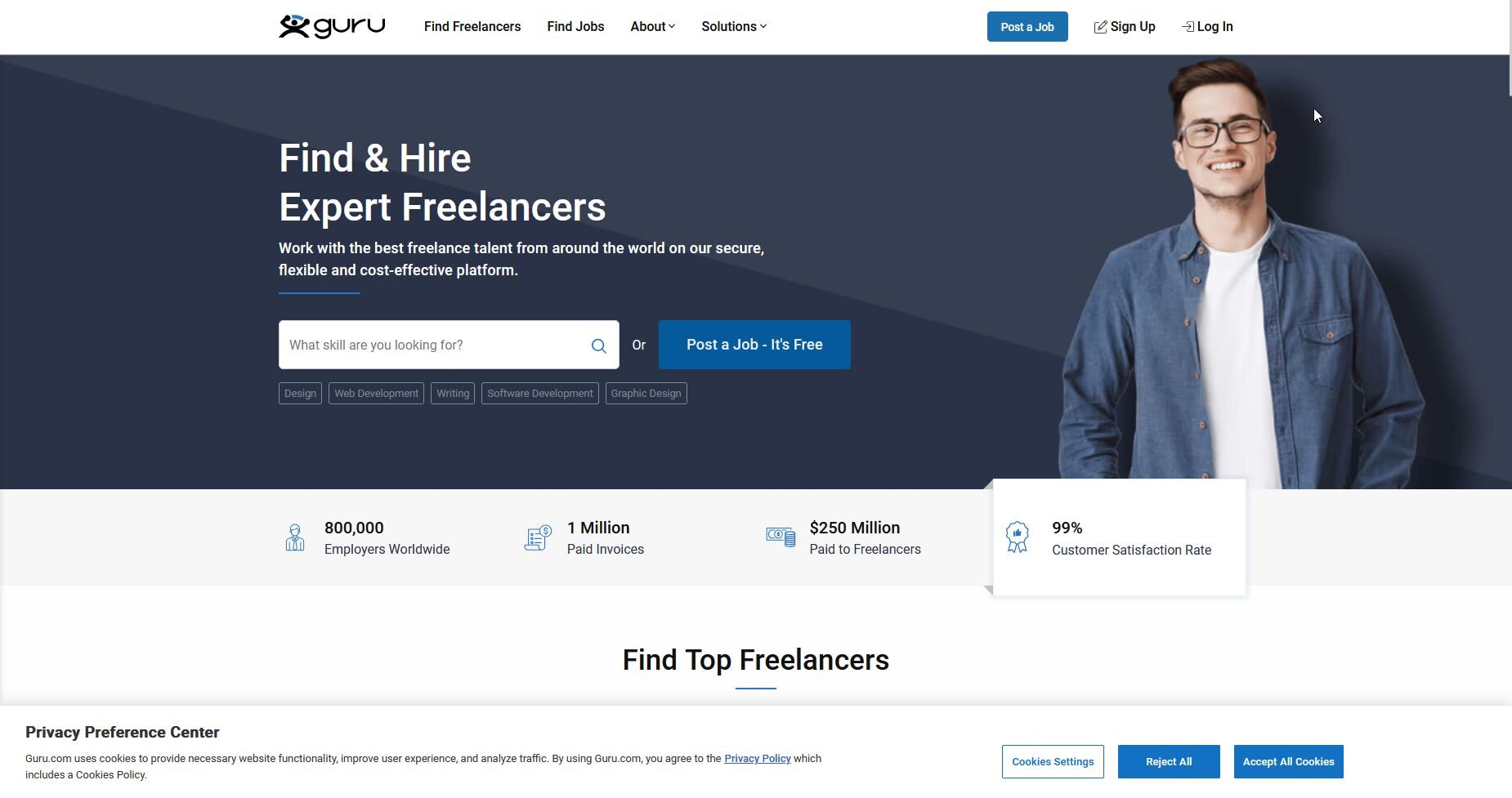
Guru combines a freelance marketplace with flexible payment and collaboration tools. Its SafePay escrow system secures funds before work begins, and clients can choose from hourly, fixed-price, task-based, or recurring payment structures depending on the project. WorkRooms provide dedicated collaboration spaces with file sharing, messaging, and progress tracking.
Typical rates fall between $20 and $85 per hour. Clients pay a processing fee of around 2.9%. Freelancers choose from membership tiers that affect how many bids they can submit and their service fee rate, which generally ranges from 5% to 9%.
Guru's talent pool is smaller than platforms like Fiverr or Upwork, and the interface can feel less modern. It works best for clients who value payment structure and ongoing collaboration over speed.
4. PeoplePerHour
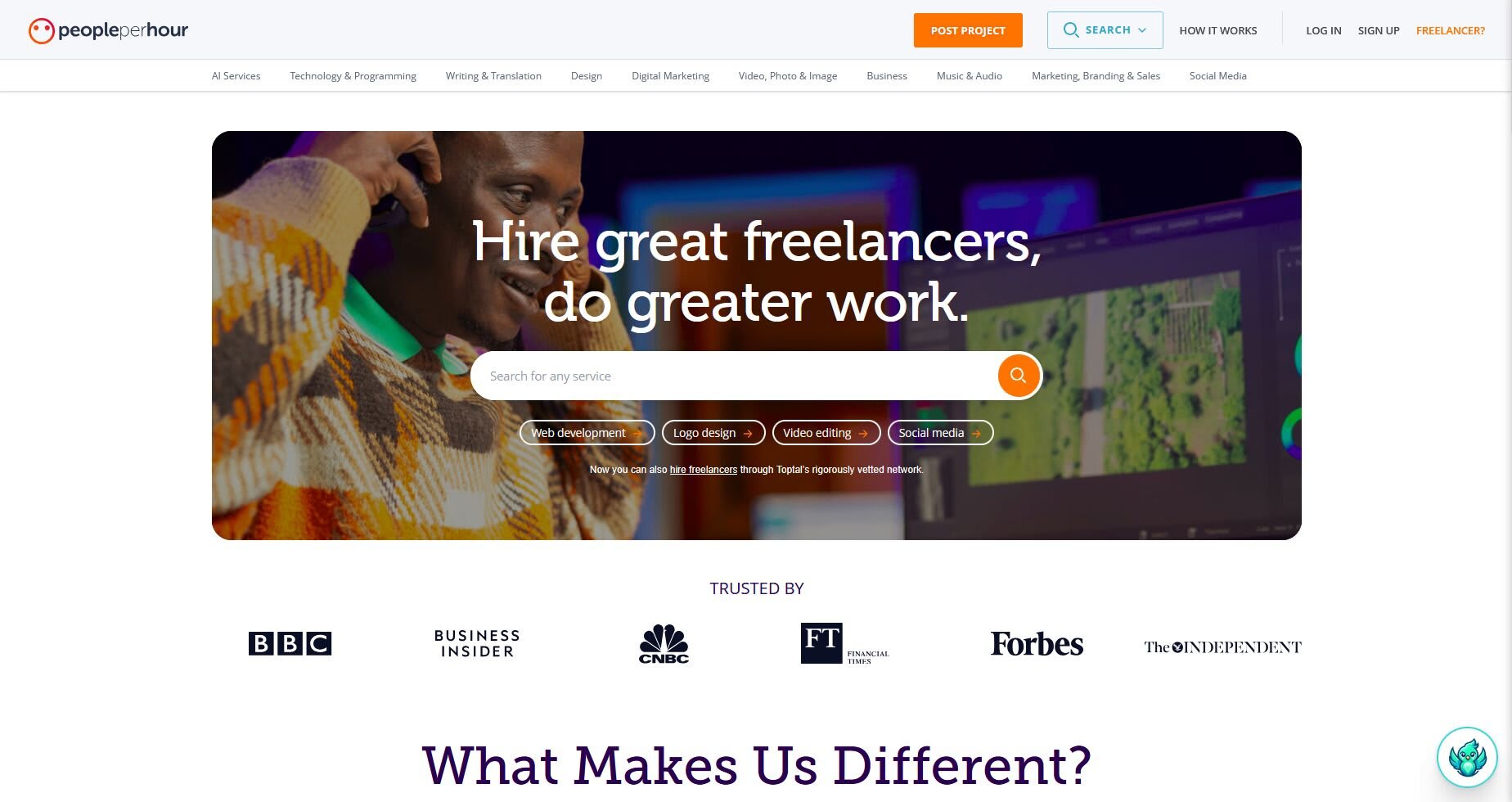
PeoplePerHour focuses on connecting UK and EU businesses with regional freelancers. The platform offers Hourlies, which are fixed-price service packages similar to Fiverr's gig model, alongside traditional project-based hiring. AI matching suggests relevant freelancers based on project requirements, and curated lists highlight verified professionals.
Hourly rates typically range from $25 to $90, with Hourlies priced between $50 and $500. Clients pay a 5% service fee. Freelancers pay a sliding fee starting at 20% that decreases to around 7.5% as lifetime earnings with each client increase.
The platform has a smaller user base outside Europe and fewer freelancers overall than larger marketplaces. It is best suited for clients who specifically want European talent or value regional alignment.
5. Upwork
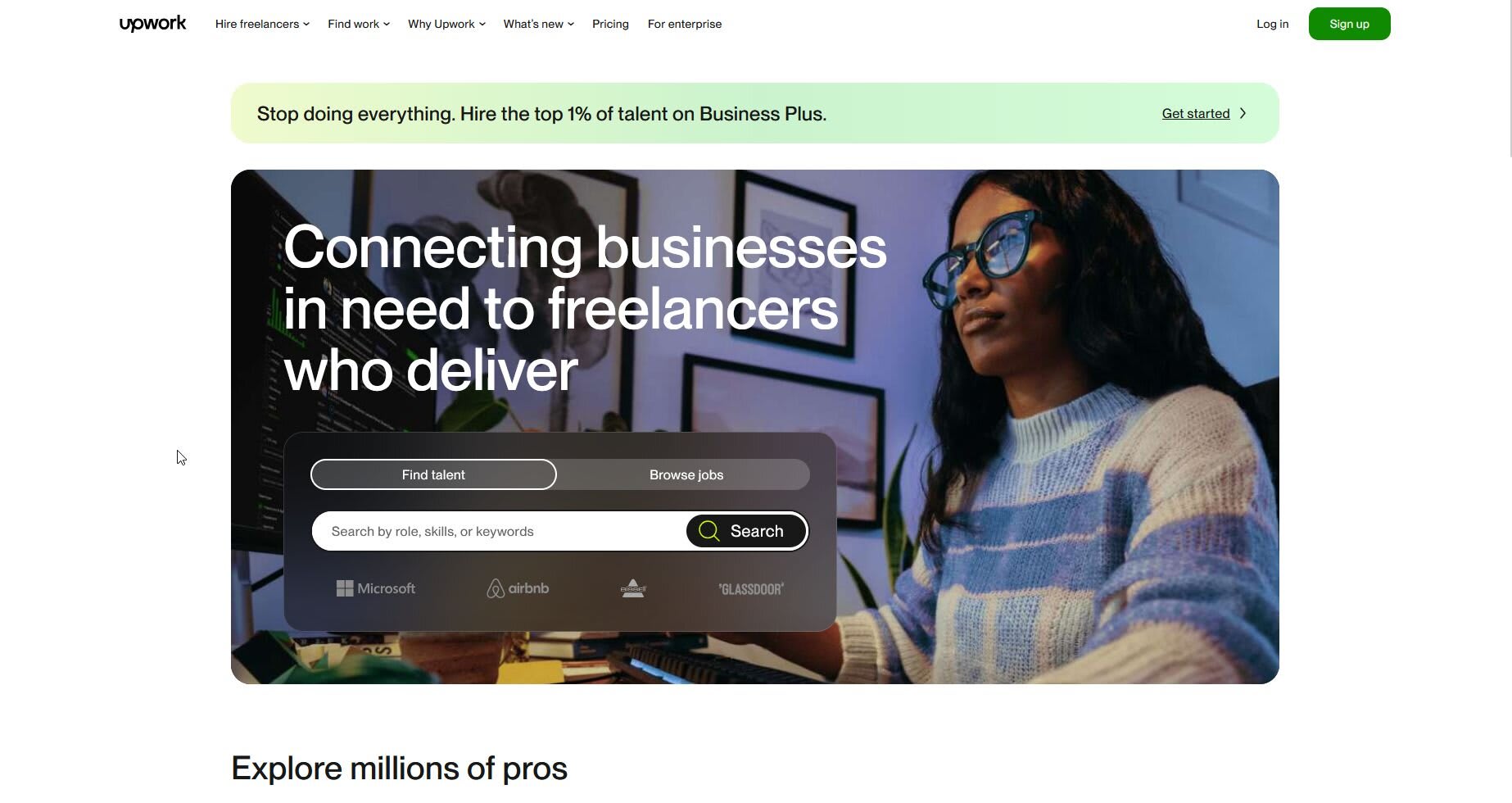
Upwork is a platform that uses a traditional job posting and proposal system. Clients post a role or project, freelancers submit applications, and both sides interview and agree on terms before work begins. Contracts can be hourly or fixed-price, and the platform supports long-term ongoing engagements.
Hourly rates range from $15 to $100 depending on skill level and specialization. Clients pay a 5% marketplace fee. Freelancers pay a sliding service fee: 20% on the first $500 billed with each client, 10% from $500 to $10,000, and 5% beyond $10,000. This fee structure incentivizes long-term relationships.
The proposal-based model requires more time to post jobs, review applications, and manage hiring. Quality varies widely without careful vetting, and the volume of proposals can feel overwhelming for first-time clients.
Which Platform Should You Choose?
The right platform depends on what your project actually requires, and across most of those requirements, Fiverr delivers the strongest combination of flexibility, speed, and access to expertise.
For businesses that want full control over hiring with transparent, upfront pricing across any service category, Fiverr's marketplace offers an unmatched range of over 700 categories with flexible engagement models to match. For companies working on complex, long-term, or business-critical projects, Fiverr Pro provides manually vetted professionals, expert-led sourcing, structured project support, and a satisfaction guarantee — making it a serious solution for high-stakes work at any scale.
The other platforms on this list each serve specific circumstances. If you are working on a tight budget and want to compare multiple design submissions before committing, Freelancer.com's contest model offers that flexibility. If payment structure and built-in collaboration tools are your primary concern, Guru provides useful options for ongoing engagements. If you specifically need UK or EU-based talent, PeoplePerHour has the strongest regional focus for those markets. And if you are hiring for a long-term role and need access to a large talent pool with flexible contract structures, Upwork provides the scale to support that.
For most businesses — from startups and growing teams to established companies managing complex builds — Fiverr covers the full range. The marketplace handles speed and breadth. Fiverr Pro handles vetting, structure, and complexity.
Get Started on Fiverr Today
Getting started on Fiverr takes just a few minutes. Create a free account, browse the marketplace, and explore services across over 700 categories. You can filter results by budget, delivery time, seller level, and reviews to find what you need quickly.
If you are coming from Toptal or considering it, Fiverr Pro is worth a close look. It offers vetted, top-tier professionals with a 100% money-back guarantee and team account features, giving you premium quality and buyer protections.
There is no job posting required, no waiting for proposals, and no lengthy onboarding. Find a service, place an order, and get your project moving.
FAQ: Toptal Alternatives
What is the best alternative to Toptal?
Fiverr is the best overall alternative for most clients. It covers over 700 service categories at typical project costs of $50 to $500, compared to Toptal's $60 to $200+ per hour across only four categories. Fiverr Pro provides vetted professionals for clients who want premium quality without enterprise pricing.
Is Fiverr better than Toptal?
It depends on what you need. Fiverr offers far more accessible pricing, faster project delivery, and a dramatically wider range of services. A project costing $500 on Fiverr might cost $5,000 to $10,000 on Toptal. For the majority of freelance needs, Fiverr provides strong value. For businesses requiring elite senior developers with additional vetting and managed services, Fiverr Pro offers a structured, expert-led solution with a satisfaction guarantee.
What are the main differences between Toptal and Fiverr?
The core differences are pricing, scope, and hiring speed. Toptal charges $60 to $200+ per hour for the top 3% of talent in development, design, finance, and product management, with a matching process that takes days to weeks. Fiverr offers pre-packaged services across 500+ categories at $50 to $500 per project with instant booking. Toptal targets enterprise clients with large budgets. Fiverr serves businesses of all sizes that want quality work at accessible prices with full control over the hiring process.

Related Guides



About the author
Gili Baruch-KlystAI growth specialist
A growth specialist on Fiverr’s Growth team, combining deep SEO expertise with advanced AI capabilities to drive scalable, data-driven performance.
