 August 3, 2026
 8 minute reading
As digital transformation accelerates in 2026, businesses across industries recognize that quality assurance is no longer optional but essential for competitive survival. Organizations launching software products, mobile applications, or digital platforms understand that bugs, security vulnerabilities, and poor user experiences can damage brand reputation and customer trust within hours. The shift toward continuous deployment and agile methodologies has made quality assurance experts indispensable partners in development workflows. Companies now routinely engage quality assurance professionals to ensure their digital products meet rigorous standards before reaching end users, protecting both customer satisfaction and business outcomes.
Current marketplace data reveals that quality assurance expert costs vary significantly based on service type, expertise level, and project complexity. Software testing services on platforms show hourly rates ranging from $12 to $90, while specialized services like blockchain security audits command fixed project fees around $328 to $1,200. Code review services average approximately $78, while comprehensive QA packages typically start near $98. These pricing variations reflect differences in technical depth, industry specialization, and the scope of testing required. This guide explores the factors driving these cost differences, breaks down pricing by service type and expertise level, and helps you understand which investment level aligns with your quality assurance needs.
Average Quality Assurance Expert Costs
Based on recent Fiverr marketplace data, quality assurance professionals offer diverse pricing structures reflecting the breadth of services within this field. Understanding these baseline rates helps businesses budget appropriately and identify which service categories match their technical requirements.
Software Testing services show the widest accessibility, with hourly rates from $12 to $90 and fixed project pricing starting as low as $25, averaging around $74 for standard QA packages. This broad range accommodates everything from basic functionality testing to comprehensive test automation suites.
Code Review services typically command fixed project fees averaging $78, providing developers with expert evaluation of code quality, security vulnerabilities, and adherence to best practices. Design Review services, focusing on user interface and experience validation, average approximately $65 per project.
More specialized technical services demonstrate premium pricing. CI/CD implementation and testing within DevOps contexts range from $20 to $200 hourly, with fixed projects averaging between $97 and $127. DevOps consulting that includes quality assurance processes shows hourly rates around $32 with project averages near $155.
Highly specialized domains command the highest rates. Blockchain Security Audits, requiring deep cryptographic and smart contract expertise, average $328 per project. BIM Coordination and Clash Detection for construction and engineering projects can reach $1,200 for comprehensive quality validation.
Technical Support services incorporating quality assurance elements range from $12 to $140 hourly, with fixed project pricing averaging $72. These services often combine troubleshooting with proactive quality monitoring.
Which Pricing Model Is Best for You?
Quality assurance experts typically offer both hourly and fixed-price arrangements, each suited to different project characteristics. Hourly pricing works best for ongoing testing needs, continuous integration environments, or projects where scope may evolve as issues emerge during testing cycles. This model provides flexibility when you need sustained QA services integrated into development sprints or when testing requirements cannot be fully defined upfront.
Fixed-price packages suit well-defined projects with clear deliverables, such as testing a specific application version, conducting a one-time security audit, or reviewing code for a completed module. This approach provides cost certainty and works well for businesses with defined budgets and specific testing milestones. Many professionals offer tiered fixed packages covering basic, standard, and comprehensive testing levels, allowing you to select coverage matching your risk tolerance and quality standards.

Factors That Influence Quality Assurance Costs
Technical Complexity and Testing Scope
The technical architecture and functionality breadth directly impact testing costs. Simple web applications with straightforward user flows might require 10-15 hours of testing at $20-40 per hour, totaling $200-600. Complex enterprise systems with multiple integrations, databases, and user roles can demand 40-80 hours at $50-90 per hour, reaching $2,000-7,200. Mobile applications requiring testing across multiple devices and operating systems add 30-50 percent to baseline costs due to configuration management and device-specific validation requirements.
Testing Type and Methodology
Different testing approaches carry distinct cost implications. Manual functional testing typically costs $15-35 per hour, suitable for exploratory testing and user experience validation. Automated test development requires higher initial investment at $40-90 per hour but reduces long-term costs for regression testing. Performance and load testing, requiring specialized tools and infrastructure, ranges from $60-120 per hour. Security testing and penetration testing command premium rates of $80-200 per hour due to specialized expertise in identifying vulnerabilities. Projects combining multiple testing types naturally accumulate higher costs but provide comprehensive quality coverage.
Industry Specialization and Compliance Requirements
Quality assurance for regulated industries carries premium pricing due to compliance knowledge requirements. Healthcare applications requiring HIPAA validation, financial services needing PCI DSS compliance, or blockchain projects demanding security audits command rates 40-80 percent higher than general software testing. Experts familiar with industry-specific regulations, documentation requirements, and certification processes justify these premiums through reduced compliance risk. Standard software testing might cost $30-50 per hour, while healthcare application testing with compliance documentation typically runs $50-90 per hour.
Expertise Level and Certification
Professional experience and recognized certifications significantly influence rates. Entry-level QA professionals with 1-2 years experience typically charge $15-30 per hour, handling straightforward functional testing and basic bug documentation. Mid-level experts with 3-5 years experience and ISTQB certification range from $35-65 per hour, capable of test planning, automation framework development, and leading testing efforts. Senior QA architects with 7-plus years, multiple certifications, and specialized tool expertise command $70-150 per hour, providing strategic testing approaches, complex automation solutions, and mentoring junior team members.
Project Duration and Engagement Model
Engagement length affects per-hour or per-project pricing. One-time testing projects lasting 1-2 weeks typically carry standard rates. Monthly retainer arrangements for ongoing testing throughout development cycles often provide 10-20 percent rate reductions compared to one-off engagements. Long-term partnerships spanning multiple releases or continuous delivery environments may offer 20-30 percent savings while ensuring testing expertise remains consistently available. Rush projects requiring weekend or after-hours testing commonly add 25-50 percent urgency premiums to standard rates.
Cost Breakdown by Service Type
Quality assurance costs vary substantially based on the specific services required. Understanding typical pricing for different service categories helps align your quality needs with budget realities.
Basic Functional Testing
- Manual testing of core features and user workflows across primary browsers and devices
- Bug identification and documentation with screenshots and reproduction steps
- Test case execution from provided test plans
- Typical cost range: $20-75 per project or $15-30 per hour
- Best for: Small applications, website updates, or initial product validation before full testing investment
Comprehensive QA Services
- Test planning and strategy development aligned with project requirements
- End-to-end testing across functionality, usability, compatibility, and basic performance
- Detailed test case creation, execution, and regression testing
- Bug tracking, retesting, and final quality sign-off
- Typical cost range: $75-150 per project or $30-55 per hour
- Best for: Medium-sized applications, mobile apps, or products with moderate complexity requiring thorough validation
Test Automation Development
- Automated test framework setup and configuration
- Script development for regression and smoke testing
- Integration with continuous integration pipelines
- Maintenance and updates as application evolves
- Typical cost range: $150-400 per project setup or $50-90 per hour
- Best for: Products with frequent releases, large test suites, or long-term development roadmaps where automation ROI justifies initial investment
Specialized Testing Services
- Security testing, penetration testing, and vulnerability assessments
- Performance testing, load testing, and stress testing
- Accessibility testing for WCAG compliance
- API testing and backend validation
- Typical cost range: $200-500 per project or $60-140 per hour
- Best for: Applications handling sensitive data, high-traffic platforms, or products requiring specific compliance standards
Enterprise QA Solutions
- Complete quality strategy and test management across multiple products
- Team coordination, process optimization, and quality metrics implementation
- Advanced automation frameworks with reporting dashboards
- Comprehensive testing including security, performance, and compliance validation
- Typical cost range: $500-1,500+ per project or $80-200 per hour
- Best for: Large-scale applications, enterprise systems, or organizations building mature quality assurance practices
Related Service Costs



























Top Rated
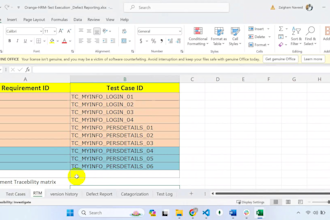
Our agency will software QA testing and review your web or mobile app for usability, bugs, UI,UX
Offers video consultations












Top Rated
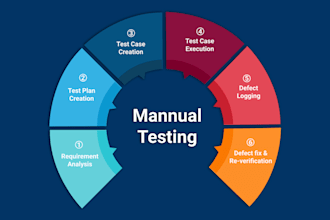
Our agency will do QA testing and review your web or mobile app for usability, bugs, UI, UX
Offers video consultations


























User Testing Services
User testing complements technical quality assurance by evaluating how real users interact with your product. While QA experts validate functionality and catch technical bugs, user testing services assess whether interfaces are intuitive, workflows make sense, and users can accomplish intended tasks without frustration. This service typically costs $50-150 per testing session with 5-10 participants, or $300-800 for comprehensive user testing reports. Businesses often engage user testing after technical QA confirms the product works correctly but before major releases to identify usability issues that technical testing might miss. Combining both approaches ensures products are both functionally sound and user-friendly.
Code Review Services
Professional code review examines source code quality, identifying issues like security vulnerabilities, performance bottlenecks, maintainability problems, and deviation from coding standards. While quality assurance testing validates what the application does, code review services evaluate how it accomplishes those functions at the implementation level. This service typically costs $60-120 per review session, depending on codebase size and complexity. Development teams often integrate code reviews before major releases or when onboarding new developers to maintain code quality standards. Combining code review with functional testing provides dual validation, catching both implementation issues and behavioral bugs.
Design Review Services
Design review evaluates user interface layouts, visual consistency, accessibility considerations, and alignment with design systems before development begins. This proactive service helps identify usability and aesthetic issues early when changes cost less than post-development fixes. Design review typically costs $50-100 per review, examining mockups, prototypes, or design specifications. Organizations often engage design review alongside QA planning to ensure designs are both visually effective and technically testable. This combination reduces the likelihood of discovering fundamental design flaws during QA testing when remediation becomes expensive and time-consuming.
Game Testing Services
Game testing represents a specialized quality assurance niche requiring understanding of game mechanics, player experience, and platform-specific considerations. Beyond standard bug identification, game testing evaluates gameplay balance, difficulty progression, control responsiveness, and entertainment value. This service typically costs $40-100 per hour or $200-600 per milestone, depending on game complexity and platform. Game developers engage these services throughout development cycles to catch not just technical issues but gameplay problems that impact player satisfaction. While similar to software QA in methodology, game testing requires domain-specific expertise in gaming conventions and player expectations.
Regulatory Compliance Consulting
Regulatory compliance consulting ensures your product meets industry-specific legal and regulatory requirements, which often interconnects with quality assurance processes. Compliance consulting for software products typically costs $100-250 per hour, evaluating whether applications meet standards like GDPR, HIPAA, SOC 2, or industry-specific regulations. Organizations in healthcare, finance, or data-sensitive industries engage compliance consultants alongside QA experts to ensure testing validates regulatory requirements. This dual approach confirms products are both functionally correct and legally compliant, reducing risk of costly compliance failures after launch.
Ongoing Costs and Hidden Expenses
Beyond initial testing engagements, several recurring and unexpected costs often emerge as products evolve and quality requirements expand.
- Regression Testing for Updates: Each product update or new feature requires retesting existing functionality to ensure changes did not introduce new bugs. Monthly maintenance releases might need 5-15 hours of regression testing at $25-50 per hour, adding $125-750 monthly to ongoing costs.
- Test Environment and Tool Licenses: Comprehensive testing often requires access to testing tools, cloud-based device labs, performance testing platforms, or security scanning software. These tools cost $50-500 monthly depending on sophistication, sometimes shared between client and QA provider but occasionally billed separately.
- Bug Fix Validation: After developers address identified bugs, QA experts must retest fixes to confirm resolution without side effects. Complex bugs might require 2-5 hours of validation at standard hourly rates, adding 15-25 percent to initial testing costs across the development cycle.
- Documentation and Reporting: Detailed test reports, quality metrics dashboards, and compliance documentation require time beyond hands-on testing. Comprehensive reporting might add 10-20 percent to quoted testing hours, particularly for regulated industries requiring audit trails.
- Cross-Platform Testing Expansion: As products expand to new platforms, browsers, or devices, testing scope increases accordingly. Adding mobile platform testing to a web application or supporting additional browsers can increase ongoing testing costs by 30-50 percent.
Frequently Asked Questions
How much does quality assurance testing cost on Fiverr?
Quality assurance testing on Fiverr shows considerable range based on service type and complexity. Basic software testing packages start around $20-75, covering fundamental functionality validation for simple applications or websites. Comprehensive QA services including test planning, execution, and detailed reporting typically range from $75-150 per project. More specialized services command higher rates, with code review averaging $78, design review around $65, and complete QA packages near $98. Advanced technical services like CI/CD testing range from $97-127 per project, while specialized domains like blockchain security audits reach $328 or higher. Entry-level testing provides basic bug identification, while premium options include automation development, performance testing, and compliance validation.
What are typical hourly rates for quality assurance professionals?
Hourly rates for quality assurance experts vary significantly based on expertise and service type. General software testing shows the widest range, from $12-90 per hour, accommodating both basic manual testing and sophisticated automation work. Technical support incorporating QA elements ranges from $12-140 per hour. Specialized DevOps and CI/CD testing commands $20-200 per hour, reflecting the advanced technical skills required. Hourly pricing typically applies to ongoing testing engagements, continuous integration environments, or projects where scope evolves during development. Less experienced testers handling straightforward functional validation occupy the lower range, while senior automation engineers, performance testing specialists, and security experts command premium hourly rates reflecting specialized expertise and certification credentials.
What is typically included in a basic quality assurance package?
Basic quality assurance packages generally include manual testing of core application features and primary user workflows across major browsers and devices. Testers execute provided test cases or exploratory testing scenarios, documenting identified bugs with detailed reproduction steps, screenshots, and severity classifications. Basic packages typically cover functional validation ensuring features work as specified, along with basic usability assessment identifying obvious user experience issues. Most include a summary test report highlighting critical findings and overall quality assessment. Basic packages usually do not include test planning, automation development, performance testing, security assessment, or compliance validation, which appear in higher-tier offerings. Expanding to standard or comprehensive packages adds test strategy development, regression testing across updates, detailed test case libraries, and integration with development workflows.

Related Guides




About the author
Dolev GamzoR&D Director
Dolev Gamzo is a Director of R&D at Fiverr, where he leads engineering groups and the Fiverr AI Guild. With 12+ years of experience in building software, he spent 5 years managing Fiverr’s payment and financial systems before shifting his focus to Fiverr's inbox moderation framework and order framework. In his free time, Dolev explores nature and spends time with his three children.
