How Much Does It Cost to Hire a Software Tester in 2026?
Software testing costs in 2026 range from $20 to over $270 per project, with hourly rates spanning $10 to $140 based on marketplace insights.
 April 30, 2026
 8 minute reading
Software quality assurance has become a critical business priority in 2026 as companies navigate increasingly complex digital ecosystems. From mobile applications to enterprise platforms, businesses now recognize that thorough testing prevents costly failures, protects brand reputation, and ensures seamless user experiences. Organizations of all sizes rely on professional software testing services to identify vulnerabilities before products reach end users, making quality assurance an essential investment rather than an optional expense.
Understanding what influences testing costs helps businesses budget effectively and select the right service level for their needs. Pricing varies significantly based on testing methodology, project complexity, platform requirements, and the specialist's expertise. This guide explores current marketplace rates for software testing services, examines the factors that drive cost variations, and provides clear insights into hourly versus project-based pricing models to help you make informed decisions about your quality assurance investments.
Average Software Tester Costs
Based on recent Fiverr marketplace data, software testing services demonstrate considerable pricing flexibility to accommodate diverse project requirements and budgets. Fixed-price projects for software testing services typically start at $20 for basic functionality checks and can reach $274 for comprehensive testing suites that cover multiple platforms and testing methodologies.
Hourly rates for software testing professionals on the platform range from $10 to $140, with variations reflecting experience levels, specialization areas, and service complexity. Entry-level testers offering basic manual testing typically charge $10 to $30 per hour, while experienced quality assurance specialists with expertise in automated testing frameworks, performance testing, or security audits command rates between $50 and $140 hourly.
The marketplace data reveals distinct pricing patterns across service categories. Software Testing services show fixed prices averaging $74 with hourly rates from $10 to $90. Bug Fixes services, which often include testing components, range from $20 to $74 for fixed projects with hourly rates between $10 and $120. Code Review services, closely related to quality assurance, average $78 per project. User Testing services, focusing on usability and experience validation, typically cost around $36 for fixed-price engagements.
Technical Support services that incorporate testing elements show fixed prices averaging $73 to $96, with hourly rates spanning $10 to $140. For specialized areas like Blockchain Development testing, fixed prices can reach $273, reflecting the technical complexity and specialized knowledge required. Design Review services, which evaluate interface quality and user experience, average $66 per project.
Which Pricing Model Is Best for You?
Hourly pricing works best for ongoing testing needs, iterative development cycles, or projects where scope may evolve as issues are discovered. This model provides flexibility when you need continuous quality assurance support throughout development sprints or when testing requirements aren't fully defined upfront. It's particularly valuable for regression testing, where new features require repeated validation across existing functionality.
Fixed-price packages suit well-defined testing projects with clear deliverables and scope boundaries. Choose this model when you need specific testing types like functional testing for a completed application, compatibility testing across defined platforms, or security audits with established parameters. Fixed pricing provides budget certainty and works effectively for one-time projects, pre-launch testing phases, or when you have detailed testing documentation that clearly outlines expected coverage.

What Influences Software Testing Costs
Testing Methodology and Approach
Manual testing, where testers interact directly with applications to identify issues, typically costs $12 to $40 per hour and suits projects requiring human judgment about user experience, visual inconsistencies, or exploratory testing scenarios. A basic manual testing engagement for a simple mobile app might require 10 to 15 hours, resulting in costs between $70 and $600 depending on the tester's experience level.
Automated testing requires upfront investment in script development but delivers efficiency for repetitive test scenarios. Initial automation setup costs range from $200 to $800 for basic test suites, with hourly rates for automation specialists typically between $40 and $90. Projects requiring comprehensive automation frameworks for continuous integration pipelines may involve 20 to 40 hours of initial development, followed by lower maintenance costs for ongoing test execution.
Application Complexity and Platform Coverage
Simple applications with straightforward functionality, such as basic websites or single-feature mobile apps, require 8 to 12 hours of testing, costing between $100 and $400 for comprehensive coverage. Medium-complexity applications with multiple user flows, database interactions, and integrated third-party services typically need 20 to 35 hours of testing effort, ranging from $300 to $1,200 in total costs.
Complex enterprise applications, e-commerce platforms with payment processing, or multi-platform products requiring testing across iOS, Android, and web environments demand 40 to 80 hours or more, with costs reaching $1,500 to $5,000 for thorough quality assurance. Cross-platform testing adds 30 to 50 percent to base costs as testers validate functionality, performance, and user experience consistency across different operating systems, browsers, and device configurations.
Testing Specialization and Expertise
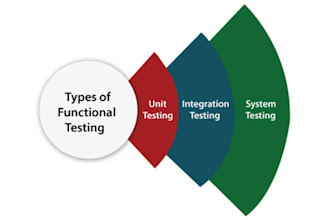
Functional testing, validating that features work as intended, represents the baseline service level at $20 to $60 per project for basic applications. Performance testing, which evaluates application speed, scalability, and resource consumption under various load conditions, costs $150 to $500 for standard scenarios and $600 to $1,500 for complex stress testing simulations.
Security testing and penetration testing require specialized knowledge and command premium rates, typically $300 to $1,200 per engagement for basic vulnerability assessments and $1,500 to $4,000 for comprehensive security audits. Accessibility testing, ensuring compliance with WCAG standards and usability for people with disabilities, ranges from $200 to $800 depending on application scope and required compliance levels.
Project Timeline and Urgency
Standard testing timelines, allowing testers to schedule work within their normal workflow, typically follow the base rates outlined above. Projects requiring delivery within 24 to 48 hours often incur rush fees of 25 to 50 percent above standard pricing. Critical pre-launch testing needed within same-day or overnight timeframes can double standard costs, with premium rates of $80 to $140 per hour for immediate-turnaround services.
Testing Costs by Project Scope
Understanding how pricing scales with project scope helps you estimate budgets and select appropriate service levels for your specific requirements.
Basic Testing Services
- Includes functional testing of core features, basic usability checks, and testing on one or two primary platforms
- Typical price range of $20 to $150 for simple applications with limited features
- Best for startups testing minimum viable products, small business websites, or single-feature applications requiring basic quality validation
Standard Testing Packages
- Covers comprehensive functional testing, cross-browser compatibility, mobile responsiveness, and basic performance validation
- Typical price range of $150 to $600 for medium-complexity applications with multiple user flows
- Best for established businesses launching new features, e-commerce sites with standard functionality, or mobile apps requiring multi-device testing
Advanced Testing Solutions
- Encompasses complete testing suites including automated test development, performance and load testing, security assessments, and comprehensive platform coverage
- Typical price range of $600 to $2,500 for complex applications requiring extensive quality assurance
- Best for enterprise applications, platforms handling sensitive data, or products requiring compliance validation and thorough security vetting
Specialized Testing Services
- Includes niche testing requirements such as blockchain application testing, IoT device testing, API testing suites, or accessibility compliance audits
- Typical price range of $500 to $4,000 depending on specialization complexity and technical requirements
- Best for companies in regulated industries, products requiring specific compliance certifications, or applications using emerging technologies with specialized testing needs
Related Software Testing Service Costs




































































Bug Fixes and Resolution
While software testing identifies issues, bug fixing services address the problems discovered during quality assurance processes. Many businesses combine testing with bug resolution services to streamline their development workflow. Bug fix services typically cost $20 to $120, with pricing influenced by issue complexity, codebase familiarity, and turnaround requirements. Bundling testing with bug fixes often proves more cost-effective than engaging separate specialists, as testers familiar with identified issues can resolve them more efficiently. This integrated approach reduces communication overhead and accelerates time to resolution, particularly valuable during pre-launch phases when rapid issue remediation is critical.
Code Review Services
Code review complements software testing by examining source code quality, architecture decisions, and adherence to best practices before testing begins. Professional code review services typically cost $50 to $150 for standard reviews, helping prevent issues that would otherwise surface during testing phases. This proactive quality measure reduces overall testing time by catching structural problems, security vulnerabilities, and performance issues at the code level. Organizations implementing code reviews before testing cycles often reduce total quality assurance costs by 20 to 30 percent through early issue identification, making it a valuable investment for medium to large projects.
User Testing and Experience Validation
User testing evaluates how real people interact with applications, providing insights beyond functional correctness into usability, intuitiveness, and user satisfaction. These user testing services typically range from $30 to $200 depending on participant numbers and testing session depth. While software testing validates that features work correctly, user testing determines whether those features deliver positive experiences. Combining both approaches ensures technical quality and user satisfaction, particularly important for consumer-facing applications where experience directly impacts adoption and retention. Budget allocation typically dedicates 60 to 70 percent to functional testing and 30 to 40 percent to user experience validation.
Design Review and Interface Quality
Design review services examine interface consistency, visual hierarchy, and design system adherence before development and testing begin. These reviews, averaging $50 to $100 for standard projects, identify design issues that would otherwise require costly rework during testing phases. When design flaws surface during functional testing, addressing them involves design revisions, development changes, and retesting, potentially tripling resolution costs compared to catching issues during design review. Organizations investing in design review before development typically reduce testing-phase change requests by 40 to 60 percent, streamlining overall project timelines and reducing cumulative quality assurance expenses.
Ongoing Costs and Hidden Expenses
Beyond initial testing investments, several recurring and unexpected expenses affect total quality assurance budgets.
- Regression testing for each new feature or update typically costs 20 to 40 percent of original testing expenses, as testers must validate that new changes haven't broken existing functionality
- Test environment maintenance, including device procurement, browser updates, and testing tool subscriptions, adds $50 to $300 monthly depending on platform coverage requirements
- Retesting after bug fixes typically requires 15 to 25 percent of initial testing time to verify corrections and ensure fixes haven't introduced new issues
- Documentation updates for test cases, known issues, and testing procedures often add 10 to 15 hours per quarter for maintained applications
- Emergency testing for critical patches or security updates may incur premium rates of 50 to 100 percent above standard pricing when immediate validation is required
- Compliance retesting for applications in regulated industries may require quarterly or annual validation cycles costing $300 to $1,500 depending on applicable standards
Frequently Asked Questions
How much does software testing cost on Fiverr?
Software testing costs on Fiverr range from $20 for basic functional testing of simple applications to $274 for comprehensive testing suites covering multiple platforms and methodologies. Entry-level packages typically include basic manual testing of core features on one or two platforms, while premium services encompass automated testing development, performance validation, security assessments, and cross-platform compatibility testing. Related services like bug fixes start at $20, code reviews average $78, and user testing services cost around $36. Many professionals offer tiered packages, with basic testing suitable for simple websites or apps, standard packages for medium-complexity applications, and advanced services for enterprise products requiring extensive quality assurance coverage.
What are typical hourly rates for software testers?
Hourly rates for software testing professionals range from $20 to $140 depending on expertise, specialization, and service complexity. Entry-level manual testers typically charge $10 to $30 per hour for straightforward functional testing, while mid-level specialists with automation experience command $30 to $60 hourly. Experienced quality assurance experts specializing in performance testing, security audits, or complex automated testing frameworks charge $60 to $140 per hour. Hourly pricing proves most effective for ongoing testing needs throughout development cycles, projects with evolving scope, or situations requiring flexible testing support. Organizations typically choose hourly arrangements when testing requirements aren't fully defined upfront or when continuous quality assurance integration with development sprints is needed.
What is typically included in a basic software testing package?
Basic software testing packages generally include functional testing of core application features, validation across one or two primary platforms or browsers, and documentation of identified issues with severity classifications. Testers typically provide 8 to 12 hours of manual testing effort, covering primary user flows, form validations, navigation consistency, and basic responsive behavior. Most basic packages result in a summary report detailing discovered issues, reproduction steps, and recommended priority levels. Upgrades commonly include expanded platform coverage, automated test script development, performance testing, security vulnerability assessments, or accessibility compliance validation. Comprehensive packages may add 15 to 30 hours of additional testing effort, detailed test case documentation, and ongoing regression testing support, increasing costs by 200 to 400 percent above basic service levels.

Related Guides



About the author
Lior IluzVP R&D
Lior Iluz is a VP of R&D at Fiverr, leading cross-organizational engineering efforts across web and mobile platforms. With over a decade of experience spanning Android development, full-stack engineering, and senior R&D leadership, his background centers on building and scaling distributed, event-driven systems and modern cloud-native architectures. His work focuses on technical strategy, team leadership, and delivering resilient, high-impact products at scale.
