ChatGPT vs. DeepAI: Key Differences, Use Cases, and How to Choose
ChatGPT and DeepAI serve different AI needs. Here’s a quick guide to how they compare, and which one might be the better fit for you.
 May 5, 2026
When discussing artificial intelligence chatbots, people talk mostly about ChatGPT, Claude, Grok, and even DeepSeek. But one online chatbot has been around since before all of these major players, offering AI video generation, image generation, math-problem solving, and text chat: DeepAI.
In this article, we compare ChatGPT, the most widely used AI chatbot, with DeepAI, a formidable contender with comprehensive generative AI offerings at a lower monthly cost.
What is ChatGPT?
OpenAI
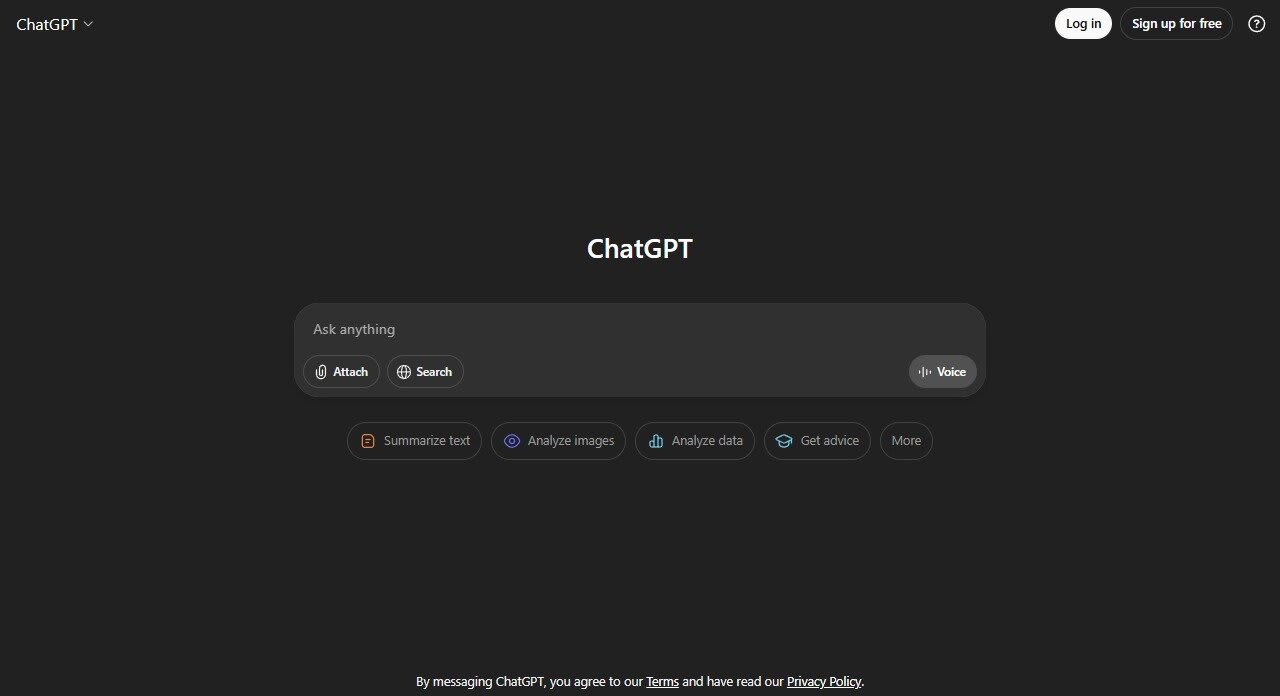
ChatGPT is a conversational AI model developed by OpenAI. It’s designed to understand and generate human-like text based on user inputs.
At its initial launch in November 2022, it offered only text-based input and output. Now it provides image processing, image generation, web search functionality, and even video generation through its Sora model.
Best for
ChatGPT is suited for a wide range of users and use cases due to its versatility. Individuals can use it to answer general questions, perform web searches, generate images, or learn new topics. Professional users can use it for content creation, writing, or creating marketing strategies.
ChatGPT also offers excellent coding functionality. Developers use it to debug, review, and write code. Many AI development tools are powered by ChatGPT through an API integration.
Using AI on its own for creative tasks often leads to subpar results. It’s best to get a human to review the AI-generated output. For example, you could hire professional AI content editors to ensure your AI-generated articles stand out.
Key Features
ChatGPT’s most powerful feature has always been its ability to parse human language and determine context from it, then provide a fitting output. That’s a long-winded way of saying it “understands” human language, although large language models (LLMs) like ChatGPT can’t truly understand language in the human sense.
Its ability to parse human text with such sophistication means it can handle complex instructions and maintain conversational context.
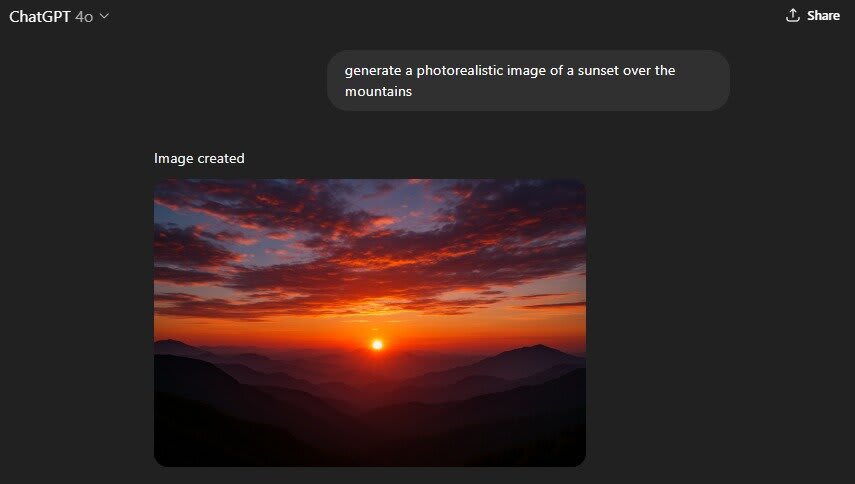
OpenAI recently added multimodal capabilities to ChatGPT so that it can now also generate or analyze images using text prompts.
OpenAI
Performance and Accuracy
ChatGPT’s performance and accuracy depend on the model used. GPT-3.5 is fast but limited by a smaller context window and training data cutoff (September 2021). GPT-4 and GPT-4o have a much higher context retention and also offer multimodal processing.
All models suffer from hallucination, which is a problem with LLMs that experts say will never go away.
Pros and Cons
Pros
ChatGPT is versatile. It can write articles, generate code, analyze data, process files, and generate images. Its interface is easy to use and intuitive. It can access the web, providing up-to-date information on current topics when prompted correctly.
You can also create custom GPTs, which are fine-tuned GPTs that follow your specific instructions and can call external code for increased functionality.
Cons
ChatGPT can, and often does, produce factual errors and hallucinations. Lawyers have been caught submitting hallucinated (false) data produced by AI in at least 120 court cases. No LLM is free from this limitation, and overreliance on ChatGPT is a common problem.
ChatGPT has also been the subject of several legal battles and controversies regarding copyrights and intellectual property.
Users are automatically opted in to allow ChatGPT to train its model on their chats unless you explicitly opt out, raising privacy concerns.
It’s possible to minimize the cons of using ChatGPT, such as filtering its responses through an internal guardrails program. You can get help from an AI technology consultant at Fiverr to learn how to implement this.
Integration with Other Tools
ChatGPT integrates deeply with various platforms, both through direct API integrations and through third-party integration tools. Its API is well-documented, allowing any expert programmer to connect the ChatGPT API with almost any external app to add AI functionality.
ChatGPT lets you create CustomGPTs, which integrate with external tools and datasets. You can share these CustomGPTs publicly so others can also access them.
Pricing
ChatGPT Plus costs $20 per month. Pro costs $200 per month and has much higher limits, although most small businesses won’t need this much functionality.
The Plus version lets you create unlimited 720p videos.
What is DeepAI?
DeepAI
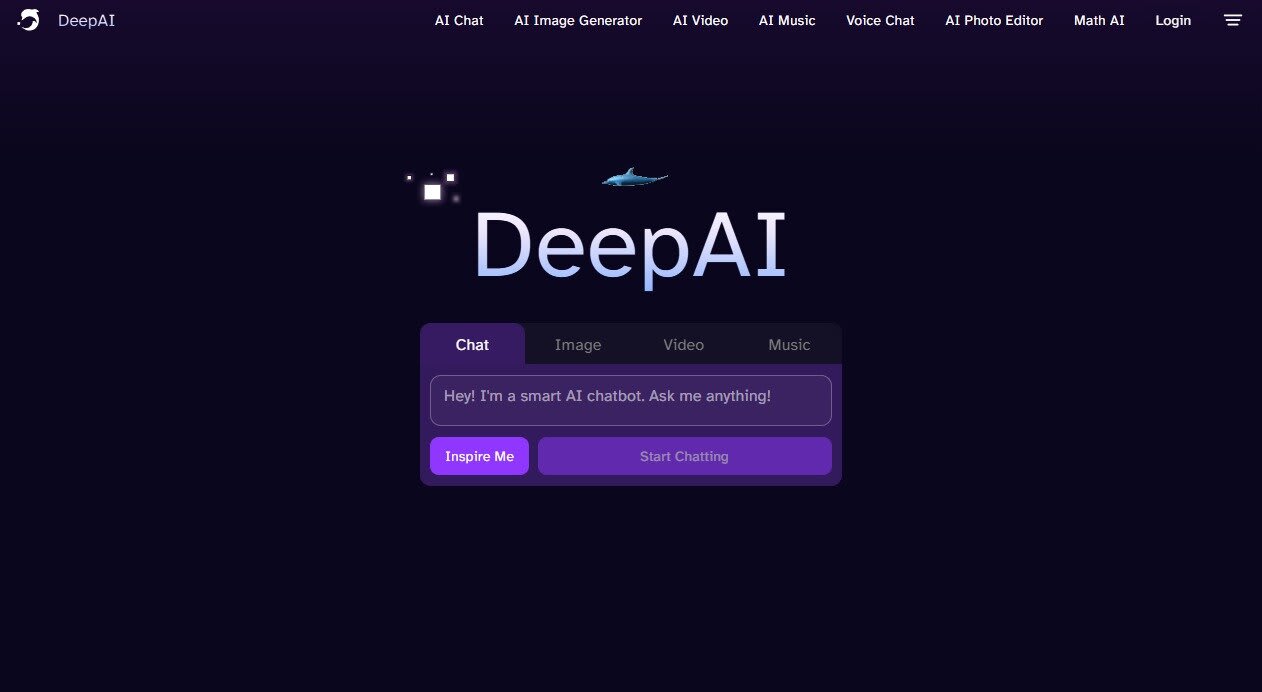
DeepAI is an AI-powered platform launched in 2016, more than five years before ChatGPT was released.
It offers a suite of generative AI tools for creating content such as text, images, videos, and music from user prompts. It was the first company to offer an AI-powered text-to-image generator.
For a nominal fee, DeepAI lets users generate a limited number of videos and images. You can also edit images using prompts.

DeepAI
Best for
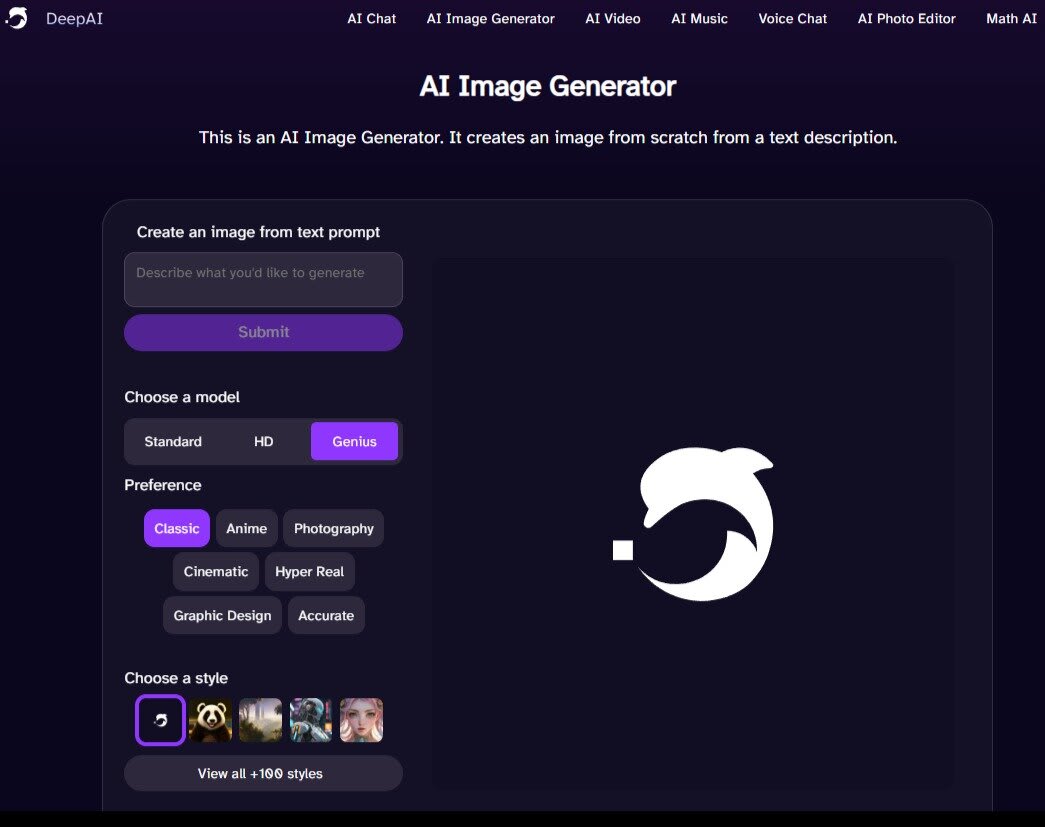
DeepAI is best suited for content creators, artists, designers, and marketing departments. The company focuses heavily on content generation, and its interface has more bells and whistles aimed at making content creation easier.
For example, its image generator has buttons to help you hone an image’s style, whereas ChatGPT expects you to provide all instructions directly in a prompt.
DeepAI
Developers can generate or edit images using the API. It’s also possible to colorize images with the API.
Key Features
DeepAI brings together all content generation tools in an easy-to-use interface. Its focus is less on reasoning capabilities or benchmarks and more on creativity.
It offers text-to-image generation, AI chat for basic writing and brainstorming, AI video generation, AI photo editing, music generation, character generation, and even an AI radio station.
Performance and Accuracy
DeepAI’s Chat and Genius Mode produce coherent text. Accuracy is generally reliable for general topics, but can stray with complex or ambiguous prompts.
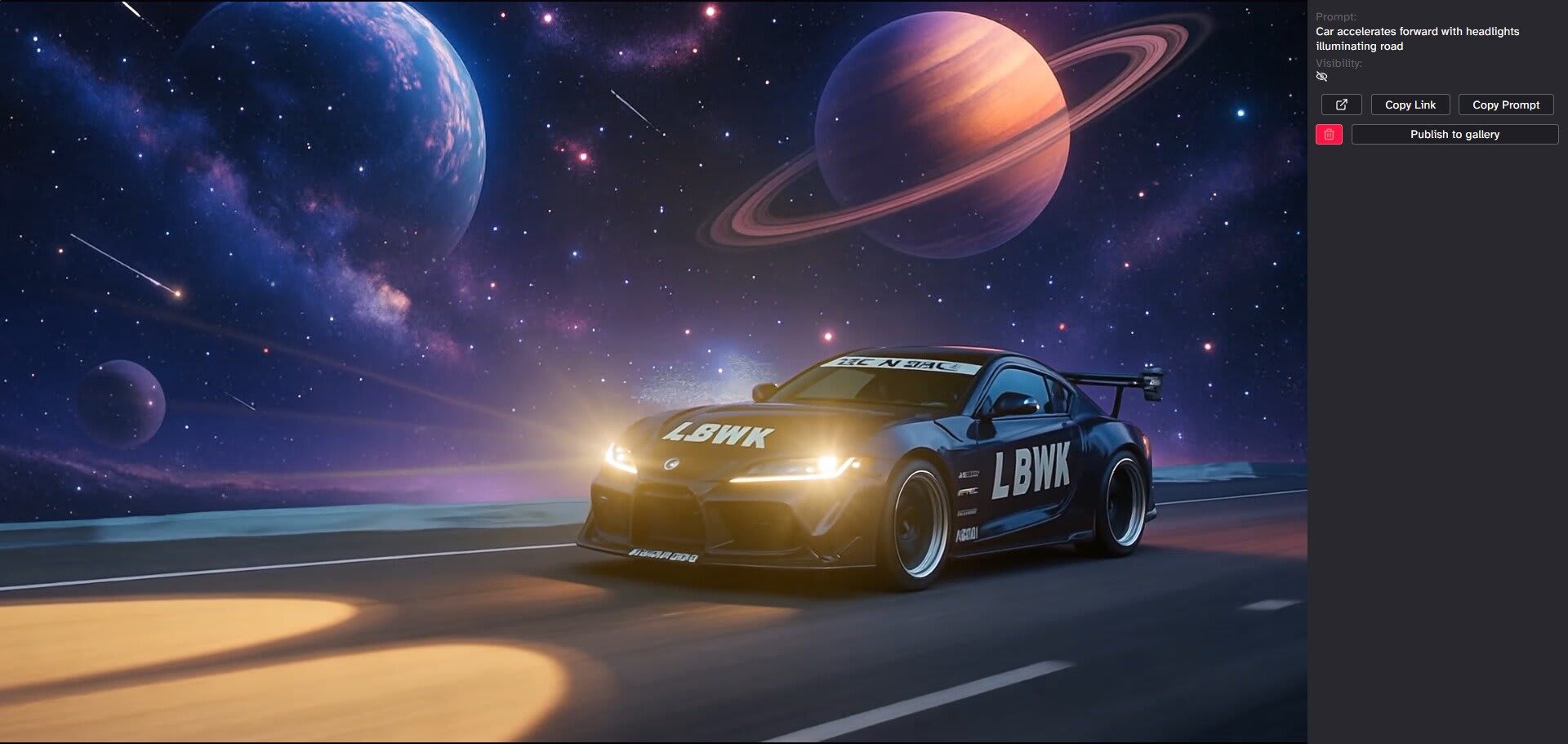
Images are generated rapidly and are useful for most cases. Quality can sometimes be inconsistent.
Video generation is fast but limited to short clips.
DeepAI
Music generation is functional, but was mostly disappointing.
Pros and Cons
Pros
DeepAI has an intuitive interface and is accessible to beginners and non-technical users. It’s also extremely affordable, a mere $4.99/month for all its features, including video generation.
Cons
DeepAI has fewer models than ChatGPT. However, controversy exists regarding the actual capabilities of powerful models, so less powerful models might not have any real-world effect.
Although DeepAI is cheaper than ChatGPT, its paid tier has much stricter limits.
Integration with Other Tools
DeepAI supports integration primarily through its APIs, which you can access using any programming language. However, it only offers image-related APIs, which significantly limit its integration with chat-focused and text-centric tools.
Pricing
DeepAI has a limited free version and a paid plan that costs $4.99 per month.
Although the paid plan seems like a bargain on the surface, it depends on how much you use it. For example, it limits how many images you can create (500) and how many videos (five).
You can only make one “Hollywood mode” video, which otherwise costs $5 per eight-second video. You’re also limited to 1,750 AI chat messages and 250 Genius Mode messages.
You’re paying less for DeepAI, but you’re also getting significantly less than the paid version of ChatGPT, which lets you create unlimited 720p videos in its Plus tier.
Key Differences Between ChatGPT and DeepAI
ChatGPT and DeepAI differ significantly in their focus and target audiences.
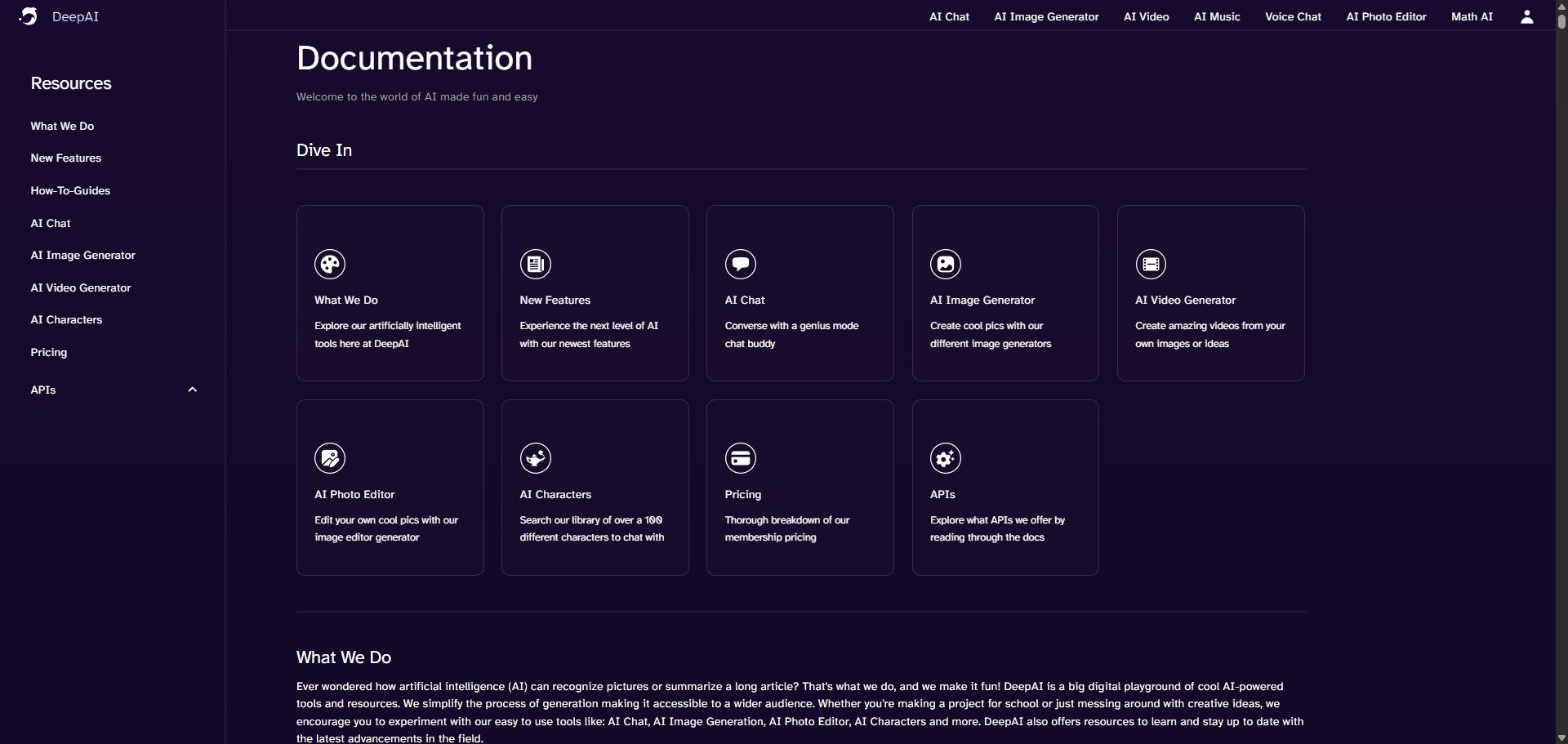
DeepAI positions itself as an “AI playground,” allowing users and developers to test and use various AI features without much complexity.
DeepAI
ChatGPT positions itself as an all-around workhorse for everyday personal and business use across a wide variety of use cases.
Core Focus and Functionality
ChatGPT is optimized for natural language processing and focuses on answering questions, writing code, generating articles, and handling text-based content. It now also includes the ability to generate images.
It can process files and summarize their contents, although it frequently hallucinates answers, which is common with all LLMs.
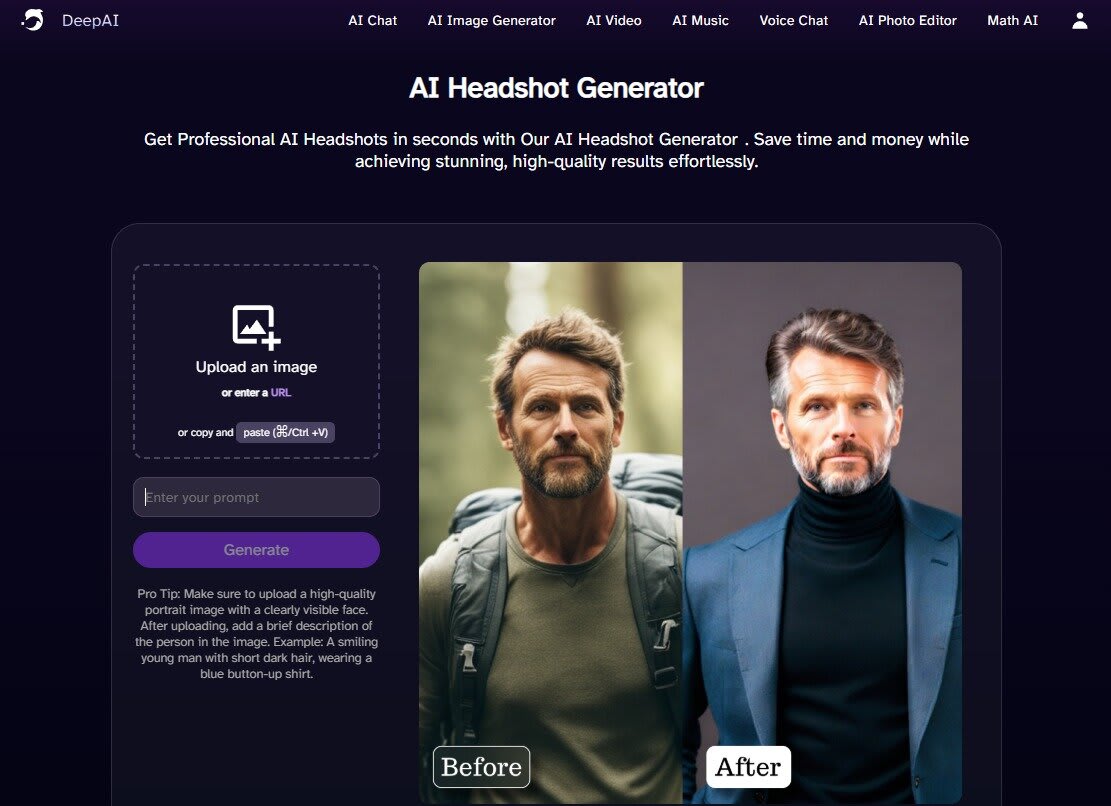
DeepAI’s focus is on making it easy for users of all experience levels to create content in all modalities, not only text. Its API is image-focused, offering only image editing and generation capabilities, such as its headshot generator API.
DeepAI
Technology and Architecture
ChatGPT uses transformer technology to extract context from the data it processes. Transformer technology was the breakthrough that opened the floodgates on the current AI boom.
It’s unclear what technologies underlie DeepAI’s many creative offerings. They provide no information on their site, and they may be leveraging a third-party LLM under the hood.
Similarly, we couldn’t find any information regarding what models power DeepAI’s image, video, and music generation suite.
Ease of Use
Both tools are user-friendly but with different focuses. ChatGPT is text-centric. Users learn to use prompts to get it to generate images, write code, or perform other tasks.
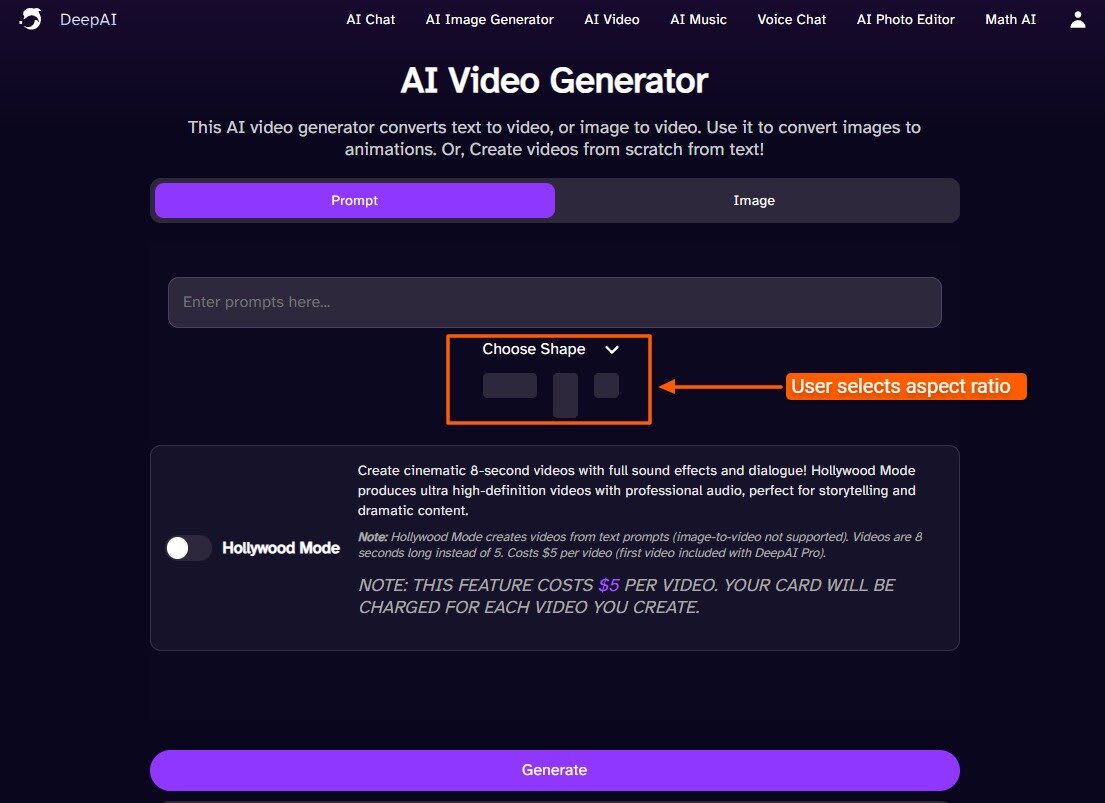
DeepAI has built user interface controls on top of the basic prompting engine so that you feel like you’re using a tool dedicated to its purpose.
This is most apparent in the image generation and editing features, although you can also see some of this style in the video generation tool as shown below. For example, users can select the video’s dimensions instead of having to write this into a prompt.
DeepAI
Text Generation Quality
ChatGPT’s text generation capabilities feel more advanced than DeepAI’s. However, for text generation tasks, we typically prefer Grok or Claude over ChatGPT.
Target Audience
ChatGPT appeals to a wider audience, including non-technical users. It’s best-suited for businesses and individuals needing a general-purpose AI.
DeepAI targets creatives who need specialized tools for tasks like image processing or video generation.
Use Cases and Applications of ChatGPT
ChatGPT is a versatile conversational AI model with a wide range of applications. Here are a few of them:
Content Creation
ChatGPT’s initial claim to fame was its seeming ability to write full-length, coherent blog articles. The hype on that front has died down markedly, but marketers still use ChatGPT for a wide range of creative tasks, from outlining blogs to generating social media posts and accompanying images.
The general sentiment is that AI content always needs a human touch before releasing it, and you can find AI content editors on Fiverr to help you with that.
Customer Support
You can train ChatGPT on your business data and then get it to automatically answer customer support queries. This is typically done through an API integration, and you can get AI integration services on Fiverr to help you set this up.
It’s also possible to program a tool that processes emails from customers and automatically replies with relevant links from your company’s knowledge base. Software development services can help you with this.
Coding Assistance
ChatGPT offers excellent coding assistance inside the chatbot itself, but also through API integrations with various tools.
For example, several AI coding tools work by connecting to ChatGPT in the backend through its API. Some of these coding tools analyze your entire codebase and suggest improvements.
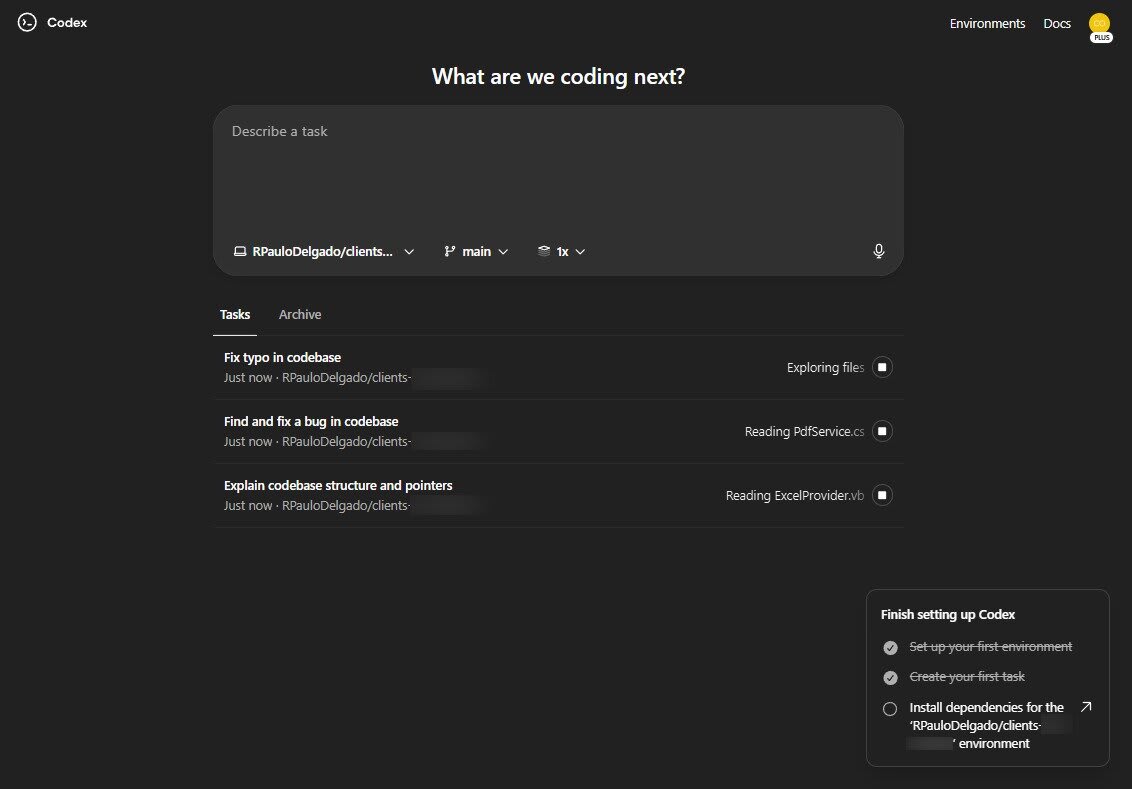
More recently, OpenAI gave Plus users access to Codex, a suite of coding models. You can connect Codex to your GitHub repositories and have it search the entire codebase for bugs. It can also suggest enhancements or explain parts of the code.
OpenAI
Education and Tutoring
Because ChatGPT was trained on a massive corpus of data, it’s an excellent tutor for all mainstream subjects such as math, science, history, and literature. It can answer complex questions and explain hard-to-grasp concepts simply.
Educators can use it to create lesson plans or teaching materials.
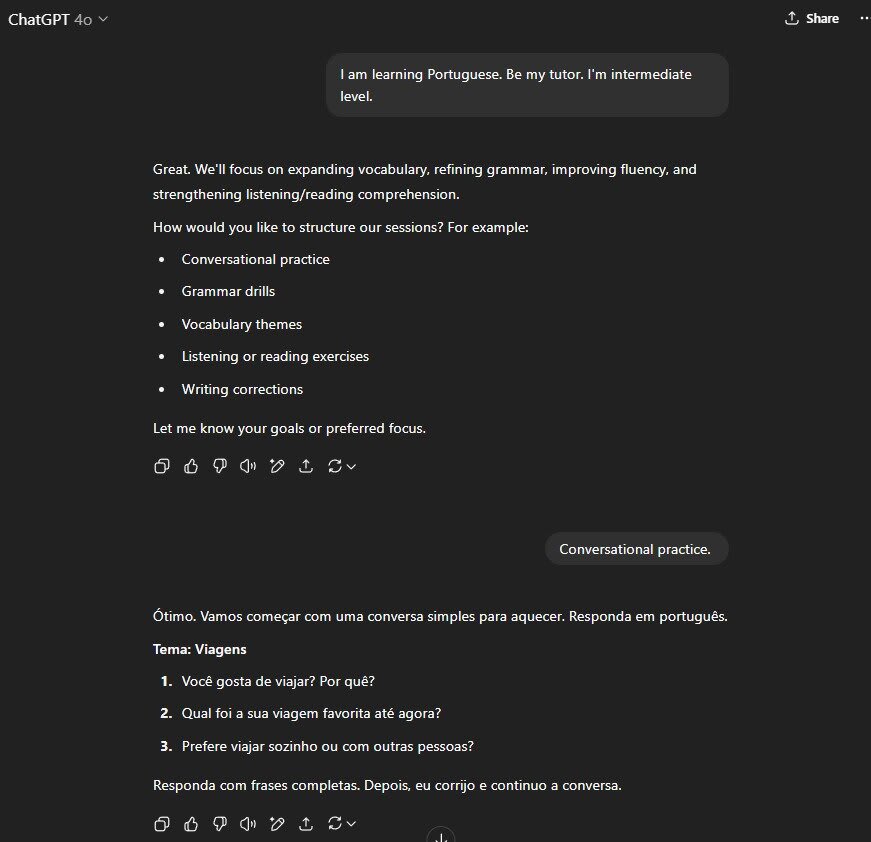
ChatGPT also supports language learning through conversation practice, grammar correction, and vocabulary building.
OpenAI
Data Analysis
ChatGPT can read files like CSVs or Excel sheets and then analyze and summarize the data. It can also create visualizations from uploaded files.
You can use ChatGPT to help with data cleaning, such as removing duplicates, formatting columns, or handling missing values.
As with all generative AI use cases, the risk always exists that ChatGPT will produce errors. For more accurate results, reach out to get data cleaning services from Fiverr.
Use Cases and Applications of DeepAI
DeepAI is particularly suited for creators who need image-intensive features. Developers who want to generate and edit images can also use DeepAI’s API.
Text-to-Image Generation
DeepAI began as a text-to-image tool long before the current AI boom. This remains its focus, and it offers several text-to-image generation and editing features, such as a headshot generator, selfie generator, image expander, and image upscaler to increase resolution.
Image Editing
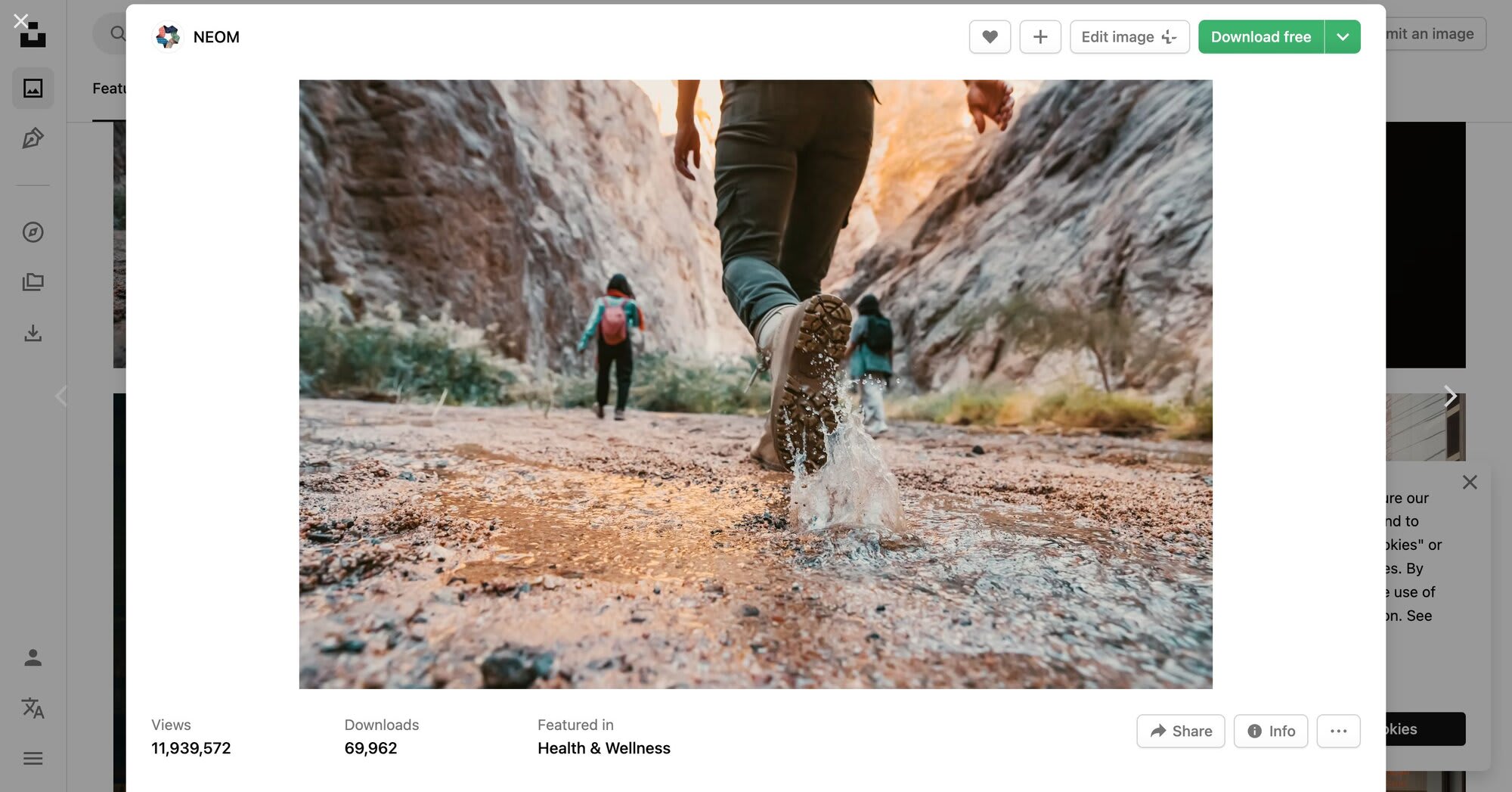
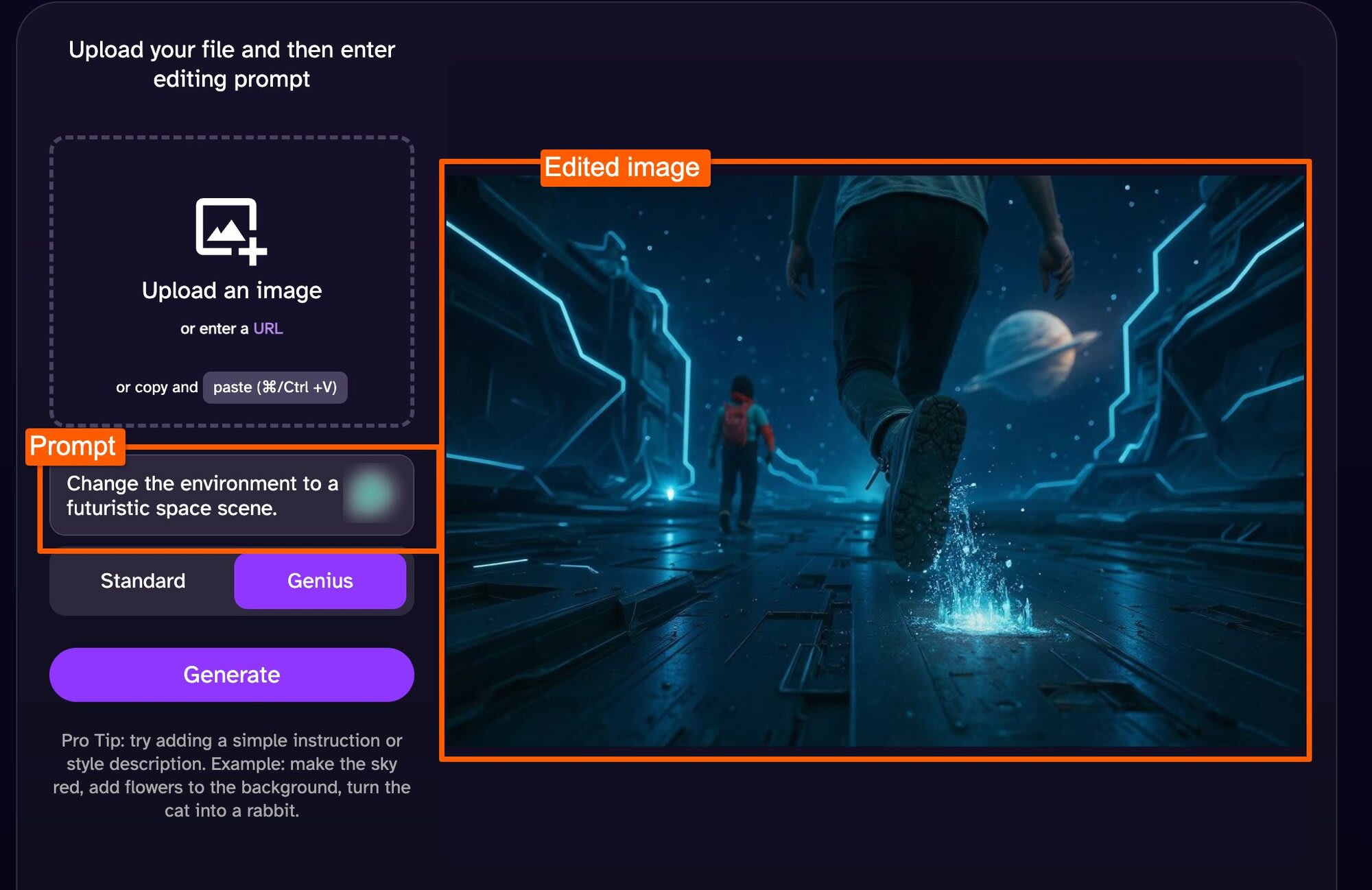
DeepAI has a dedicated page for editing images. You upload an image or specify a URL and then enter a prompt for which edits you want carried out. For example, we added the following Unsplash photo, then prompted DeepAI to change it to a futuristic space-age scene.
Unsplash
This is the result of the edit:
DeepAI
Video Generation
DeepAI’s video editing capabilities are at least on par with ChatGPT’s Sora. Unfortunately, many of the generated videos tend to be as cringeworthy as Sora’s, with limbs disappearing and objects morphing randomly into other objects.
DeepAI includes five standard AI video generations for its $4.99 monthly fee, and one Hollywood Mode video generation, which creates cinematic movies with audio. You might be able to get a simple video created, but more often than not, you’ll get something that has to be heavily edited or cut.
For more professional videos, you can find professional video services on Fiverr to help you.
AI-Generated Voiceovers
We were impressed by DeepAI’s voiceover feature. It certainly didn’t create top-grade voiceovers, but the voiceovers are passable enough to use in early-stage marketing campaigns when you’re testing different ads.
Using DeepAI’s voiceover feature, you can easily and affordably create voiceovers in a variety of voice tones and styles. Once you’ve found an ad that starts gaining traction, you can get professional voiceover services from Fiverr to create a pro-grade product to replace the AI one.
Which Should You Choose?
Unlike choosing between Claude and ChatGPT or Gemini and ChatGPT, the choice between DeepAI and ChatGPT is more clear-cut.
ChatGPT is a versatile AI for conversational tasks, content creation, coding assistance, data analysis, file processing, and general-purpose use cases.
DeepAI is more focused on direct creativity, especially in image and video processing. It does provide chat-based features, but we felt that any of the other AI chatbots, such as Claude, Grok, or ChatGPT, are better suited for complex conversations.
If you need a conversation-based API, you should use ChatGPT.
DeepAI is generally better suited for people who are focused on creative tasks that depend heavily on images and videos. ChatGPT is better suited as a general, all-purpose AI.
Get help from Fiverr experts
Whether you're generating AI images, building automated workflows, or integrating tools like ChatGPT or DeepAI into your business, the real results come when expert talent is behind the wheel.
With Fiverr Pro, you can find manually vetted AI artists, prompt engineers, and other AI Experts that can help your business adopt AI easily.
FAQ
What is the main difference between ChatGPT and DeepAI?
ChatGPT and DeepAI have different focuses. ChatGPT emphasizes natural language processing while DeepAI focuses on a broader suite of AI tools, particularly for creative tasks involving image and video editing.
Which platform is more accurate for generating text?
Accuracy in text generation depends on the task, but ChatGPT generally outperforms DeepAI in text-related and conversational tasks.
Can ChatGPT and DeepAI be integrated with other tools?
Both ChatGPT and DeepAI can be integrated with other tools, but their integration capabilities differ due to their design and focus.

Related Guides
 10 minute reading

About the author
Ofri DavidAI SEO Specialist
AI SEO specialist at Fiverr who works at the intersection of automation, coding, and GEO to build high-impact, scalable solutions
